A minimalist wedding works when every remaining element carries the full visual weight, not when you simply spend less on fewer things. The trap couples fall into is stripping decor and quality together, which leaves guests inside a sparse concept rather than an intentional celebration. The single photograph on the welcome table, the handwritten note inside each invitation, the 50-person guest list that lets you sit down and actually eat with people you know: these choices cost the same per unit as traditional weddings, but they buy coherence instead of clutter.
1. Intimate Guest List
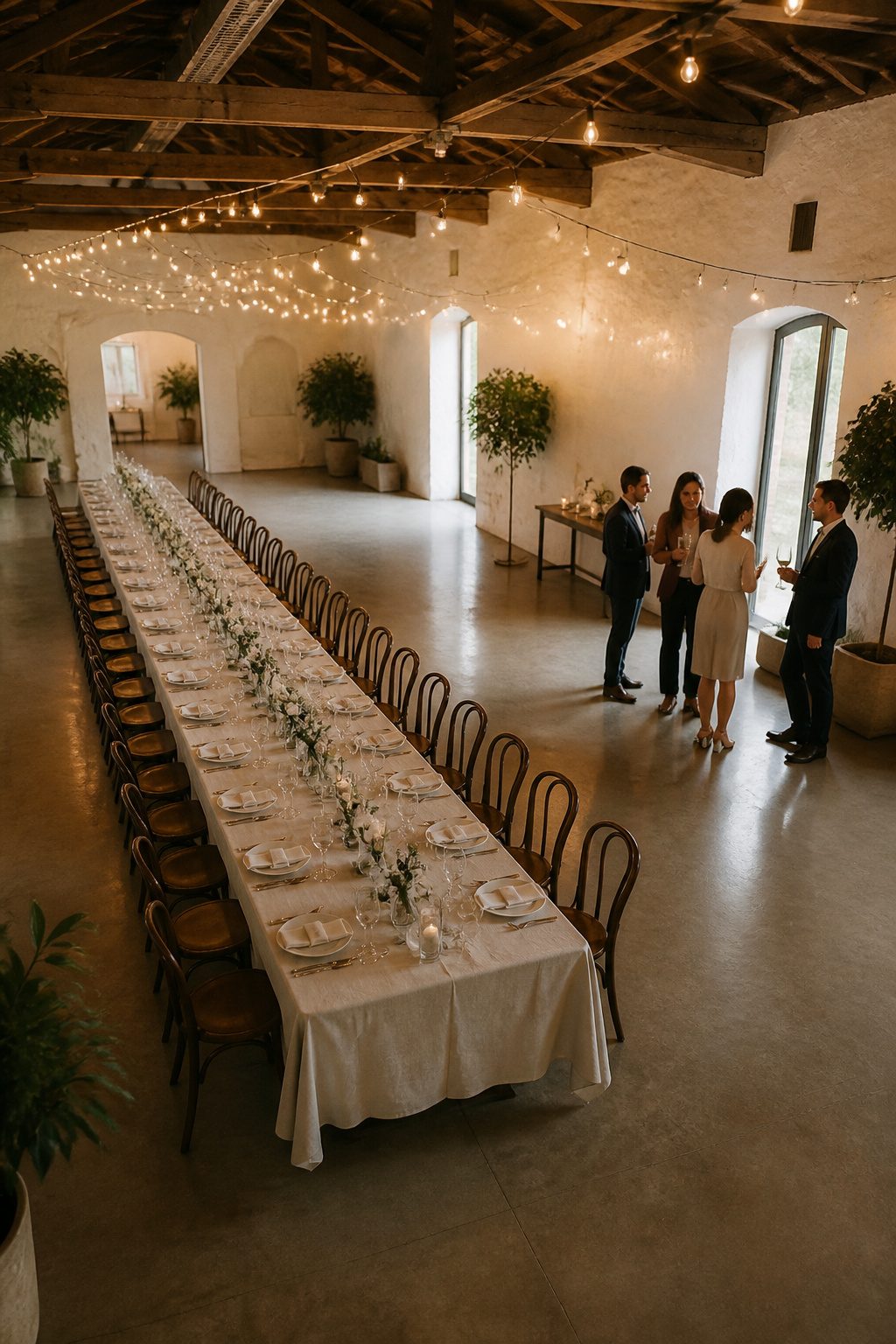
A guest count between 50 and 80 people sits right where a minimalist wedding starts to feel curated rather than cramped. Below 30, the energy can thin out; above 120, you are managing a crowd whether you planned to or not.
Fewer guests reshape the budget in ways that matter. One fewer table means one fewer centerpiece, one fewer linen, eight fewer plates and glasses, and the staff to serve them. The savings stack fastest on food and drink, which is where most weddings bleed money. A smaller list also opens venues that cap out at 60 or 70, places too tight for a traditional reception but perfect for a long dinner where everyone hears the toasts.
The harder part is who does not make the cut. I have watched couples stall for weeks on the plus-one question, the old college roommate, the aunt they see once a year. Setting the number early, before anyone gets a save-the-date, protects you from the slow creep of obligation. A venue with a hard limit helps here; the wall does the refusing for you.
What you gain is time. At 50 guests, I can sit down and eat with people I actually know instead of threading through a hundred hands to shake. The pressure to perform for a crowd drops off, and the wedding starts to feel like something shared rather than something produced.

Complete Balloon Arch Kit – Package includes balloons in sage green, beige, metallic gold, clear bobo bubble, and gold confetti balloons, along with 1pc 5-meter balloon strip, 5 sheets of dot glue, and 1 roll of 10-meter white ribbon. The combination of avocado green, sand white, and gold creates an elegant neutral look for any celebration. Please note that due to the light and screen difference, the color of the balloon may be slightly different from the picture.

【Complete Sage Green Blue Balloon Set】Includes 50pcs 12 inch balloons: 8pcs macaron blue balloons, 18pcs dusty sage green balloons, 10pcs dusty blue balloons, and 14pcs dusty ivory white balloons, plus 2 blue ribbons. This coordinated sage green and blue balloons set combines soft pastel shades and neutral tones for balloon bouquets, wedding backdrops, baby shower decorations, dessert tables, and elegant party displays.
2. Neutral Color Palettes
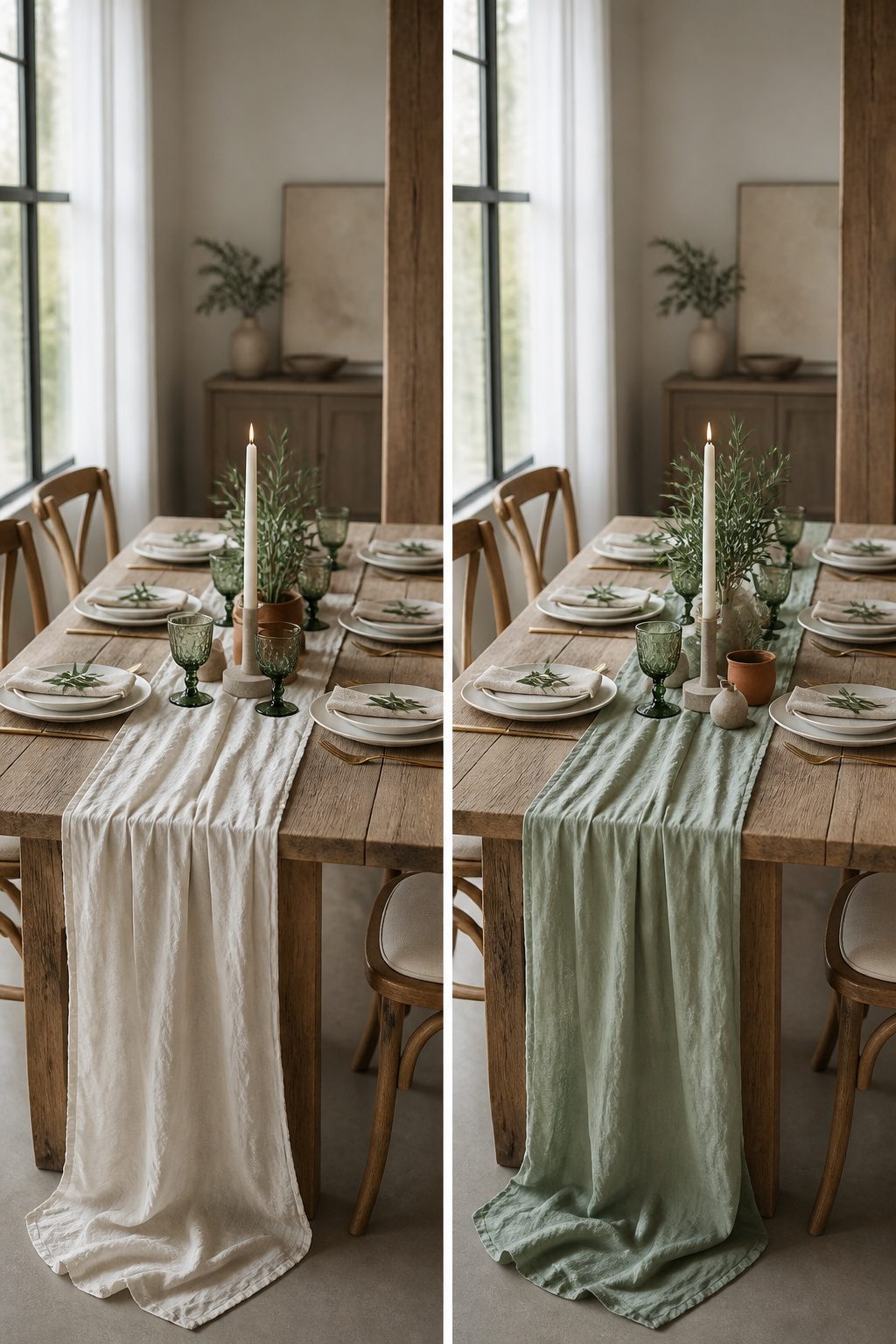
White and ivory read as one tone from the aisle but photograph as gentle depth up close, which is why that pairing still dominates the minimalist weddings I end up shooting. Beige and taupe do the same work in dimmer venues, the kind with wood beams and late-afternoon windows, where stark white would fight the room. For 2026, the shift I am noticing is toward two-tone palettes that borrow from landscape rather than linen: cream and sage green, or sage green and warm sand layered with oat. Muted terracotta is the accent that keeps appearing in these sets, though the rule that actually matters is the count, not the names. Limit the palette to two or three colors total. Discipline there does more than any single shade choice. Texture becomes the substitute for extra color: linen napkins, cotton runners, stone place card holders. The eye reads that variety as interest without the palette sliding into clutter. I have seen ceremonies where the couple stopped at two tones and the whole room felt intentional, and receptions where a fourth color crept in through bridesmaid gifts or signage and the coherence collapsed. Three is the ceiling. Two is often enough.

Package includes 1 wedding signs for reception with stand measuring 8 x 11 inches

Complete DIY Floral Set: get creative with 6 clear acrylic vases, 30 lifelike artificial roses, 36 delicate baby's breath flowers, 30 vibrant eucalyptus leaves, and 6 LED lights (batteries not included); Craft a stunning, illuminated centerpiece perfect for weddings or special occasions

Romantic Heart Vase Design: These white ceramic vases feature a unique hollow heart shape. When placed together, they create the enchanting silhouette of a couple embracing, while individually, each vase adds a charming and artistic accent to your space—infusing every day with a touch of love and romance
3. Simple Floral Arrangements
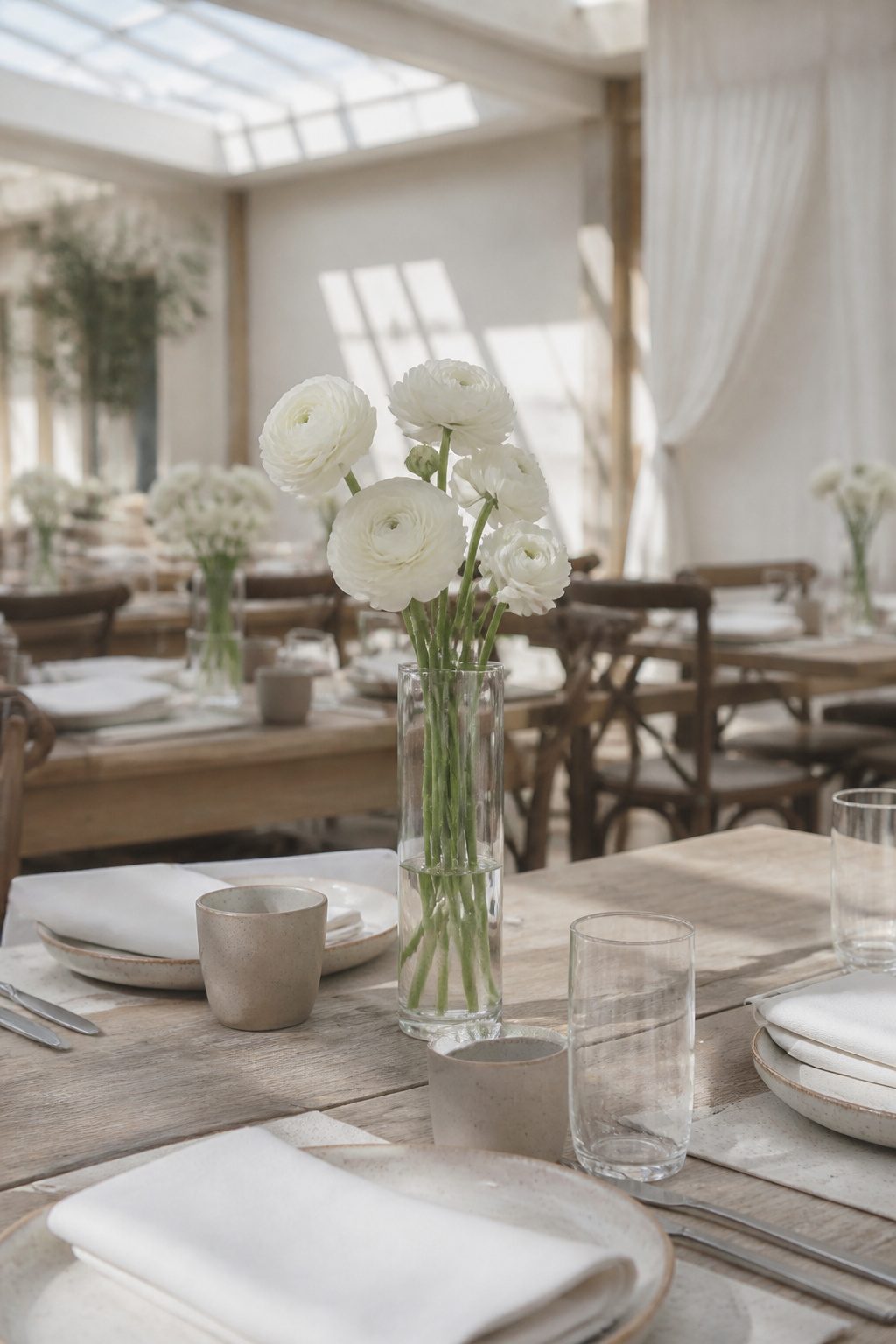
A tall vessel filled entirely with white ranunculus, or a low bowl of cream garden roses, lands harder than mixed arrangements ever do. The uniformity does the work. For a minimalist wedding, single-variety groupings in white, cream, or blush keep the palette disciplined: peonies, anemones, white dahlias, or dried grasses each carry enough texture to stand alone.
Deconstructed arrangements follow the same logic backward. Instead of building density, you place stems sparingly so each one reads as an individual choice. A single-stem centerpiece in a clean ceramic cylinder can hold a table as well as a mound of blooms, provided the stem is interesting enough. Garden roses work here because the ruffled heads supply their own drama without backup.
One centerpiece per table, placed dead center. That rule matters more than the flowers themselves. Offset arrangements fight the spareness; symmetry keeps the room calm. Dried grasses, pampas included, suit this placement especially well because their vertical lines draw the eye up without crowding the conversation space.
What to skip: mixed wildflower arrangements. The boho looseness reads as clutter against a minimalist frame. If flowers feel like too much altogether, a runner of lush greenery or delicate ivy strands laid straight down the table center achieves the same quiet impact with even less.
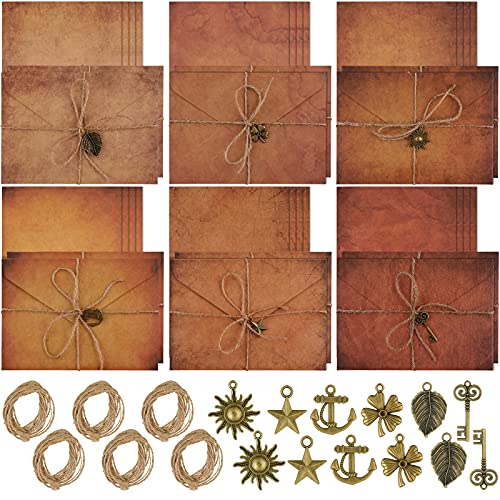
Sufficient quantity: you will receive 6 sets of writing stationery letters, each set comes with 4 sheets of writing paper, 2 pieces vintage envelopes, 2 pieces of rope, 2 pieces of classic key metal fittings; 60 pieces in total, enough quantities of letters to meet your various needs

Used Book in Good Condition

ELEGANT STATIONERY SET WITH TIMELESS DESIGN: Minted's Framed in Floral Stationery Cards bring a touch of sophistication to your personal correspondence with exclusive designs delicately printed on quality luxe paper. The Delft Blue color theme adds a sense of refined elegance, making these cards perfect for leaving a lasting impression with every note you send.
4. Nontraditional Venues
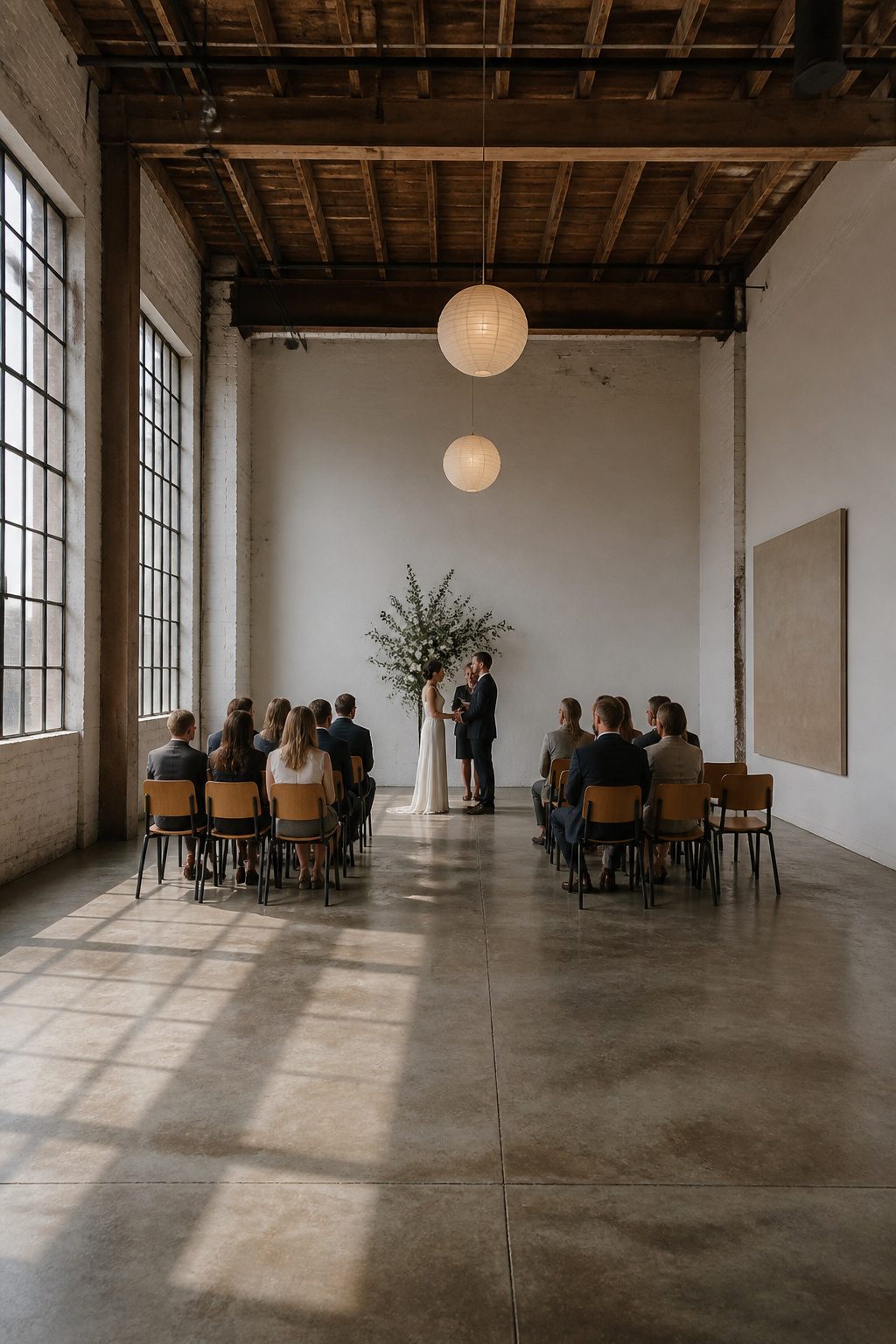
A gallery with white walls and polished concrete floors already did half your decorating before you signed the contract. The space is the statement; your guests, moving through it, become the living part of the installation. A few candles and one architectural floral piece are enough, maybe too much.
Botanical gardens work the same way, though the risk runs opposite. The built-in greenery is the whole point, so your job is to not compete with it. Simple linen runners and unembellished chairs let the garden stay the main event. Every extra banner or balloon fights the place instead of working with it.
Open landscapes, meadows, forest clearings: the draw is seclusion and scale, but the same rule holds. Lanterns in trees, a large rug for the dance floor, paths that guide guests to the ceremony site. That is the full list. Add more and you have stopped trusting the meadow you chose.
Industrial spaces trade the view for control. Four walls, a roof, a floor; raw space that asks for nothing and accepts only what you deliberately bring. The bare-bones aesthetic is honest there in a way draped fabric over a hotel ballroom never is.
Two ways to play this: pick a venue that already looks like your mood board and spend almost nothing on decor, or rent a blank space and build the look from zero. The first wins for any budget under $10K, and for most above it too.

2x3.5 Placecards: Each 8.5 x 11 inch sheet includes 4 table cards sized 2 x 3.5 inches; The pack contains 40 sheets for a total of 160 cards, made from sturdy 65lb cream cardstock,and the ivory cardstock is made of FSC-certified paper

Lace-Inspired Design: Features intricate lace-style borders laser-cut for a romantic and refined touch on any table setting.

Stunning Design - Intricate pearl detailing and a soft ivory finish create a luxurious, timeless aesthetic, ideal for weddings, galas, or boutique displays. Excellent for large events, weddings, or retail shops needing cohesive, eye-catching displays.
5. Classic Bridal Fashion
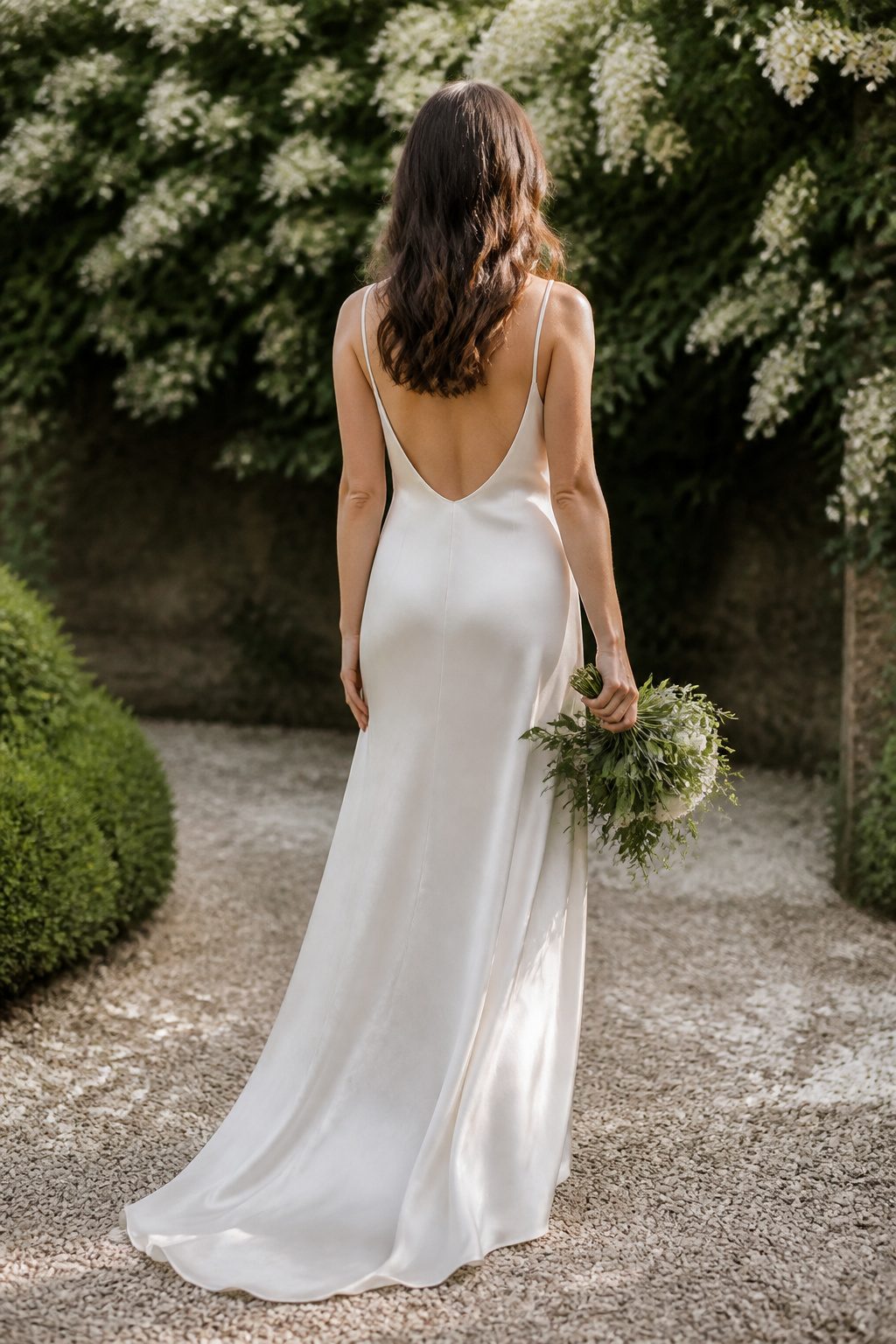
A slip dress in silk satin or crepe does more work than beaded lace ever could. The fabric catches light on its own, and the cut does the shaping so the wearer does not have to compete with her own gown. I have seen this mistake go the other way: a bride choosing heavy mikado for an outdoor July ceremony in Missouri, then spending the reception wishing she had listened when the consultant mentioned weight. The A-line and simple ballgown silhouettes share this same logic. They stand away from the body just enough to move well, not enough to become architecture you carry.
Draping adds texture without adding noise. An off-the-shoulder cut in plain white fabric reads upscale because the line itself is doing the interest, not appliqué. The sources I trust on this point toward subtle design choices: a square neckline, simple boning, an open back. These become your single focal point. Hair and makeup stay natural, accessories stay to one or two pieces. The dress does not announce the bride; it clears space for her to be seen.

What's Included & Size: You will receive 10 sage green cheesecloth table runners, plenty for wedding receptions and all kinds of gatherings, each measuring approximately 17 inches wide by 108 inches long. These versatile runners are designed to fit most tables, chairs, and wedding arches. They can even be used as chair sashes, decorative napkins, backdrop draping, or gift wrapping.

Package Contents: You will get 12 pieces cheesecloth table runner, 35" wide and 118" length, which is large enough to cover rectangle or round tables, long enough for you to use.

COTTON LINEN BLENDED FABRICS : Highly recommended fabric for your home because of the softness and durability due to the quality of cotton and linen.
6. Minimalist Invitations
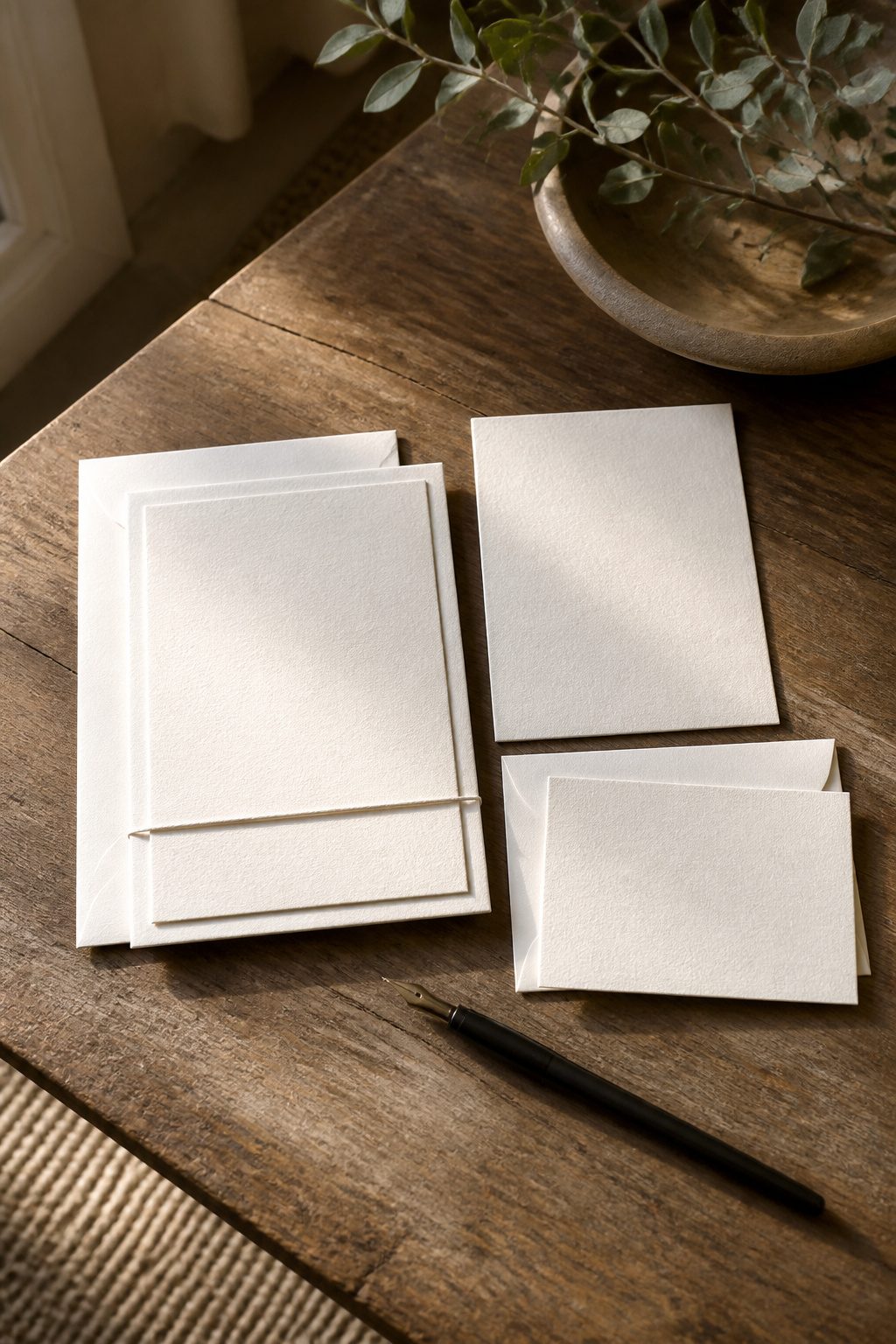
Clean invitations set the tone before anyone arrives. Letterpress on cotton paper remains the gold standard; the slight indentation where the plate meets the fiber gives guests something to run a thumb across. That tactile weight signals intention without shouting it.
If the budget does not stretch to letterpress, a digital print with generous white space achieves the same quiet confidence. The key is restraint in the suite itself: three pieces total. An invitation card, one details insert, and a reply card. Anything beyond that starts to clutter the mailbox and contradict the message.
Typography matters more when illustration is stripped away. Simple, well-spaced fonts carry the whole design. Geo Sans Light, Raleway, or Clemente each read as modern without trying too hard. Dates spelled out in full look more considered than numerals, and the negative space around the text does more work than any border could.
For digital delivery, a single QR code on a clean background links to the full schedule without adding paper. The same three-piece rule applies to the information architecture: what, when, and how to respond. Everything else is noise.

Package Contains - 3 packs of sage green beige tissue pom pom heart garland banner, Each string is 6.57 feet with 4 pcs tissue flowers and 5pcs 3d love heart, Total is 19.7 feet with 12 pcs tissue flowers and 15pcs 3d love heart.Meeting daily general needs.
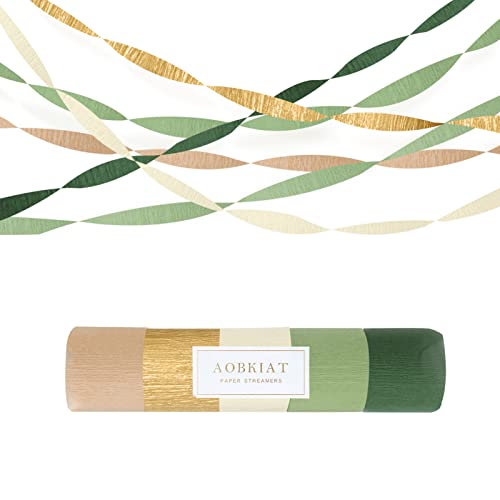
COLOR - Our crepe paper floats with olive green, grass green, khaki, white and gold, and you can match different colors of paper together for a better display.

Versatile & Size Set: Olive Sage Green Tissue Paper Poms offers a range of colors and sizes to suit your decor needs. Includes 15 pom poms: beige (2 x 7.8 inches), brown (2 x 9.8 inches, 2 x 7.8 inches), sage green (3 x 9.8 inches, 2 x 7.8 inches), olive green (2 x 9.8 inches, 2 x 7.8 inches). Ideal for layered pastel party decorations or creating a serene neutral palette.
7. Meaningful Activities
The constraint of a 30-minute ceremony maximum forces choices that guests actually remember. Every reading, song, or ritual has to earn its place, which means the ones that survive tend to be the ones that matter.
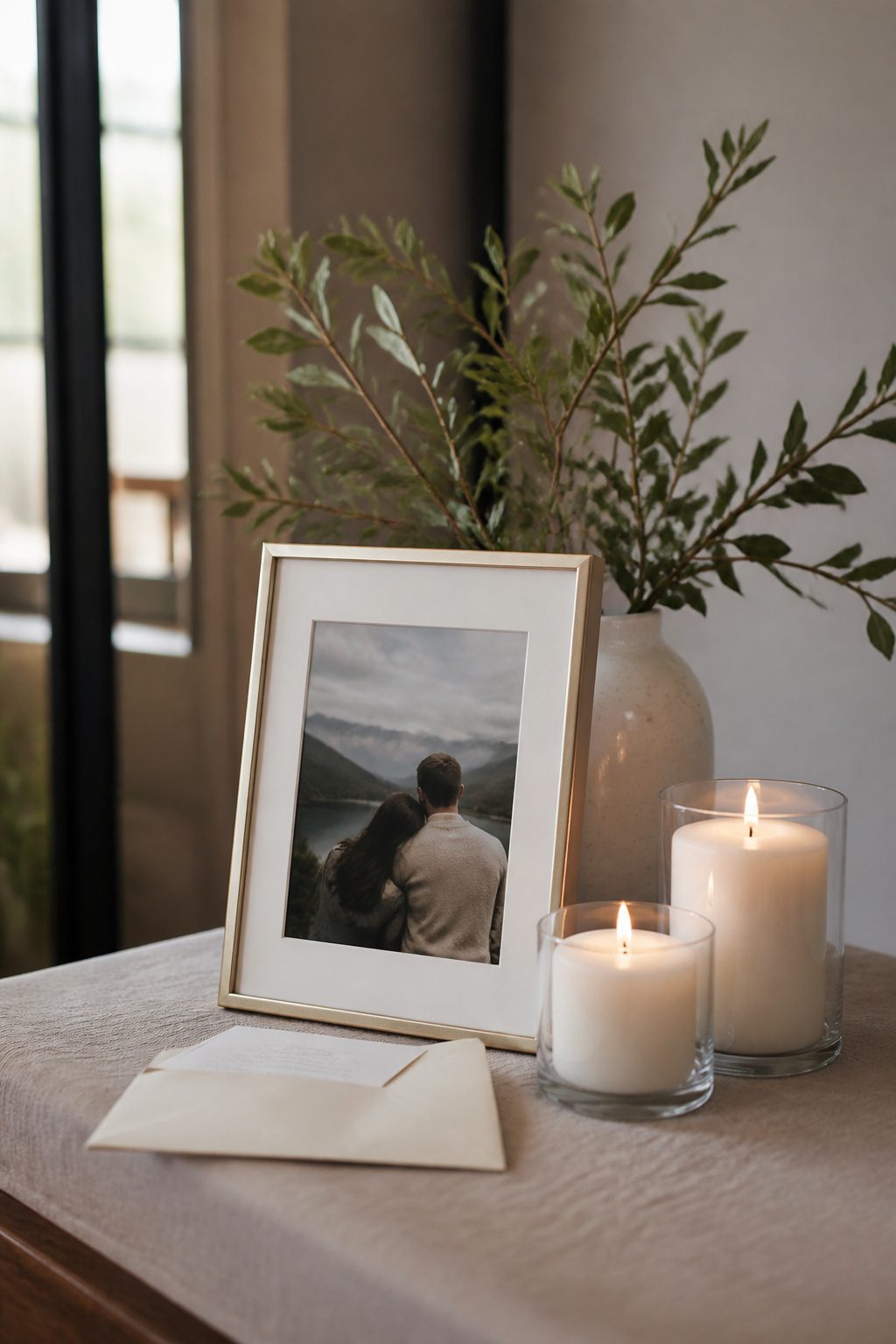
A single photograph on the welcome table, a handwritten note tucked inside the invitation, the appetizer from your first date passed during cocktail hour: these land harder when they are not competing with a dozen other personalized touches. The warmth comes from specificity, not volume.
I have seen couples try to compress a full Catholic liturgy into a minimalist frame and watched the energy leak out of the room after minute forty. The same elements that feel sacred at twenty minutes feel indulgent at fifty. Guests check their phones. The meaning drains away.
Build in a 30–40 minute photography window between ceremony and reception. That pause lets the moment settle, gives you portraits in the venue’s best light, and keeps the day from feeling rushed. A reception running 6:30 PM to 11:00 PM for fifty guests needs no extension into early morning; the intimacy carries the evening.

Standard Size & Bulk Value Pack: This package comes with 12 pieces of 16oz clear mason jar vases, measured 3" x 5" each. Adopted classic embossed vintage glass texture and matched with natural jute twine, the bulk quantity allows you to arrange unified table layouts easily. Great for batch decoration on wedding receptions, bridal showers and baby showers to build consistent rustic styling.

Minimalist Modern Aesthetic: Our sleek tall cylinder vases create an photo worthy look that instantly elevates your tabletops and everyday home decor styling

Aesthetic Design: This wooden wedding lantern features an artificial eucalyptus wreath and LED candles for a warm, romantic glow. Crafted from a carbonized finish with distressed white painting, it is great for weddings, aisles, and table settings
What Minimalist Budgets Actually Look Like
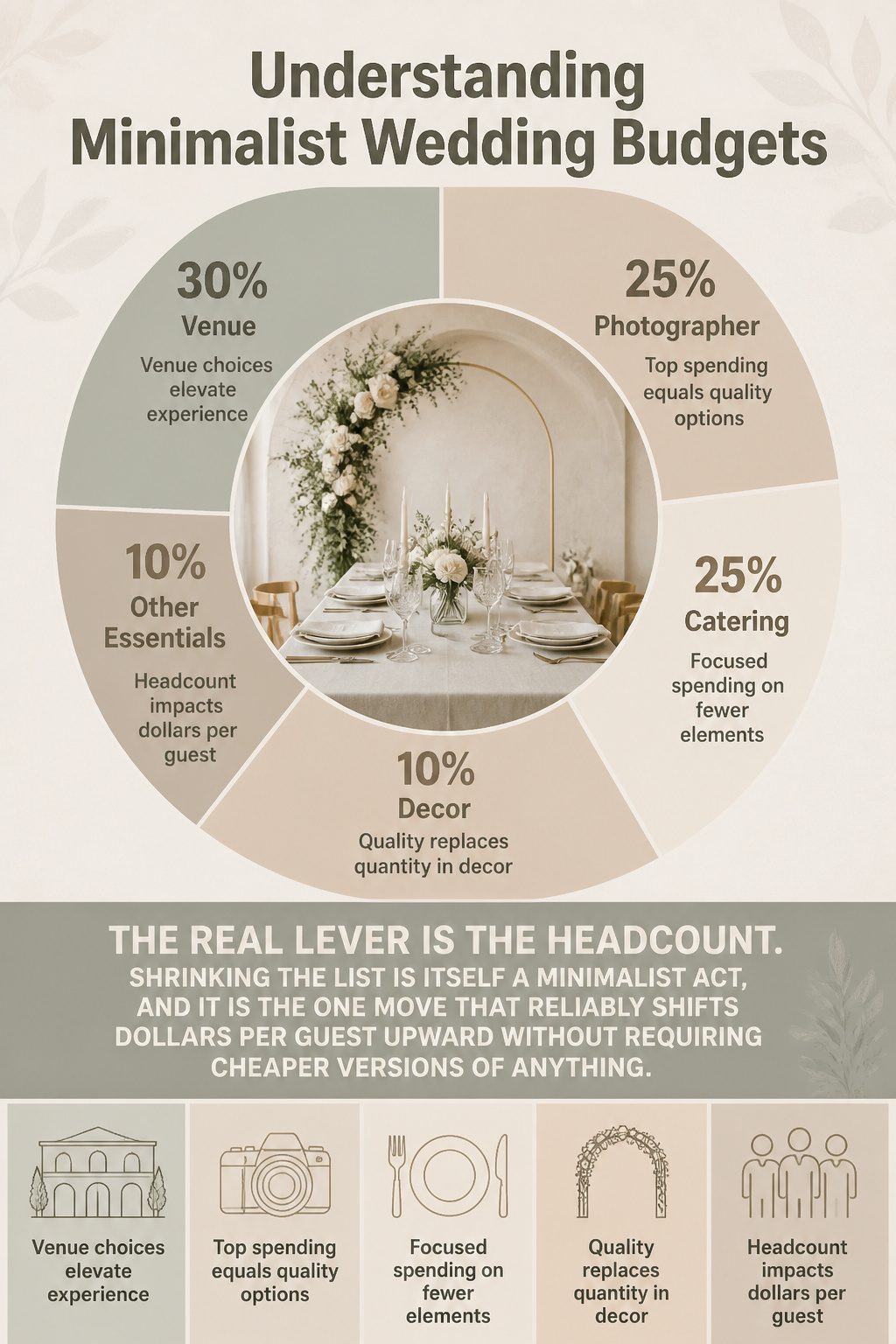
The first thing that surprised me, reading budget breakdowns from couples who went minimalist, was how many spent roughly what a traditional wedding costs. They just spent it on six things instead of twenty. A 60-person guest list lets the same pool of money cover a better venue, an editorial photographer, and a tasting-menu dinner that a 150-person buffet would have swallowed whole.
Quality over quantity is not a discount code. Letterpress on cotton stock, one sculptural floral arch in lieu of bulk centerpieces, a space whose architecture does the decorating: each choice costs more per unit because it has to carry the whole visual weight. The savings come from what you eliminate, not from what you downgrade. Candles, linens, and a single rental arch replace the decor pile, and that restraint is the point.
The real lever is the headcount. Shrinking the list is itself a minimalist act, and it is the one move that reliably shifts dollars per guest upward without requiring cheaper versions of anything.

ELEGANT STATIONERY SET WITH TIMELESS DESIGN: Minted's Hydrangea Love Stationery Cards offer a sophisticated touch to your personal correspondence, featuring exclusive designs beautifully printed on quality luxe paper. The soft and delicate hydrangea motif, combined with a classic color palette, adds an air of refined elegance, making these cards perfect for creating a lasting impression with every note you send.

Our 5x7 blank cards with envelopes are made from thick 230 GSM sturdy cardstock paper, ensuring excellent print quality and durability. Perfect for creating professional-looking office stationery and holiday cards.

ELEGANT STATIONERY SET WITH TIMELESS DESIGN: Minted's Bow Stationery Cards bring a touch of sophistication to your personal correspondence, featuring exclusive designs expertly printed on quality luxe paper. The charming bow motif, paired with a classic and graceful red color palette, adds a refined sense of elegance, making these cards ideal for leaving a lasting impression with every note you send.
Sustainability in Minimalist Weddings
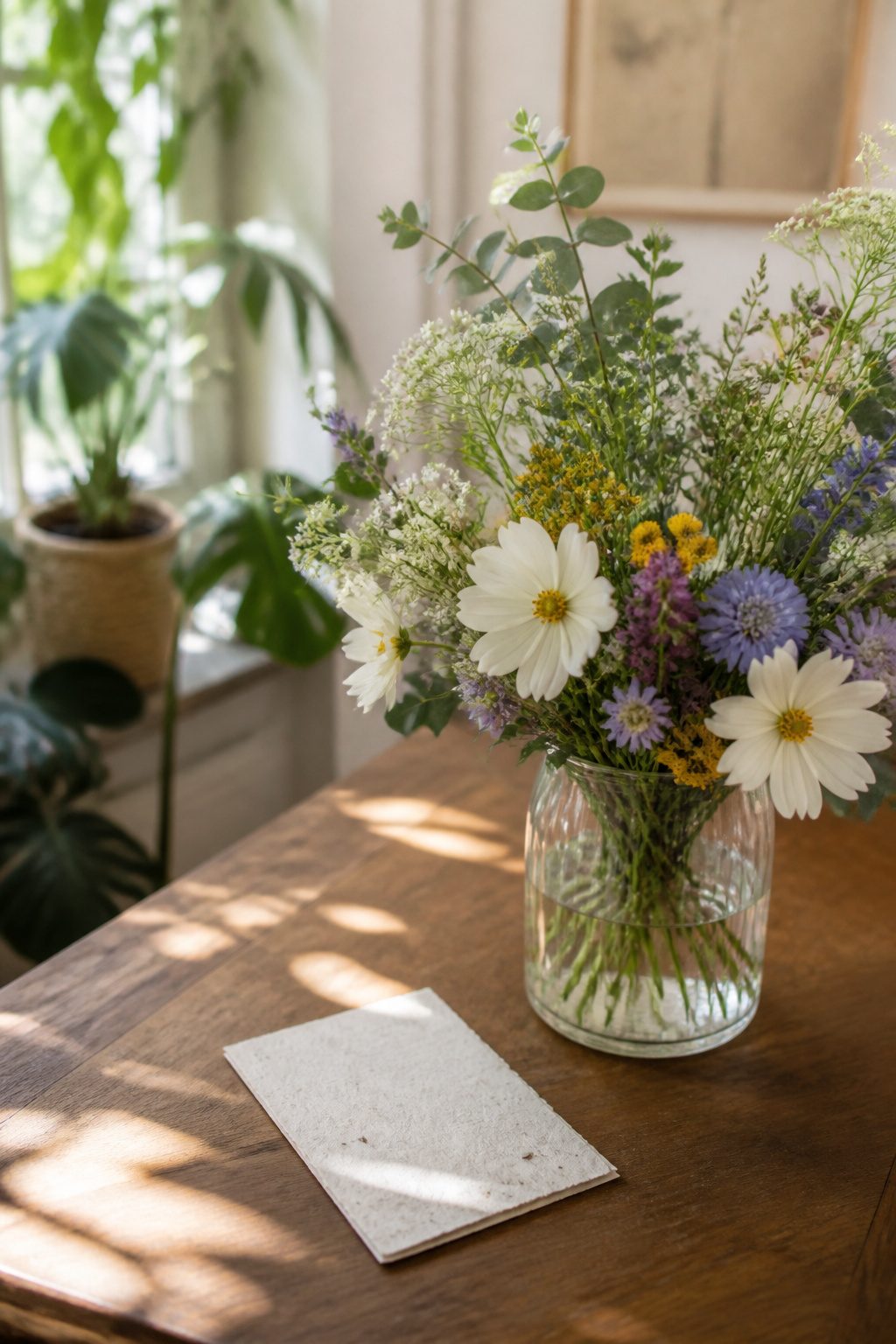
A minimalist wedding already runs lean by instinct, and that instinct happens to cut waste sharply. Fewer guests mean less uneaten food and a lower carbon footprint per chair. Curated floral arrangements replace the bulk orders that end up in dumpsters by Monday morning.
Local flowers stretch that advantage further. Seasonal blooms grown within driving distance skip the refrigerated flights from South America, and they tend to cost less because you are not paying for jet fuel disguised as a stem count. The arrangements look fresher too, because they were cut days ago, not weeks.
Seed paper invitations carry the same logic into stationery. Guests plant the card, water it, and wildflowers or herbs grow from the pulp. The object transforms instead of getting tossed. One supplier builds a tree donation into every order, which makes the environmental story easy to explain to relatives who asked why you skipped the foil-stamped suite.
Digital save-the-dates handle the rest of the paper load. The physical invitation stays reserved for the moment when touch actually matters, and the seed paper gives that moment a second life in the garden.

3.5x11 Placecards: This table place card measures 7 x 11 inches unfolded and 3.5 x 11 inches folded, and is made from 80 lb heavyweight cream cardstock; Each pack includes 100 cards, providing a sturdy and professional appearance, and the cardstock is made of FSC-certified paper
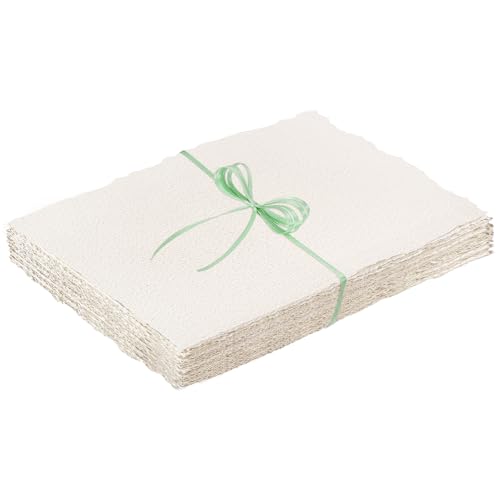
【What You Will Receive】You will receive 50 pieces of watercolor paper bulk, which is enough for your daily use and replacement, can meet your various painting needs, and can also be shared with your kids, friends and family.
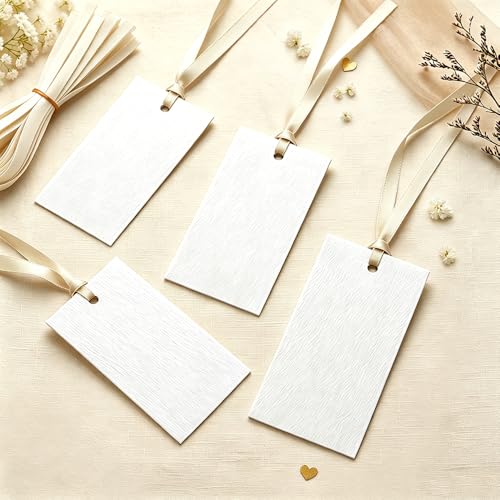
[50Pcs Name Place Cards with Ivory White Ribbon] - Package includes 50pcs blank name place cards 3.5x2 inches and 50pcs ivory white ribbons 0.12x11.8inches, each paper tag comes with a ivory white ribbon for quick hanging, adding a classic and elegant touch, ideal for wedding table settings, banquets and party events.
DIY Elements That Stay Minimal
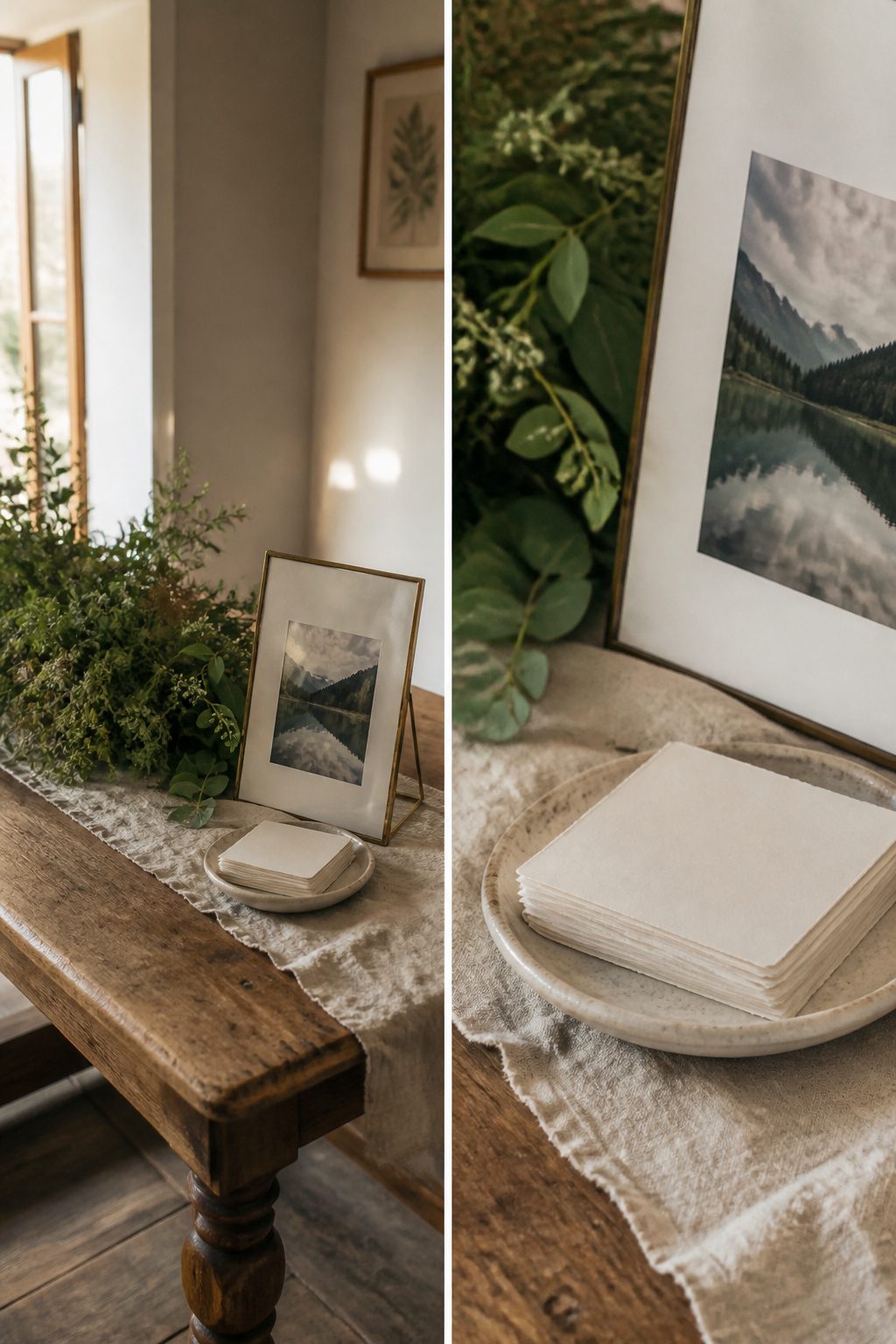
A handwritten note tucked inside each invitation carries more weight than a printed insert ever could. The same ink, the same paper, but the slight irregularity of actual handwriting signals that someone sat down and thought about this guest specifically. At the welcome table, one photograph does the work of a dozen: a single framed image from a trip or an ordinary afternoon, placed where guests pause, gives them something to lean into rather than scroll past.
The ceremony program offers another opening. A short poem or a line from a song you both return to, printed in a clean typeface with generous margins, fills space emotionally without filling it visually. The constraint forces the choice to matter.
Meaning comes from context, not volume. The appetizer you shared on your first date, served as one of several passed bites, lands harder than any generic luxury item because the story travels with it. Guests do not need the whole timeline; they need one true detail to hold onto.
What I leave out matters as much as what I include. A welcome table with the single photograph and a small stack of handwritten place cards feels finished. Add a guestbook, a framed seating chart, a dish of favors, and the eye starts hunting for somewhere to rest. The mistake is thinking minimal means empty. It means every object has to earn its square footage.

Complete 6 Sets wedding Table Decorations: this curated set includes 1 sage green cheesecloth table runner (118.11" x 31.5"), 6 cotton linen napkins (15.75" x 15.75"), 6 round woven natural grass placemats (11.81" diameter), and 6 wooden bead napkin rings with tassel accents; Every piece is designed to work together straight out of the box, saving you hours of hunting for matching pieces separately and giving your table a professionally styled, cohesive look from the very first setup

【Cheesecloth Table Runner】 You will get 1 piece, 35" Wx120" L(10ft)length terracotta thanksgiving table runner. The boho fall table runner are designed with textured gauze fabric, which is not easy to fade, does not shrink, has elasticity, and its length is enough to span a large table.

Complete Set and Effortless Coordination: this Sage Green Boho Table Runner Set Includes Everything You Need for a Cohesive Table Setting: 1 gauze cheese cloth runner, 6 square napkins, 6 placemats, and 6 D-ring napkin holders; The 19-piece sage green collection saves you time on mixing and matching, providing an instantly stylish foundation for your dining table decor
When to Hire a Minimalist Wedding Planner
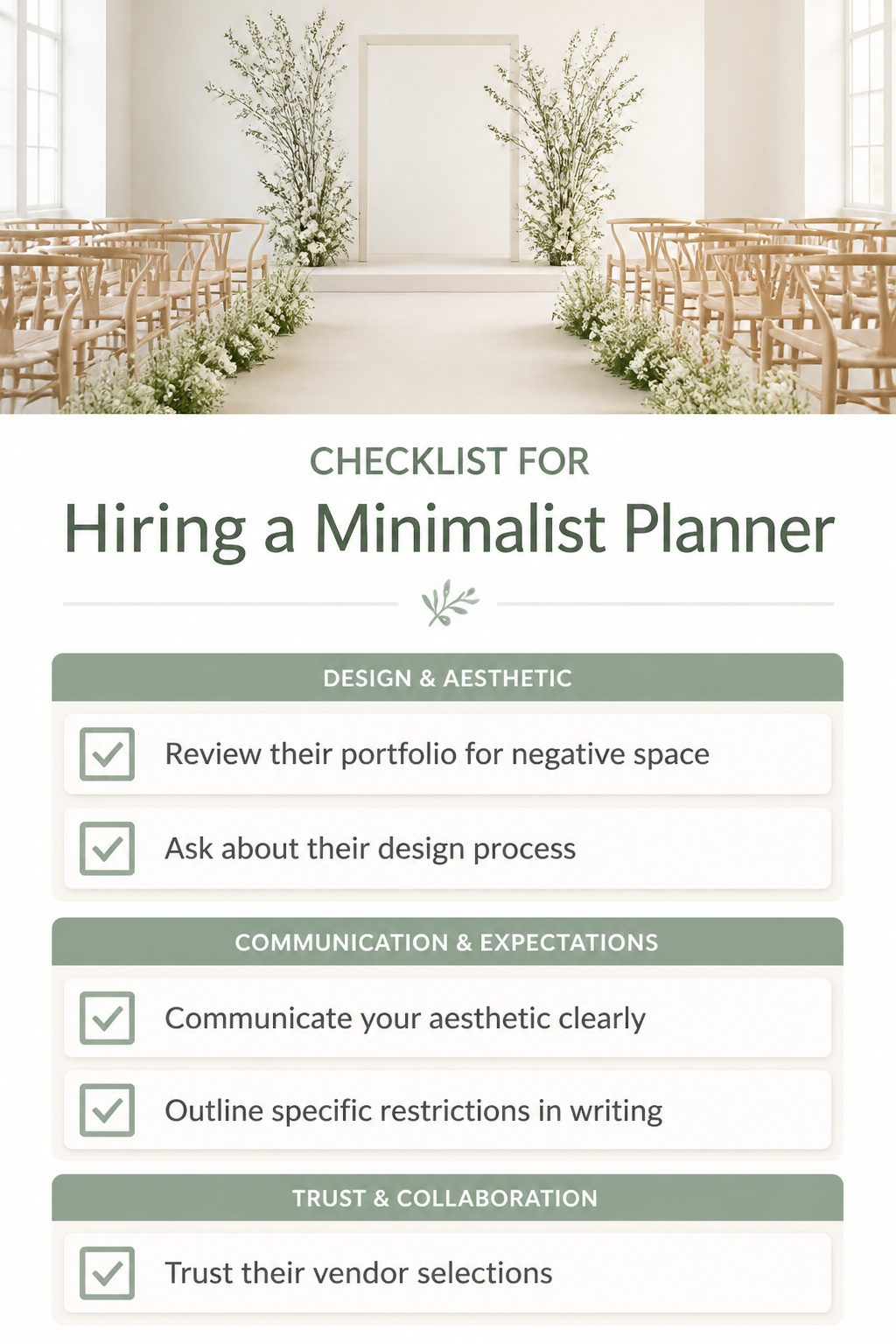
A planner who specializes in intentional design rather than maximalist full-service production will save you from the "it looks too plain" mistake that sinks so many minimalist weddings. Ask to see their portfolio for negative space, not just empty space: clean lines, restrained color palettes, and evidence that they edited down rather than built up.
The aesthetic is genuinely hard to execute well because restraint requires confidence. When you interview planners, describe the feeling you want (expensive, thoughtful, quiet) rather than handing them a Pinterest board of things to copy. Trust their selection process for vendors who understand that every choice must count.
I learned this the hard way at a friend’s wedding where the planner kept "adding warmth" until the minimalist brief disappeared entirely. The couple had not named the aesthetic aloud in the contract, and by the time they saw the linen swatches with watercolor flourishes, the budget for revisions was gone. Spell out the restraint you want, put it in writing, and give them permission to push back on your own second-guessing.
Common Minimalist Mistakes
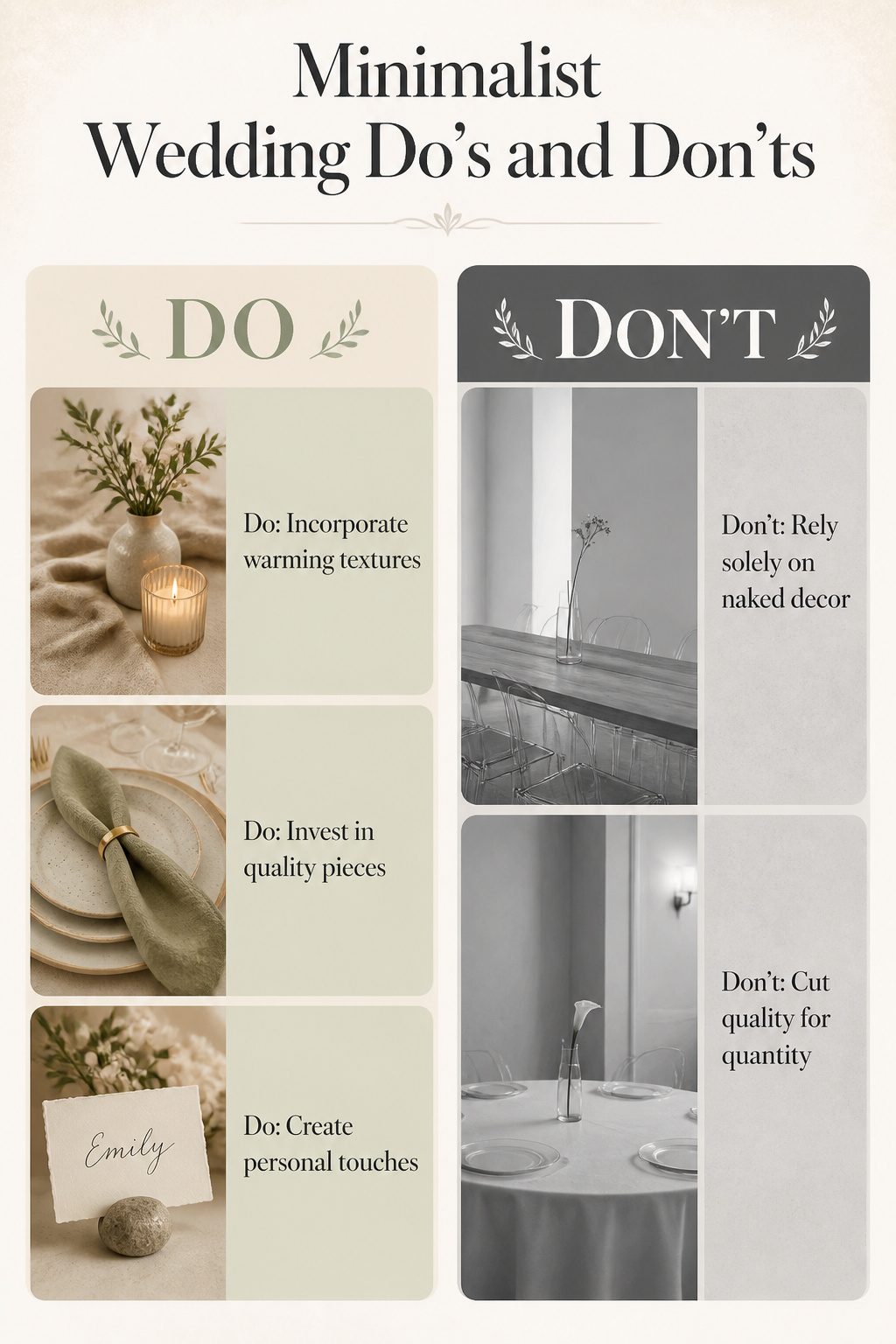
The first thing I notice when I walk into a reception that has gone wrong is the silence. Not the peaceful kind. The hollow kind that happens when every table is bare wood, every wall is white, and no one quite knows where to look. Cold atmosphere is the mistake that shows up in photographs before anything else. I have shot weddings where the couple achieved perfect emptiness: single stems in crystal vases, unadorned chairs, translucent plates over white chargers. The images look intentional in the portfolio and lonely in the album, because the camera sees what the guests felt. Texture matters more than color in a minimalist frame, but texture without warmth just reads as institutional. Dried leaves scattered down an aisle can feel poetic or forgotten, and the difference is usually whether anyone greeted those guests at the door.
Minimalist budgets often make this worse, not better. Couples hear "fewer elements" and spend less on each one, when the whole logic of restraint is to spend the same amount on much less. The venue, the food, the photographer, the linens with actual grain or sequined weight: these are where the money goes. Strip the decor and strip the quality together, and you have not built a minimalist wedding. You have built a sparse one. The guests do not know the terminology. They only know whether they felt invited into something or observed from inside a concept.
Flowers That Work and Flowers That Fight the Style
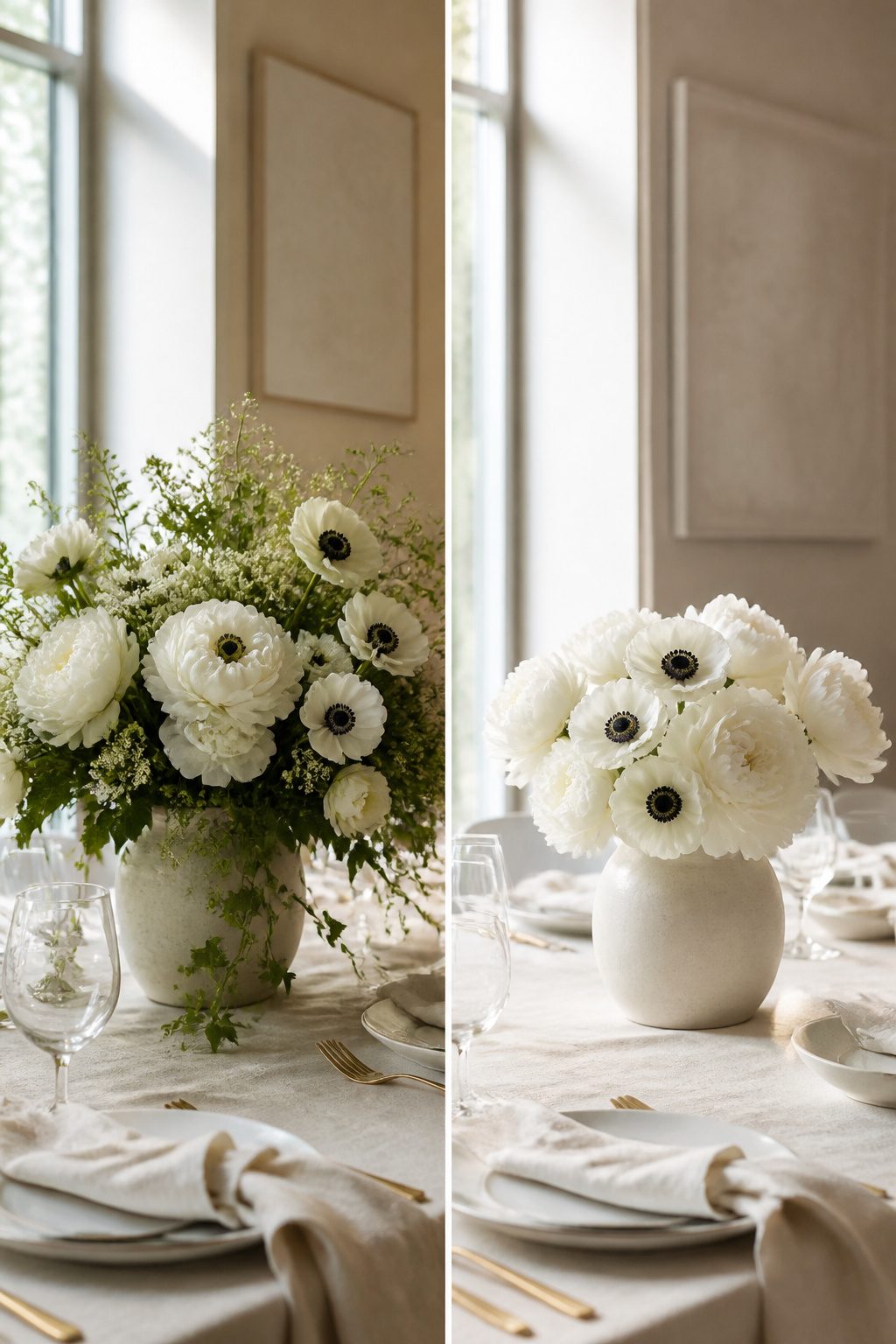
Single-variety arrangements in white, cream, or blush carry the minimalist look without trying too hard. White ranunculus, garden roses, peonies, anemones, and white dahlias each have enough structure to stand alone. A tall vessel filled entirely with one of these, or a low bowl of cream garden roses, hits harder than mixed arrangements because the uniformity itself becomes the design. Dried grasses or pampas work the same way; the texture does the job so the palette can stay quiet.
What fights the style is mixed wildflower arrangements. They read boho, not minimalist, and the variety undoes the restraint you’re after. If you want to step away from blooms entirely, single-stem bouquets and centerpieces keep the line clean, or skip flowers for graceful greenery like ivy strands or leafy table runners.
Seasonal availability shapes what you can source locally and what you’ll pay to bring in. Dahlias peak late summer into fall. Peonies run spring to early summer. Ranunculus and anemones favor cooler months. Garden roses stretch longer but cost more out of season. Dried options solve the calendar problem entirely. A local florist who grows or sources nearby can tell you which of these overlaps with your date, and that conversation usually saves enough to matter against a tight budget.
Why Warmth Still Lives in Less
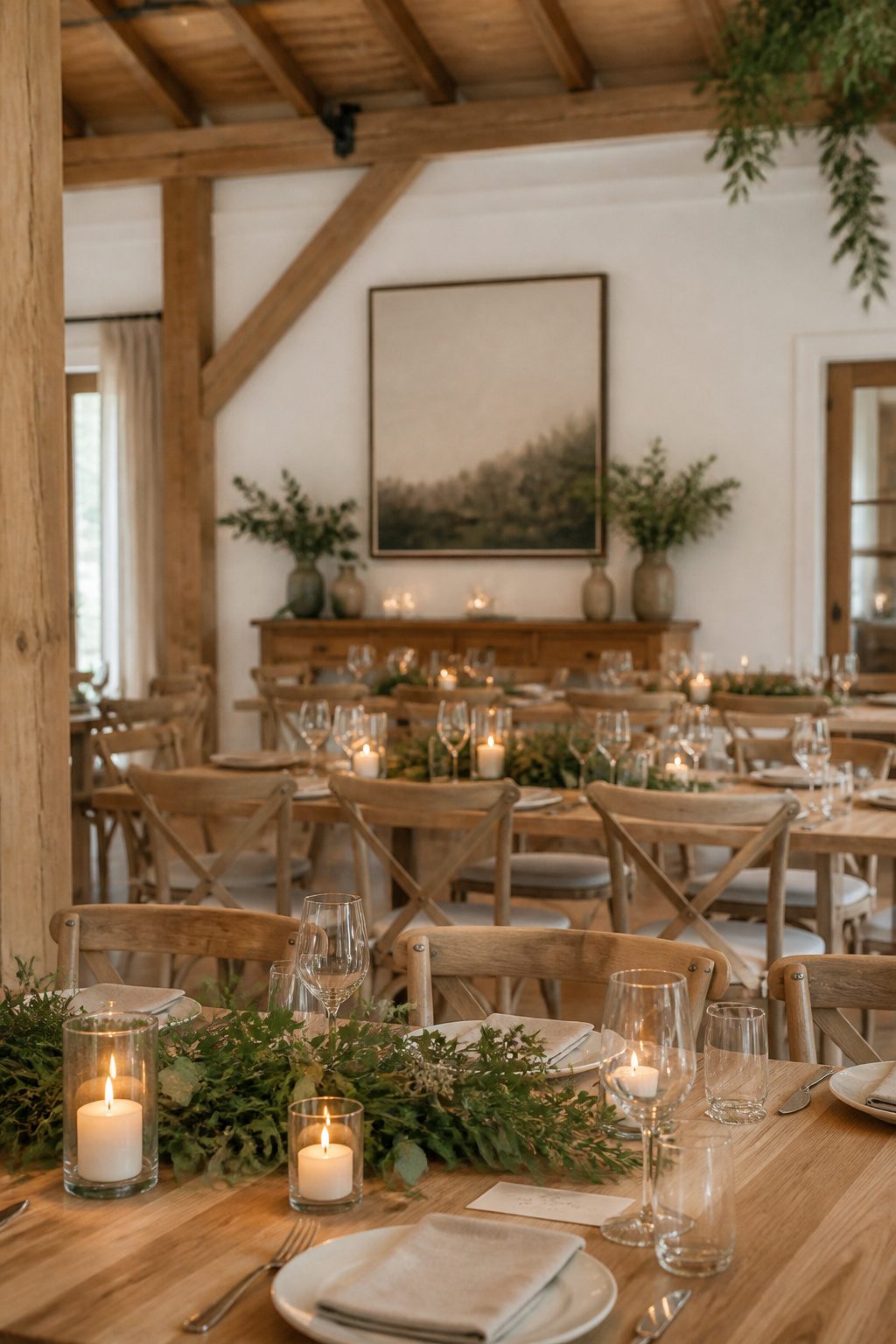
The first thing that drops away in a minimalist wedding is the visual noise: no chair sashes, no layered linens, no favors nobody asked for. What stays has to carry more weight. A single photograph on the welcome table, a handwritten note tucked inside each invitation, a poem read aloud during the ceremony. These touches land harder precisely because the room around them is quiet.
Constraint forces you to choose. With a hundred tables you might scatter framed photos everywhere and call it personal; with three, you pick the one image that matters and people actually stop to look at it. The same logic holds for the guest list. Fewer guests means less of almost everything else, food and drinks, tables and chairs, centerpieces, and it buys you something better: quality face time with the people you actually wanted there.
The risk is stopping too soon, thinking bare equals done. A minimalist wedding done right is not boring; it is memorable because every element left in the room earned its place. Readings from a favorite poem, a first-date song during the first dance, the appetizer you shared that night as a passed bite. These are the choices that keep the day from feeling like a showroom and make it feel like yours.
Frequently Asked Questions
How much does a minimalist wedding cost?
A minimalist wedding is not automatically cheaper than a traditional one. Couples often spend roughly the same total amount, but they concentrate it on six elements instead of twenty. The savings come from what you eliminate, not from downgrading what remains. Quality per guest rises when the headcount drops, since the same pool of money covers a better venue, editorial photography, and a tasting-menu dinner that a 150-person buffet would have consumed.
What type of wedding invitations suit a minimalist style?
Letterpress on cotton paper remains the gold standard for minimalist invitations. The slight indentation where the plate meets the fiber gives guests a tactile experience that signals intention. If letterpress exceeds the budget, digital print with generous white space and simple, well-spaced fonts like Geo Sans Light or Raleway achieves the same quiet confidence. Limit the suite to three pieces: an invitation card, one details insert, and a reply card.
Can a minimalist wedding still feel warm and personal?
Yes, and the constraint of minimalism actually forces the personal touches to land harder. A single photograph on the welcome table, a handwritten note inside each invitation, or the appetizer from your first date passed during cocktail hour carries more weight when it is not competing with a dozen other personalized details. The risk is stopping too soon: bare does not equal done. Every remaining element must earn its place, but those that do become memorable precisely because the room around them is quiet.
What flowers work best for a minimalist wedding?
Single-variety arrangements in white, cream, or blush carry the look without trying too hard. White ranunculus, garden roses, peonies, anemones, and white dahlias each have enough structure to stand alone. A tall vessel filled entirely with one variety, or a low bowl of cream garden roses, hits harder than mixed arrangements because the uniformity itself becomes the design. Dried grasses or pampas work the same way, with texture doing the job so the palette stays quiet. Skip mixed wildflower arrangements; the boho looseness reads as clutter against a minimalist frame.
How many guests work for a minimalist wedding?
A guest count between 50 and 80 people sits right where a minimalist wedding starts to feel curated rather than cramped. Below 30, the energy can thin out; above 120, you are managing a crowd whether you planned to or not. Fewer guests reshape the budget in ways that matter most on food and drink, and they open venues that cap out at 60 or 70, places too tight for a traditional reception but perfect for a long dinner where everyone hears the toasts.