A destination wedding in Spain can run from a modest villa weekend to a full castle buyout, and the deciding factor is whether your crowd wants to turn the trip into a shared vacation or keep it to a single day.
The venues that swallow the whole weekend, beds and all, kill the shuttle math and keep the party going past midnight.
Castell De Sant Marçal alone fits hundreds inside and more in the gardens, with someone who still holds the title living on site.
1. Historic Estates, Beach Resorts, Vineyards, and Luxury Villas
Spain hands you the full menu. Catalan masias sit between vineyard rows, Andalusian haciendas open onto tiled courtyards, and private island fincas let guests roll out of bed straight to the pool.
I like the ones that swallow the whole weekend: ceremony, reception, and beds for everyone who flew in.
That setup kills the shuttle math and keeps the party going past midnight, which in Spain means the party is just getting started.

Candle holders with tray:placed firmly on the desktop, which is not easy to move and slide, bring you nice decorative effect,candle tray holder

Baby Boy Baptism Outfit: Adorable cute and fashionbaby boy christening outfit, baby baptism outfit boy,baby boys cake smash clothes, wedding baptism outfits. 3Pcs little gentleman includes jumpsuit vest, suspenders shorts pants, bowtie, it’s great 1st 2nd gifts for newborn toddler infant babies

2. Historic Architecture, Gardens
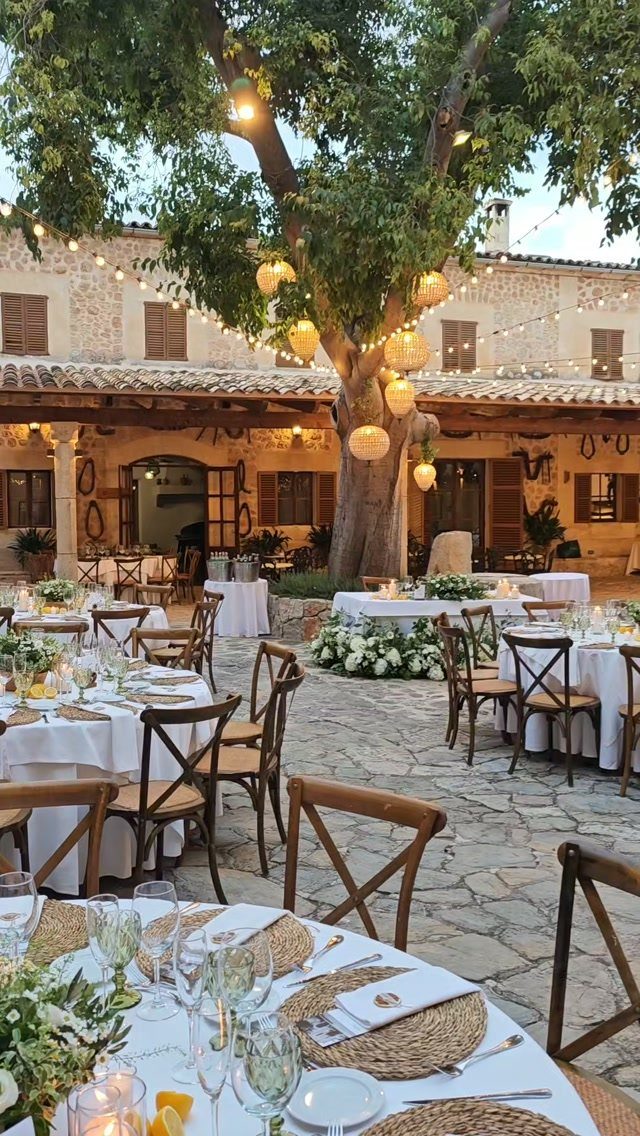
Stone walls that have watched centuries pass make guests slow down and look up.
What I notice about Spanish historic venues is how the gardens earn their keep: ceremony under the tree, cocktails on the lawn, dinner back in the courtyard where the lanterns hang.
Check whether the indoor spaces hold up if weather turns; a pretty garden is only half the venue.


Assemble Freely: Black 7.9 Feet High x 4.6 Feet Wide. The garden arch trellis is very easy to assemble and disassemble.

Sturdy and Durable Construction: Built to last, this arch is constructed from sturdy wood, ensuring stability and durability. Its robust design can withstand outdoor conditions, making it a reliable addition to any garden or event setup.
3. Castell De Sant Marçal
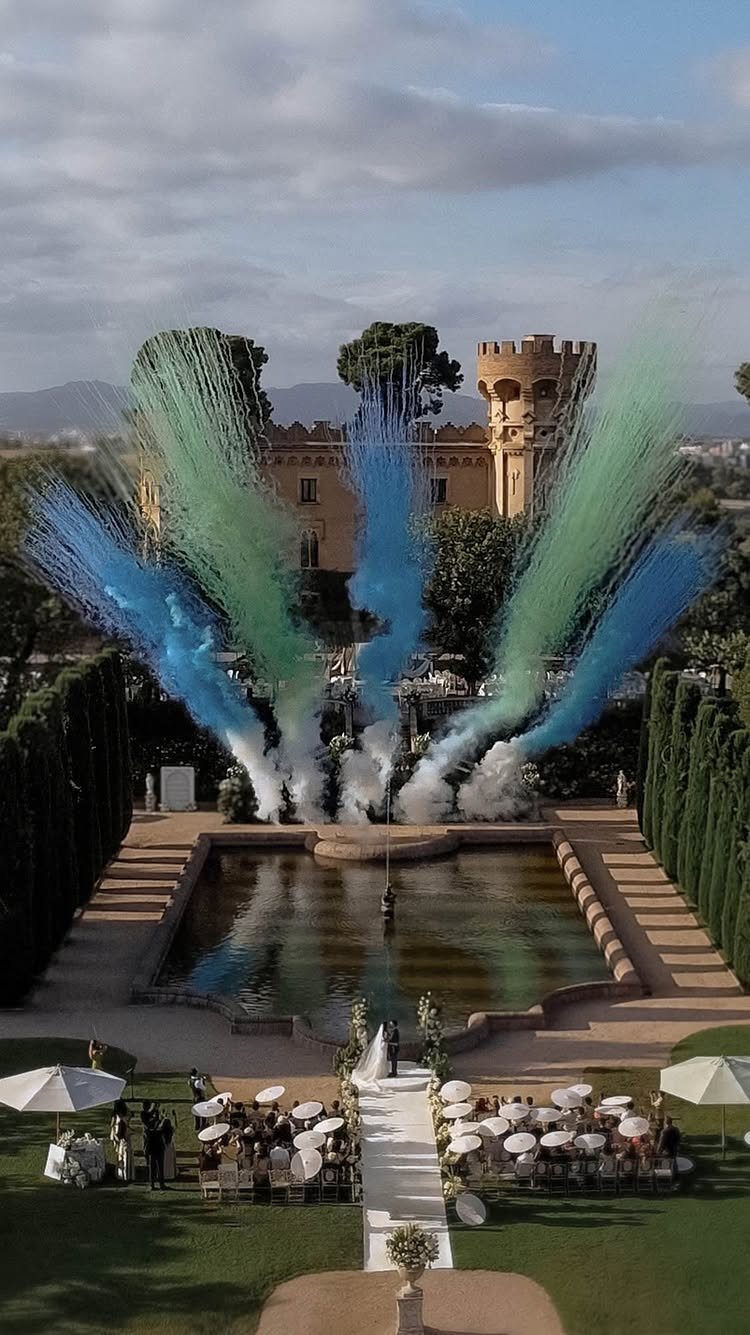
The stone at Castell De Sant Marçal has held up since the medieval period, and Barcelona sits close enough for easy airport runs.
The gardens alone fit 600, the interior holds 450, and someone with a title still lives there. That scale is the point: you are not renting a castle-themed venue, you are borrowing actual history.
Check which spaces you want to use at Castell De Sant Marçal; each tier carries its own price and the total shifts accordingly.
Castell De Sant Marçal can even bring in a live band or DJ if you want—that is an add-on, not standard, but it shows what the place can absorb.

Delicate Mini Lanterns: Hexagon Moroccan style candle lantern with 6 clear glass panels and use high quality bead to light up your table. Cute dimension(2.6"D x 4.7"H), candle lanterns equipped with flameless candles, no fumes, smell and fire, no fire hazards or burning risks, can be used anywhere

Sufficient Quantity: the set includes eight vintage white candle lanterns with large LED white porcelain pillar candles, which are realistic to create a vintage charm atmosphere, suitable for large events such as weddings, Christmas, etc

Elegant Wedding Decor Set: enhance your special day with our wedding aisle decoration set, complete with 8 shepherd hooks and 8 LED candle lanterns; Ideal for creating a romantic pathway or illuminating a celebration space with elegance and charm
4. Outdoor Weddings
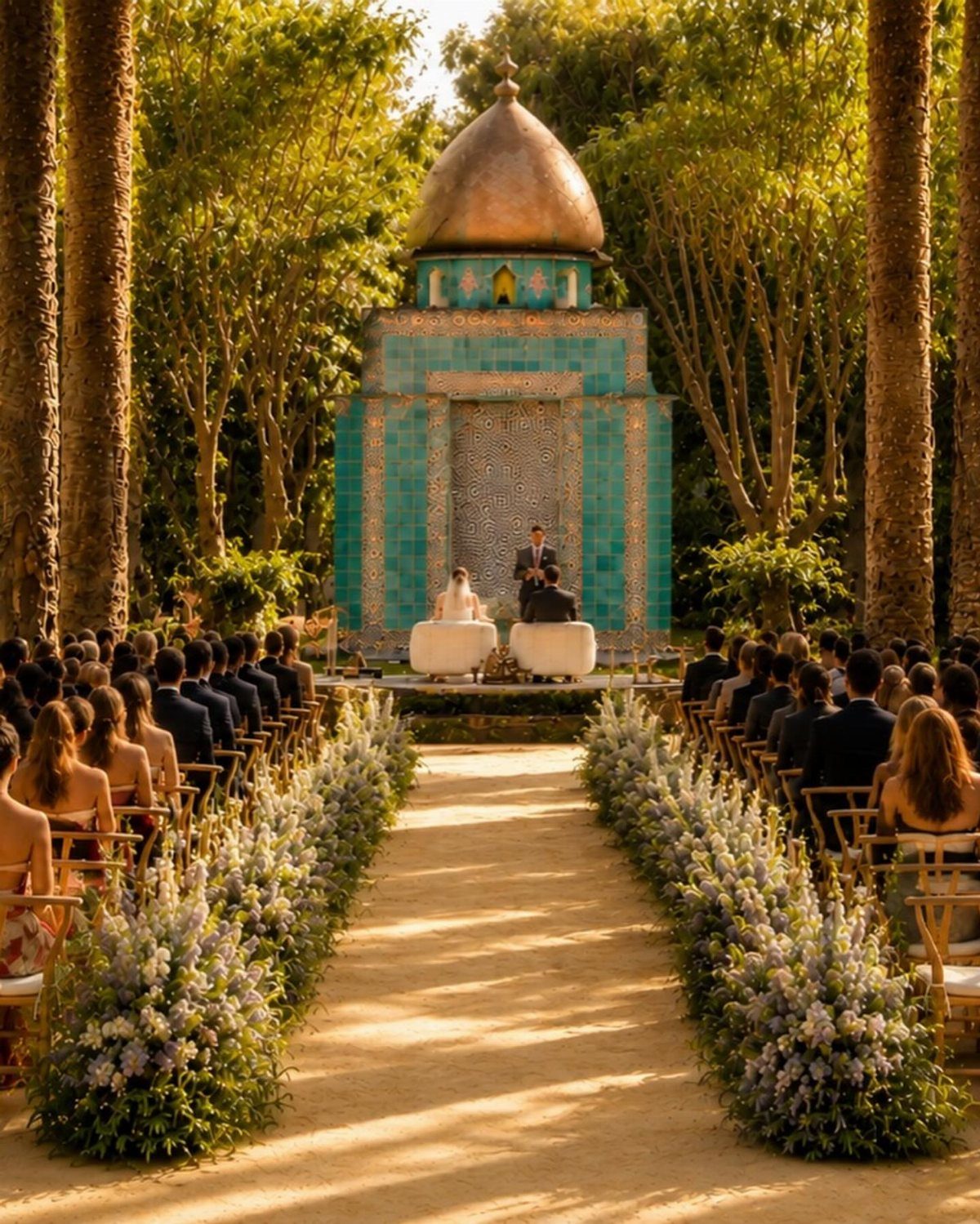
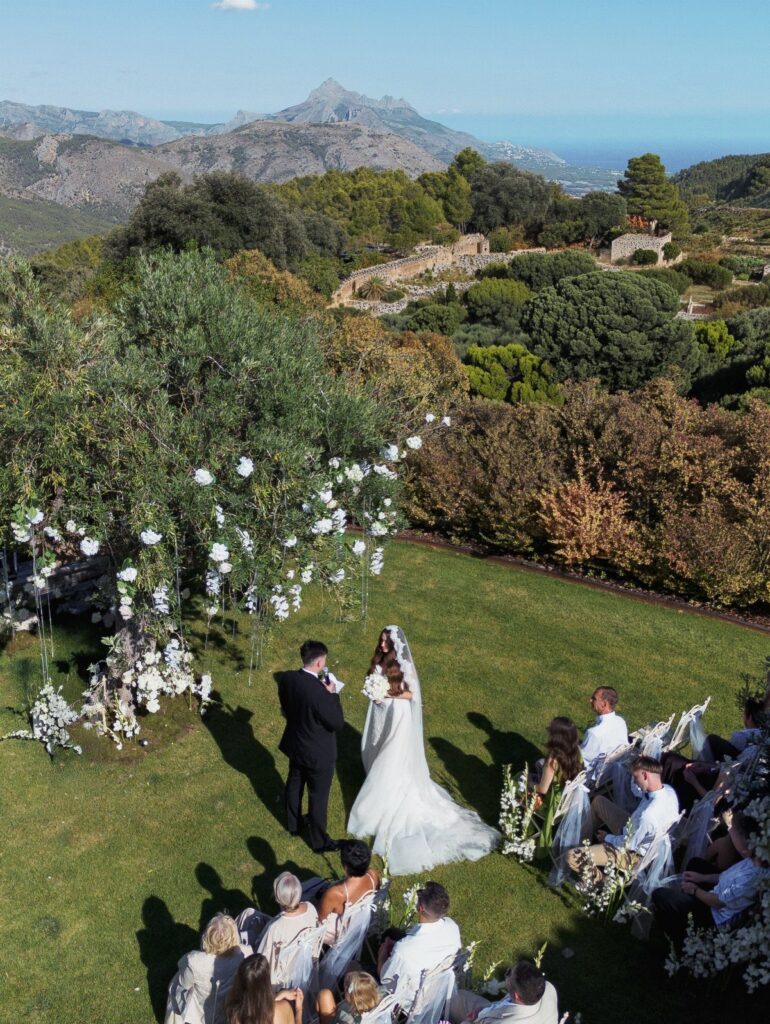
Spain’s outdoor season runs longer than most Americans expect.
I have seen ceremonies in February that felt like May, though August inland can punish. A tiled pavilion gives the eye somewhere to land, frames the couple without fighting the trees, and keeps the ceremony readable against all that green.
When you scout, stand where guests will sit and check what the sun does at your hour. Shade matters more than view for the people watching you say your vows.

Charming Wildflower Design – Add a touch of natural beauty to your event with these name cards for table setting. Featuring a hand-painted wildflower pattern, these place cards bring an elegant, floral look that complements weddings, garden parties, and rustic or boho-themed events.


5. La Baronia
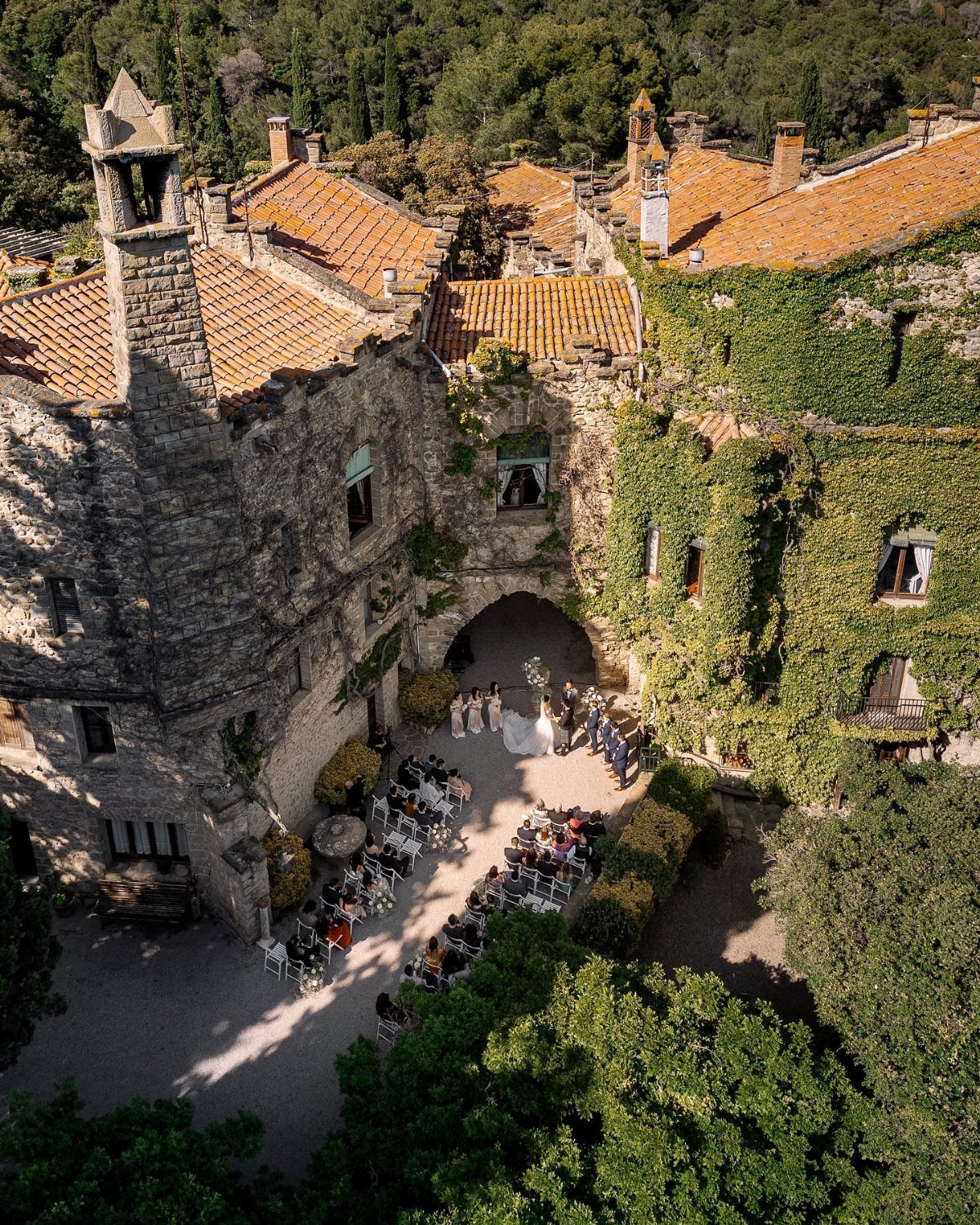
La Baronía sits north of Barcelona with the sea on one horizon and woods on all the others. Up to 300 guests, modest pricing for what it is.
I would check how the light falls in the courtyard at your ceremony time; stone walls reflect and they also shadow. The Mediterranean glare in the distance is real, not a filter.

【Specification】: Black & White Camera Shaped inflatable photo booth is made of wear-resistant 210D Oxford cloth; Its external size is 11.5x9.2x8.2ft(137.8x110.2x98.4 inches-L*W*H),Width noot include camera shot.

Mini Exquisite: the Ramadan lantern measures about 5.3 inches in height and 2.8 inches in diameter, small and bright, attractive enough as a table centerpiece or home decoration to draw people's attention; This Ramadan lantern is hexagonal, has transparent glass on the sides and a top hanging ring; When you hang it on a high place, the hollow pattern at the top can also project a warm yellow light and shadow pattern to enhance the home atmosphere
6. Flamenco Dancing
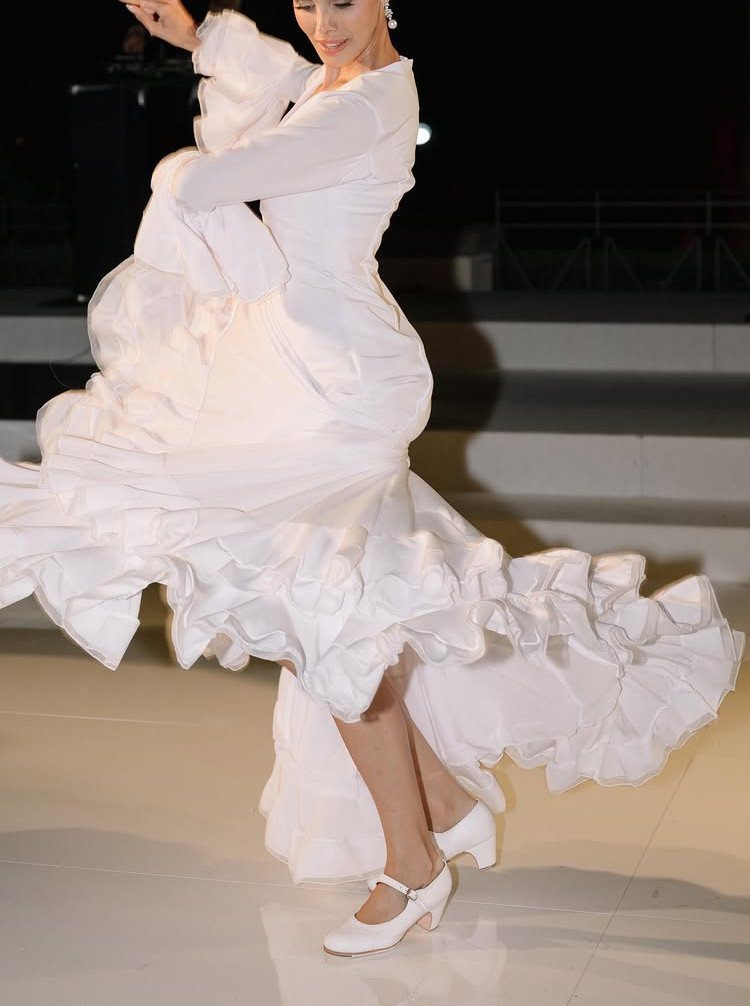
Hiring a flamenco dancer is not the same as booking entertainment; it is importing a discipline that expects to lead the room.
The white ruffled gown is traditional, the movement is not optional, and the floor matters: outdoor stage, hard surface, no grass.
One set, maybe two, placed after dinner when guests have wine in them and nowhere to be. Ask whether the dancer travels with a guitarist or needs one provided; that detail changes your booking.

Sturdy and Durable Construction: Built to last, this arch is constructed from sturdy wood, ensuring stability and durability. Its robust design can withstand outdoor conditions, making it a reliable addition to any garden or event setup.

[Assemble Freely]: Cream white 8.2 Feet High x 6.2 Feet Wide. The garden arch trellis is very easy to assemble and disassemble.

🎈Exquisite Double-sided Printed : The wedding directional signs are exquisite double sided printed, No matter which direction the guest comes from, it can guide the guest to the right direction.
7. Intimate Weddings
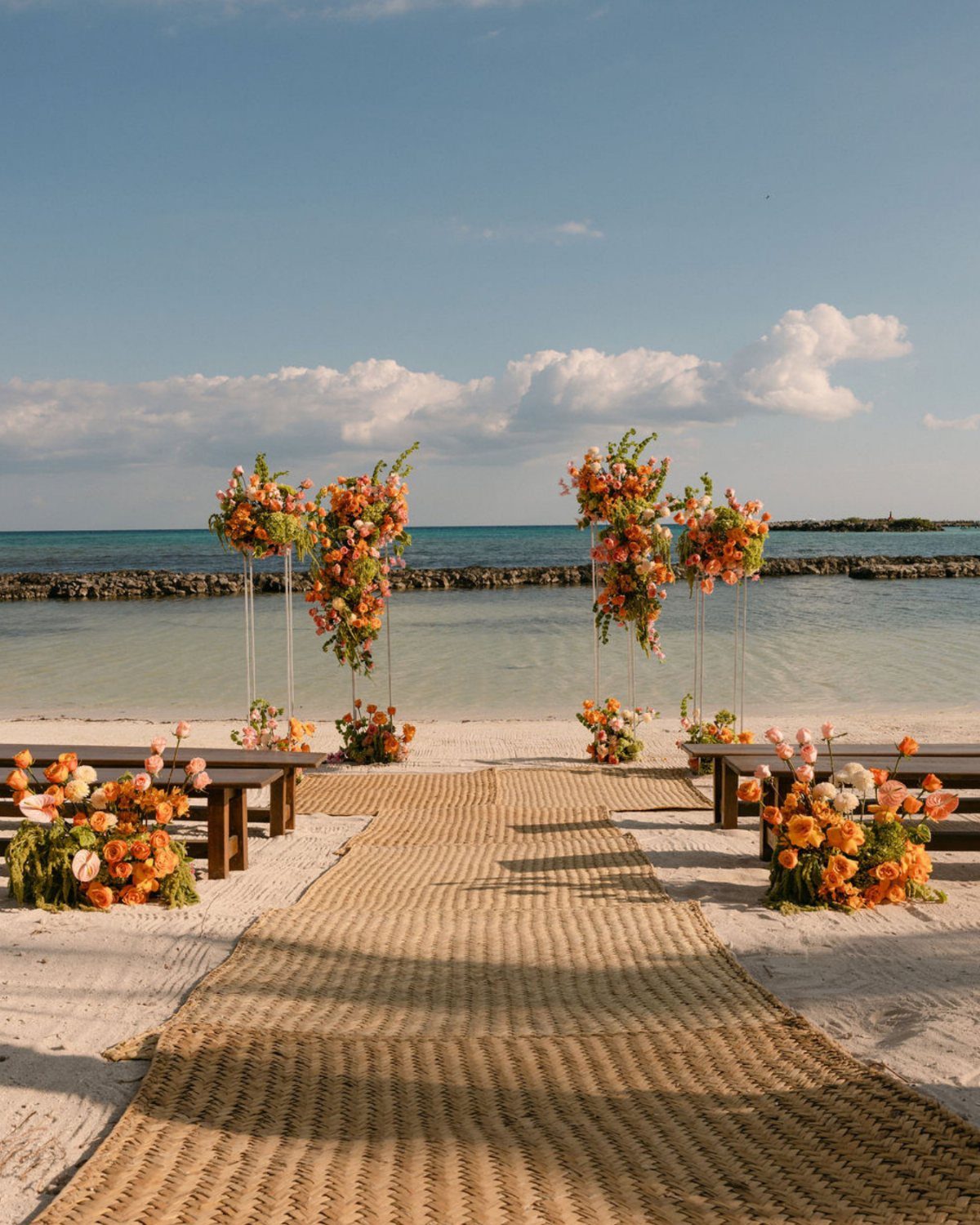
A guest list of 30 to 80 people opens doors that shut on larger parties. Hidden coves along the Costa Brava, wild gardens, private terraces: these spots do not need a crowd to feel full.
I would book a place that sleeps everyone on site. The money saved on shuttles and hotels covers the extra nights, and the weekend stretches out instead of compressing into a single day.
Ask what the minimum spend is.
Some venues price for 150 and let you shrink the head count; others built their business around small. The difference shows in how they handle dinner service, not just in the room rate.

Suitable for Every Theme Party: ideal for weddings, camping trips, western cowboy parties, Halloween gatherings, Christmas celebrations, and outdoor events; Add charming vintage details anywhere

Durable & Lightweight Construction: Made with shatterproof plastic (non-glass design), these mini lanterns for centerpieces measure 2.5 x 2.2 x 4.9 inches (6.3 x 5.5 x 12.3 cm) and weigh just 0.13 lbs each. Their compact size fits seamlessly on tables, shelves, or hanging hooks, while the lightweight build allows easy rearrangement. Mix colors to match themes—from minimalist white for modern spaces to festive red/orange for holidays like Christmas decorations or garden party decor.

Material:Made of water-proof paper.Each lantern comes with an individual tea light and pre-fixed with an adhesive pad to prevent lanterns get wet. 100% biodegradable
8. Formal Wedding Attire
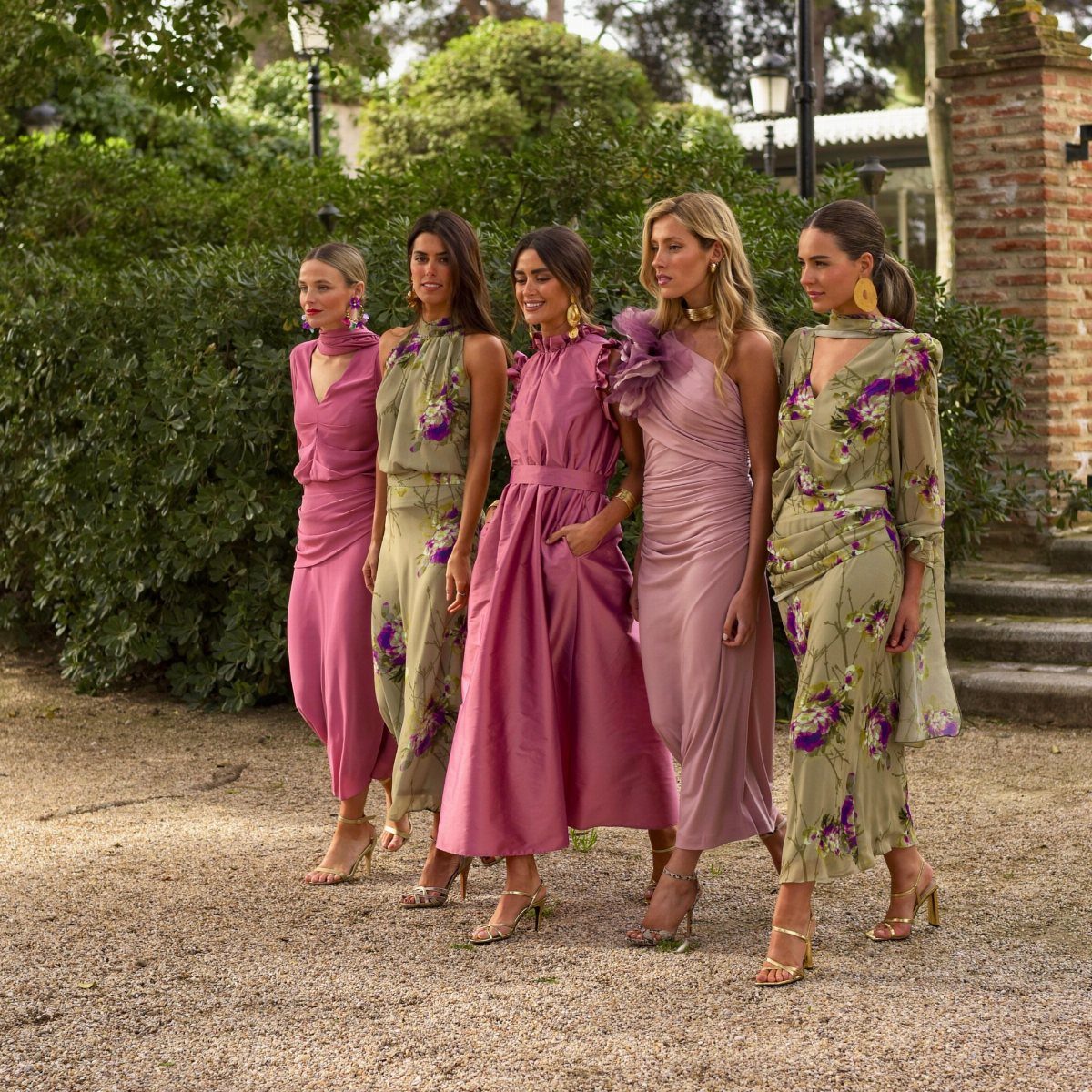
Spanish weddings run formal.
The invitation will say one thing; the venue says more. A hacienda courtyard or a Barcelona palace expects a level of dress that an American vineyard might not.
For women, a long dress in a solid or subtle print reads correctly; for men, a dark suit at minimum, a tuxedo if the hour is evening.
Olive and pink floral works at a formal wedding when the cut is ceremony-grade, not because the pattern reads casual.
Check the ground.
Gravel paths, cobblestones, and lawn between flagstones punish stilettos. Block heels or a second pair for cocktails save the night.

1. 25 PLACE CARDS PER SET Each package includes 25 decorative place cards, providing a simple way to organize guest seating and add a thoughtful finishing detail to wedding receptions, parties, banquets, dinners, and restaurant tables.

Complete Set for Rustic Wedding Seating: This wedding seating chart display set comes with 1 "Welcome" seating chart sticker, 30 blank wedding cards, 30 vintage wax seal stickers and 12(24 pieces) self-adhesive stickers, helping you build a delicate layout for outdoor wedding and reception.

Complete Set for Rustic Wedding Seating: This wedding seating chart display set comes with 1 "Welcome" seating chart sticker, 30 blank wedding cards, 30 vintage wax seal stickers and 12(24 pieces) self-adhesive stickers, helping you build a delicate layout for outdoor wedding and reception.
9. Custom Floral Arrangements
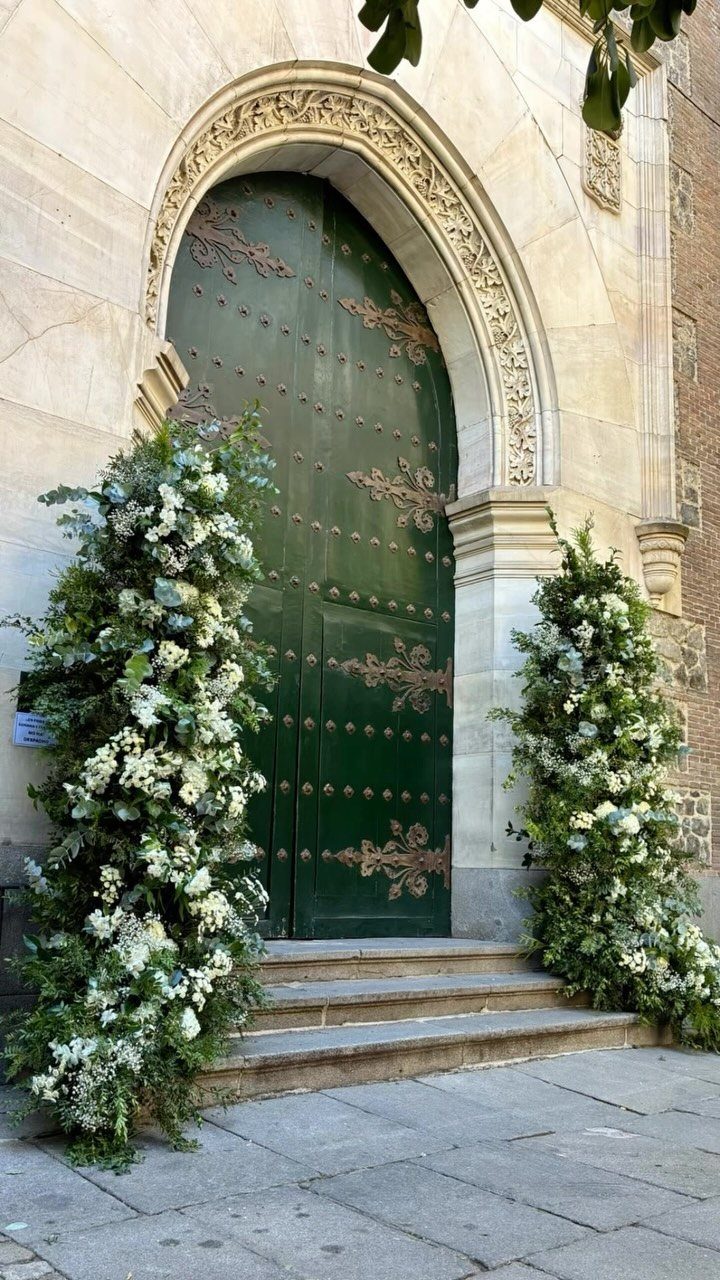
A local florist who knows your venue’s humidity, light, and what holds up from setup to last dance is worth more than a portfolio shot in different conditions.
One person handling both flowers and lighting keeps the look consistent and cuts down on crossed wires. One person adjusting tone as the sun drops keeps the room from drifting between warm candles and cold spots.
If your palette runs bold, test it against the stone.
Terracotta walls swallow color; white limestone throws it back. A restrained arrangement lets an ornate door do the visual work instead of fighting it.

Premium Quality Floral Backdrop : Elevate your event decor with this luxurious blue and white floral backdrop, crafted from wrinkle-resistant polyester fabric. Its high-resolution floral design creates an elegant castle/palace-inspired atmosphere, perfect for weddings, bridal showers, and photography studio props.

Enchanting Atmosphere Provider: the castle cake topper figurine with light is a nice addition to your event decorations; Embedded with lights, it introduces a whimsical element to your cake; This feature pays heed to your aesthetic needs and turns a simple gathering into a fun event

Candle holder:perfect for everyday use, centerpieces, wedding, events, aromatherapy, spa, meditation, etc,Novel Candlestick
10. Traditional Thematic Wedding Decor
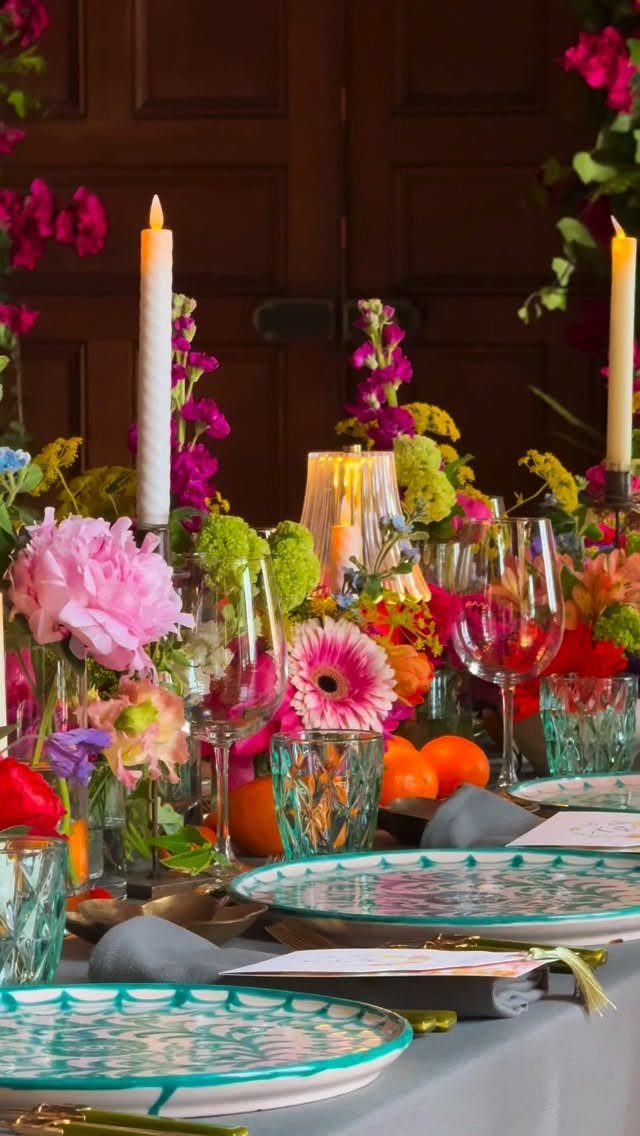
Hand-painted ceramics, fresh citrus, tall candles: the table carries the theme so the room does not have to. This is the Spanish approach to color, not a Mexican or Andalusian variant, though the lines blur in tourist hands.
Source local ceramics if you can; the glaze and weight differ from imports, and the story holds up when a guest asks. Fresh oranges last the evening and smell right in heat that wilts softer blooms.
I would stop at 3 strong elements.
Plates, flowers, fruit, linens, glassware, and favors all at once give the eye nowhere to settle. Let one layer do the talking.

1, 270cm (106") Elegant Garden Arch – Enhance your outdoor sanctuary with this beautifully crafted metal arbor, featuring a graceful birdcage-inspired design. Its sturdy yet stylish frame provides perfect support for climbing vines and flowers, creating a blooming paradise in your garden or patio. Ideal for relaxation, this pergola transforms any space into a serene retreat.

Sturdy and Durable Construction: Built to last, this arch is constructed from sturdy wood, ensuring stability and durability. Its robust design can withstand outdoor conditions, making it a reliable addition to any garden or event setup.
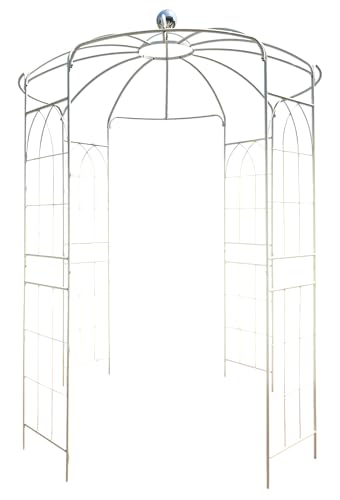
Statement Archway for Memorable Events: Create a breathtaking focal point for your wedding ceremony, reception, or garden party. The grand, birdcage-shaped silhouette (Dia 81.3" x H 114.2") elegantly frames the bride, groom, or guest of honor, providing an unforgettable backdrop for photographs
11. Coastal Ceremony Setup
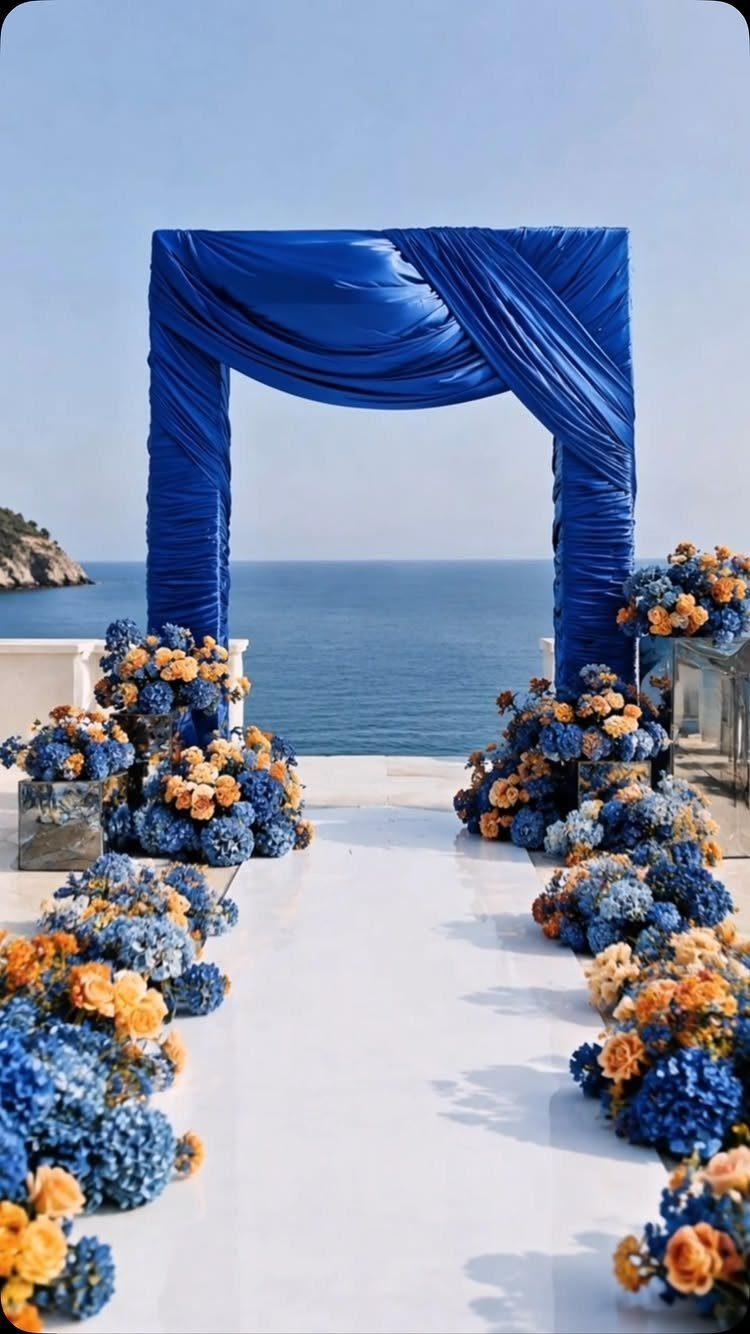
A terrace ceremony trades the sand mess for the horizon line. A palette pulled from the water itself works because it coordinates instead of competing.
Wind is the variable you cannot control. Fabric draping catches it, microphones catch worse, and a guest’s view of your vows should not include hair across her face.
Ask the venue when the breeze rises and which way it runs; they know, even if they do not volunteer it.
Schedule for the light, not just the tide. A western terrace facing into the sun at ceremony time means guests squint; wait for the glow to come from behind you and the photos turn golden without a filter.
12. Sea Cave Ceremony
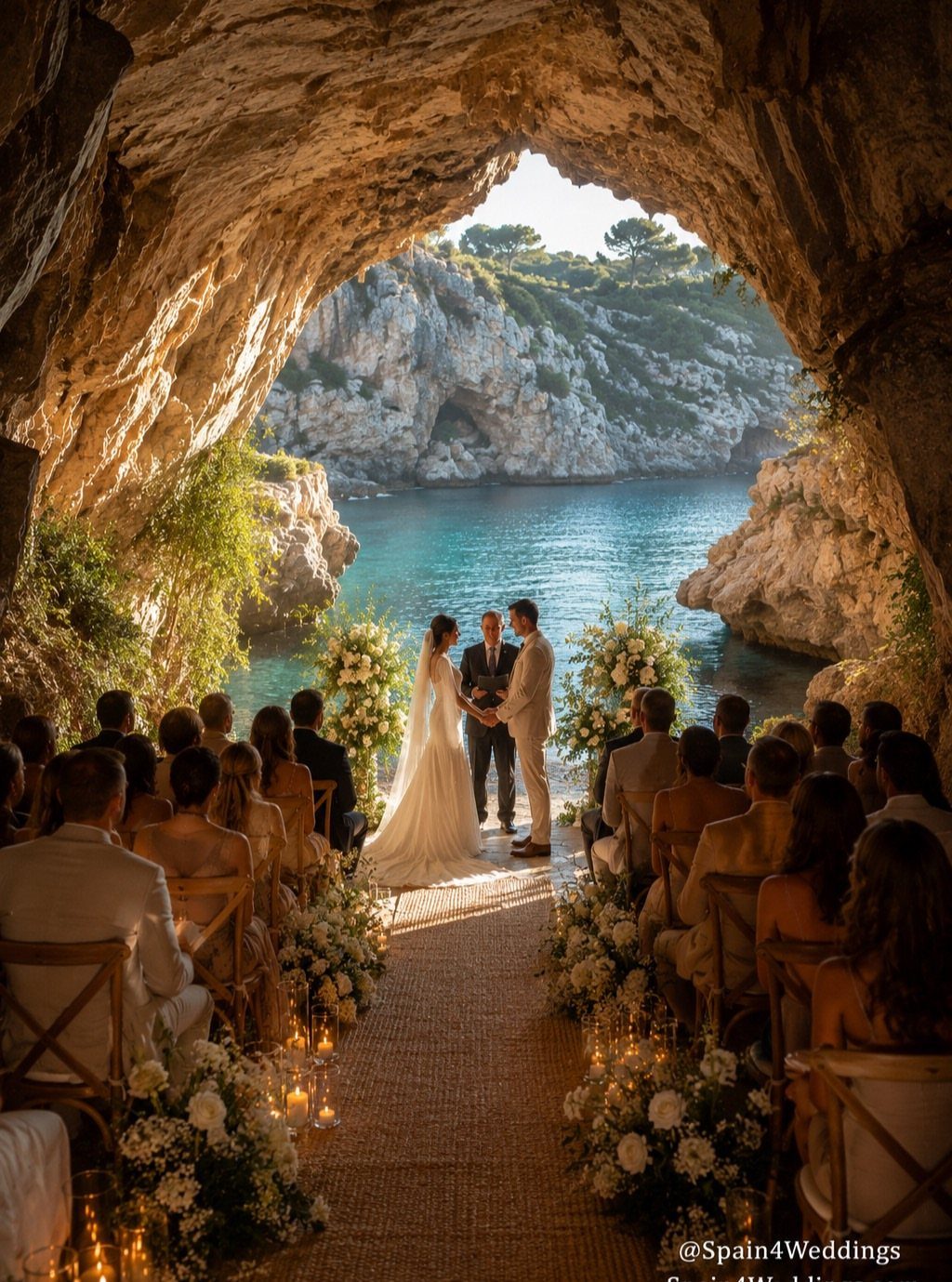
A sea cave is not a backup plan.
The tide sets your window, the floor is uneven rock, and the sound of waves against stone swallows words. A hard-to-reach spot still wins when the place itself is why people flew in.
Check access.
Some caves reach by boat only, which means guest logistics, dress logistics, and a hard cutoff when the water rises. Others have paths that dry at low tide and disappear by afternoon.
Sound carries strangely in stone.
A battery-powered speaker might not; ask if the venue has run ceremonies there before and what they used. Candles read beautifully in a sea cave and sidestep the question of wiring altogether.
13. Poolside Reception Banquet
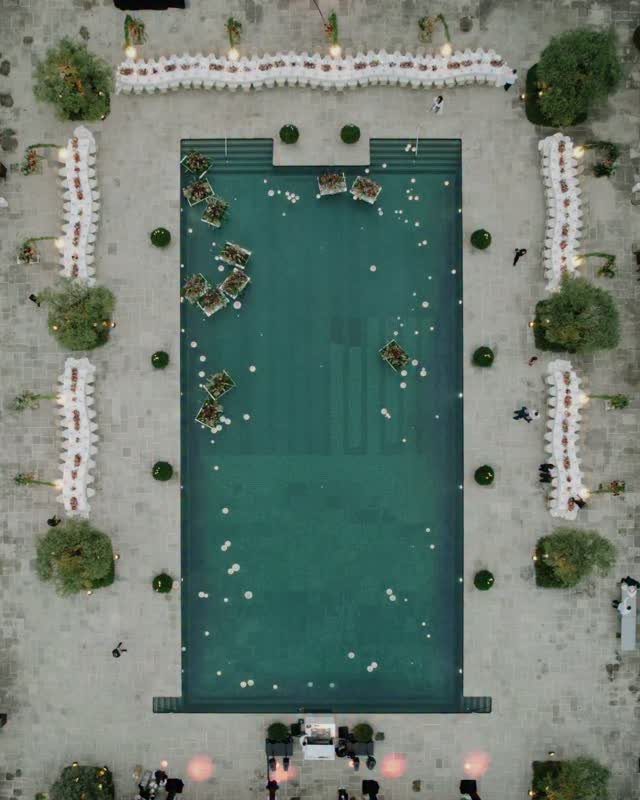
Curved banquet tables follow the coping stone so guests face inward and the water stays in sight.
Check depth before you order anything that sinks.
The real decision is wet versus dry.
A pool that guests might enter needs different footwear, different lighting, and a different speech about phones. A pool that stays decorative keeps the evening formal.
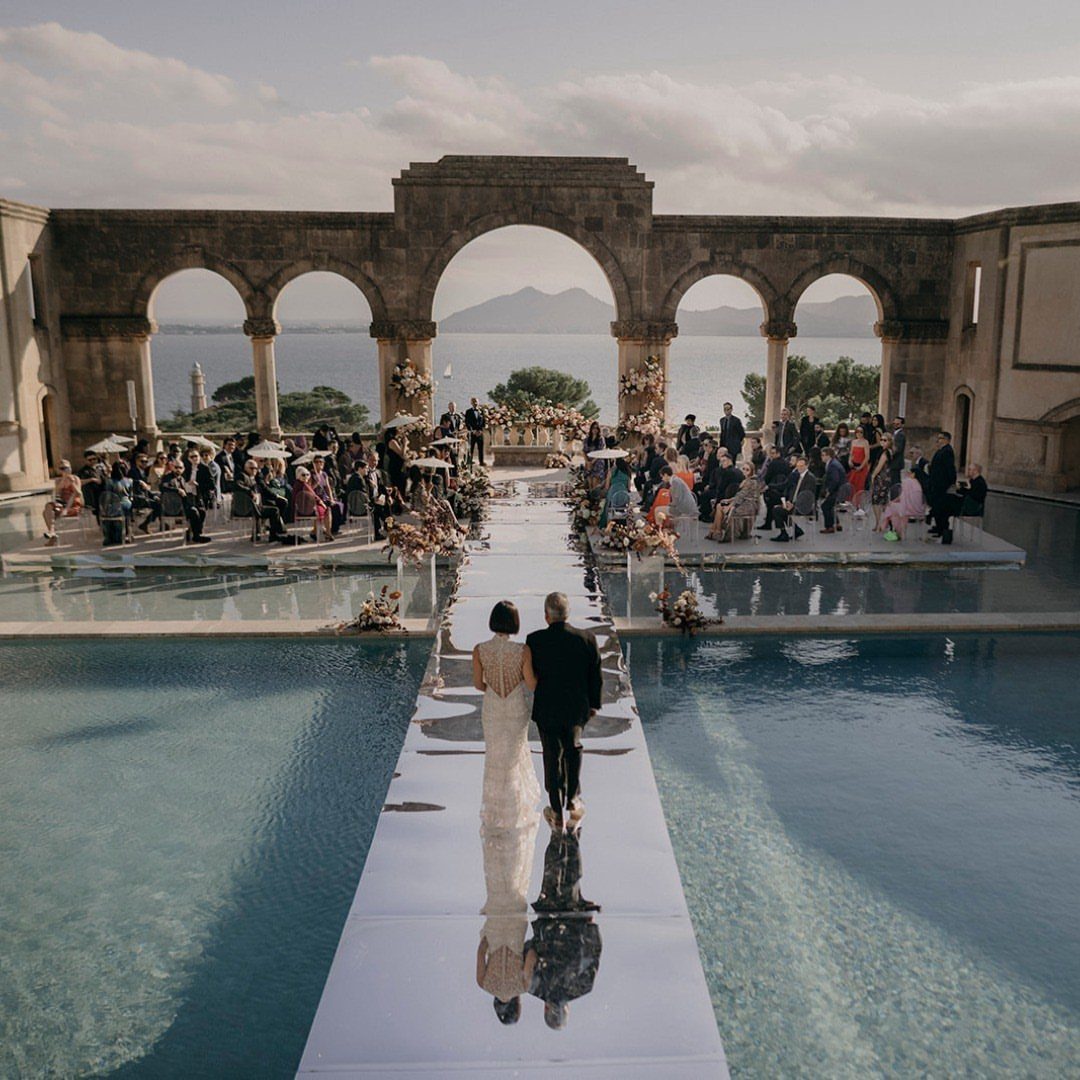
Castle Perelada runs this at scale: 900 standing, 600 seated in the Mirador alone.
Most of us are working with a villa that holds 40. The principle holds; the proportions shrink.
14. Courtyard Fairy Light Canopy
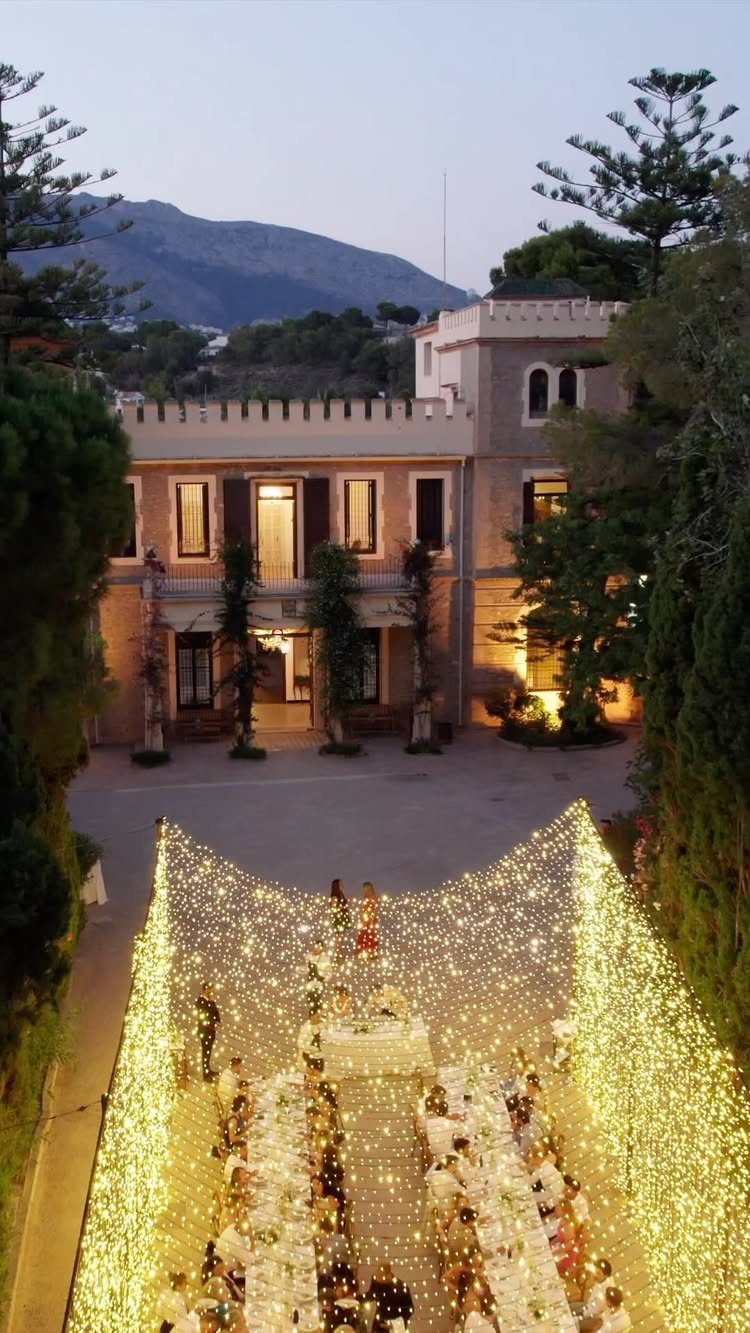
Fairy lights hung overhead turn a courtyard into a room after sunset.
The density matters: sparse reads as afterthought, dense reads as ceiling. Hundreds of bulbs at varying heights give an even glow and the wires disappear.
Power is your first question.
A villa with outdoor outlets saves the generator conversation; without them, battery strings have improved enough to run a full evening. Test color temperature against your dinner plates, warm white flatters skin and food alike.
Wind in open courtyards moves the strands. Secure rigging points on multiple walls, not one anchor that swings.
15. Palm Grove Ceremony
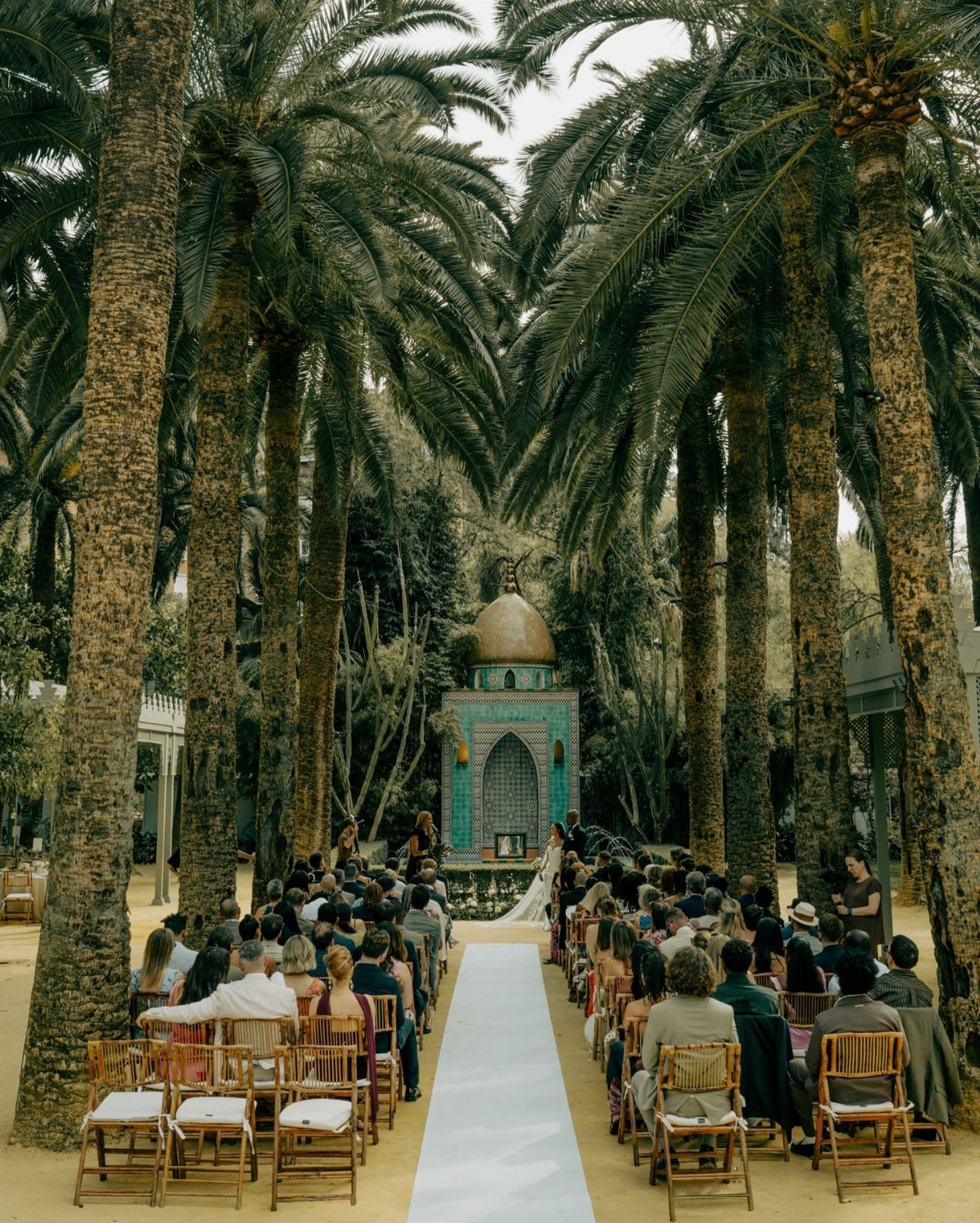
Tall palms give you vertical lines no florist builds. The aisle runs between their trunks, and the eye travels up to the fronds against sky instead of down to the ground cover.
A tiled pavilion at the end of that aisle gives the couple a destination and the photographer a frame. A dome shape echoes the palms’ height instead of cutting it off.
Check what the palms drop. Dates stain, dead fronds fall, and both change the aisle walk.
A runner helps; a venue that grooms weekly helps more. Shade is generous but dappled, so ceremony timing still matters for photos.
16. Olive Grove Dinner Under String Lights
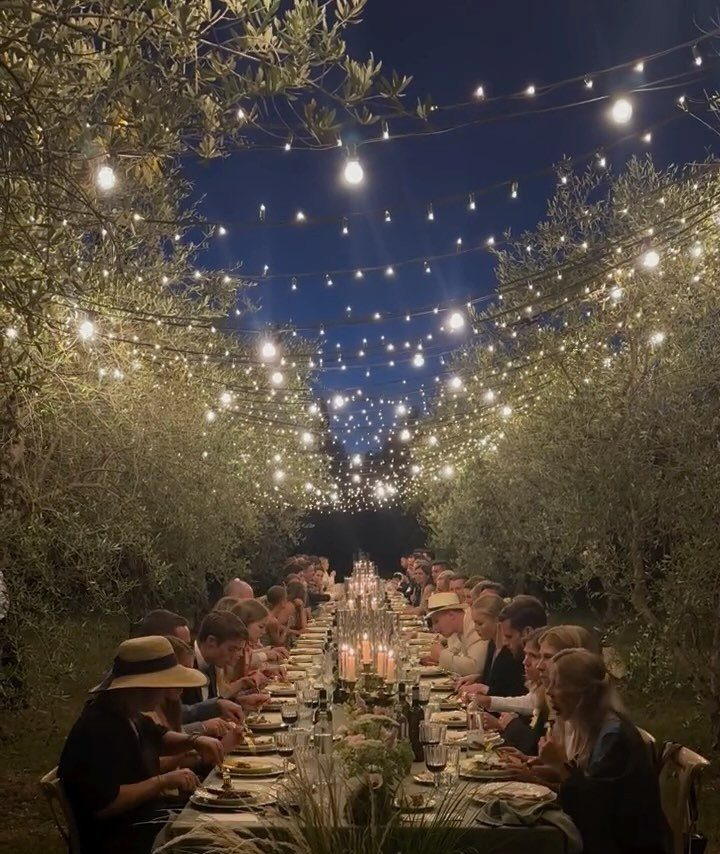
Olive trees carry their own architecture: silver leaves, twisted trunks, branches low enough to hang light strings between. The grove becomes a hall without walls.
The table runs the length of the space so guests sit inside the trees, not beside them. Overhead strings follow the row spacing in multiple parallel lines, enough to read as a ceiling without blocking the sky entirely.
Olive harvest season runs fall through winter.
Fruit on the ground attracts wasps, and oil processing nearby brings its own smells. Spring dinners avoid both.
17. Citrus Mediterranean Tablescape
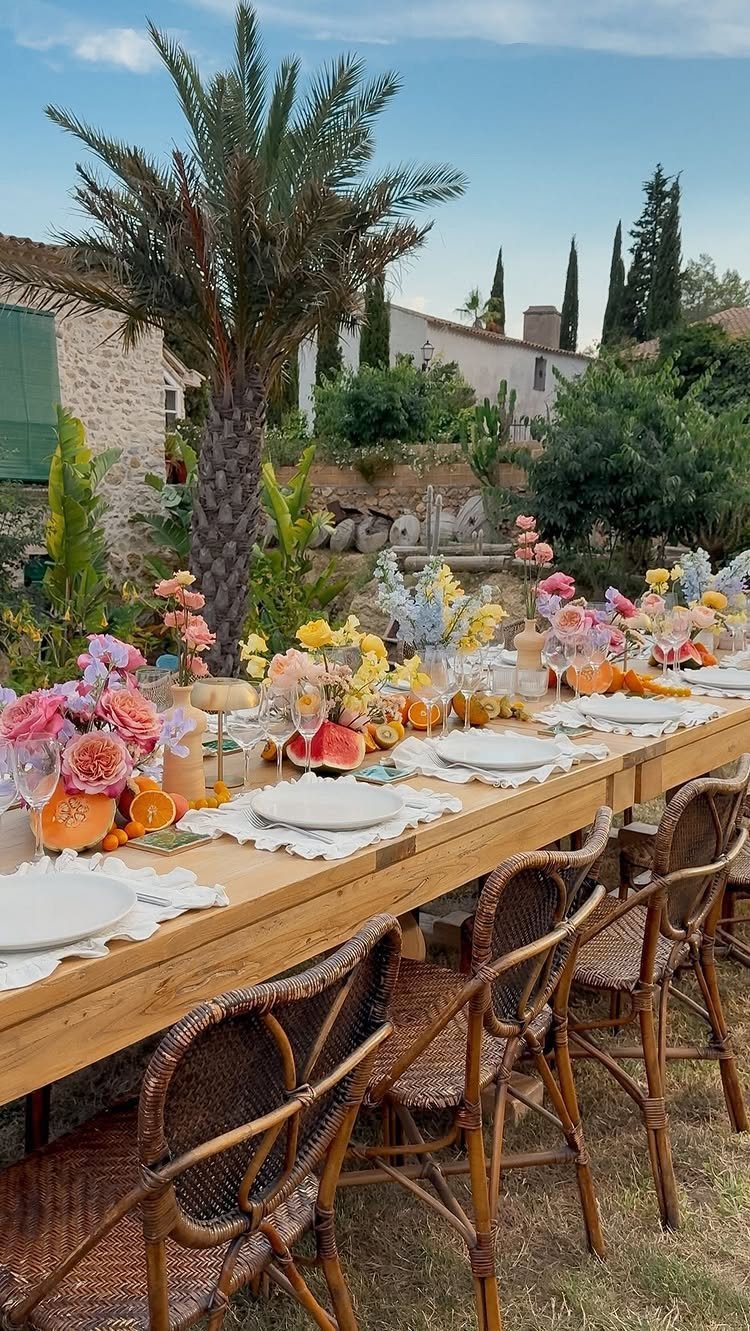
Whole citrus and sliced melon on the table does what flowers do at half the wilt rate. The colors are already Mediterranean: orange, pink, green against white plate and pale wood.
Wicker chairs set the tone before guests sit; they also weather outdoor humidity better than upholstered rentals. A palm trunk confirms this is a warm-climate setup, where citrus belongs naturally and does not read as theme.
Check what the venue allows.
Some historic properties restrict food on surfaces that stain; citrus oils mark unfinished wood. A runner or mat beneath the fruit solves this without hiding the table.
18. Chandelier-Lit Sunset Reception
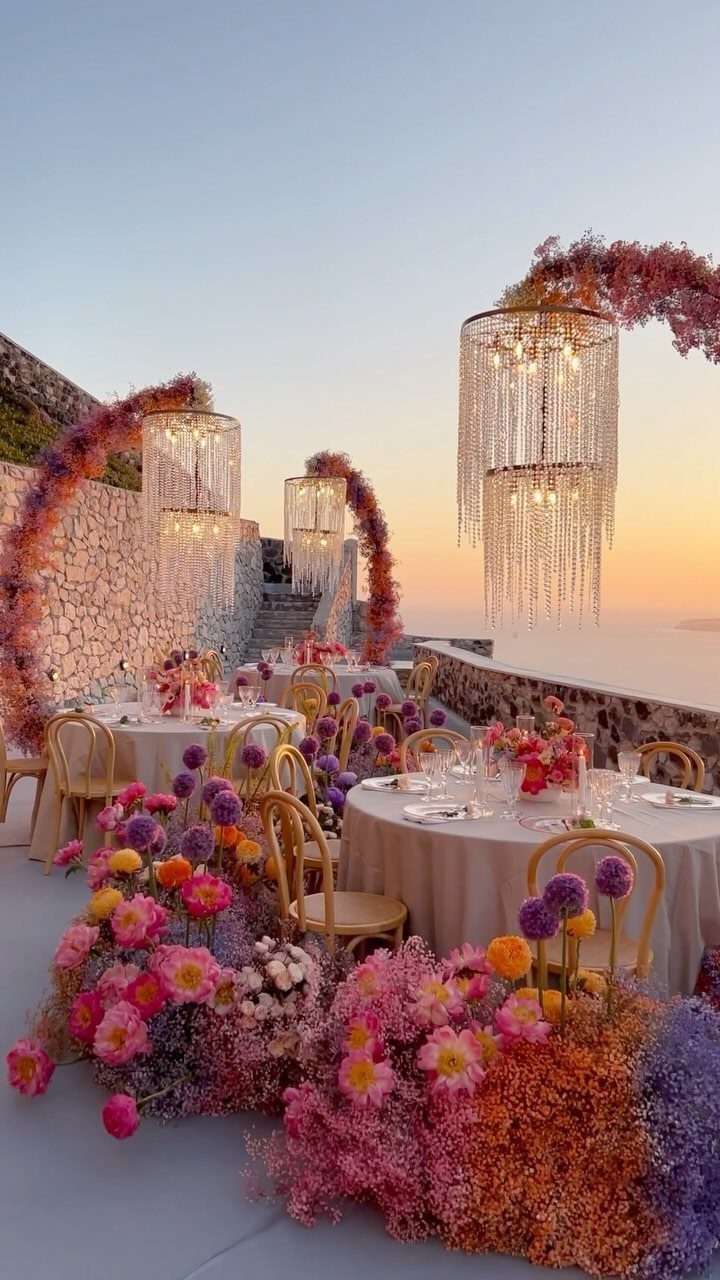
Chandeliers hung outdoors trade their usual ceiling for floral arches and open sky.
Weight is the practical concern.
The arch or frame holding it must be engineered, not decorated; a florist’s foam structure will not do. Rental companies that serve film sets often have the hardware.
Wooden chairs repeat the warm light.
Round tables let guests face the view, in this case the ocean over a stone wall. The cliff edge is the reason people came; do not seat anyone with their back to it.
19. Vine-Covered Spanish Villa
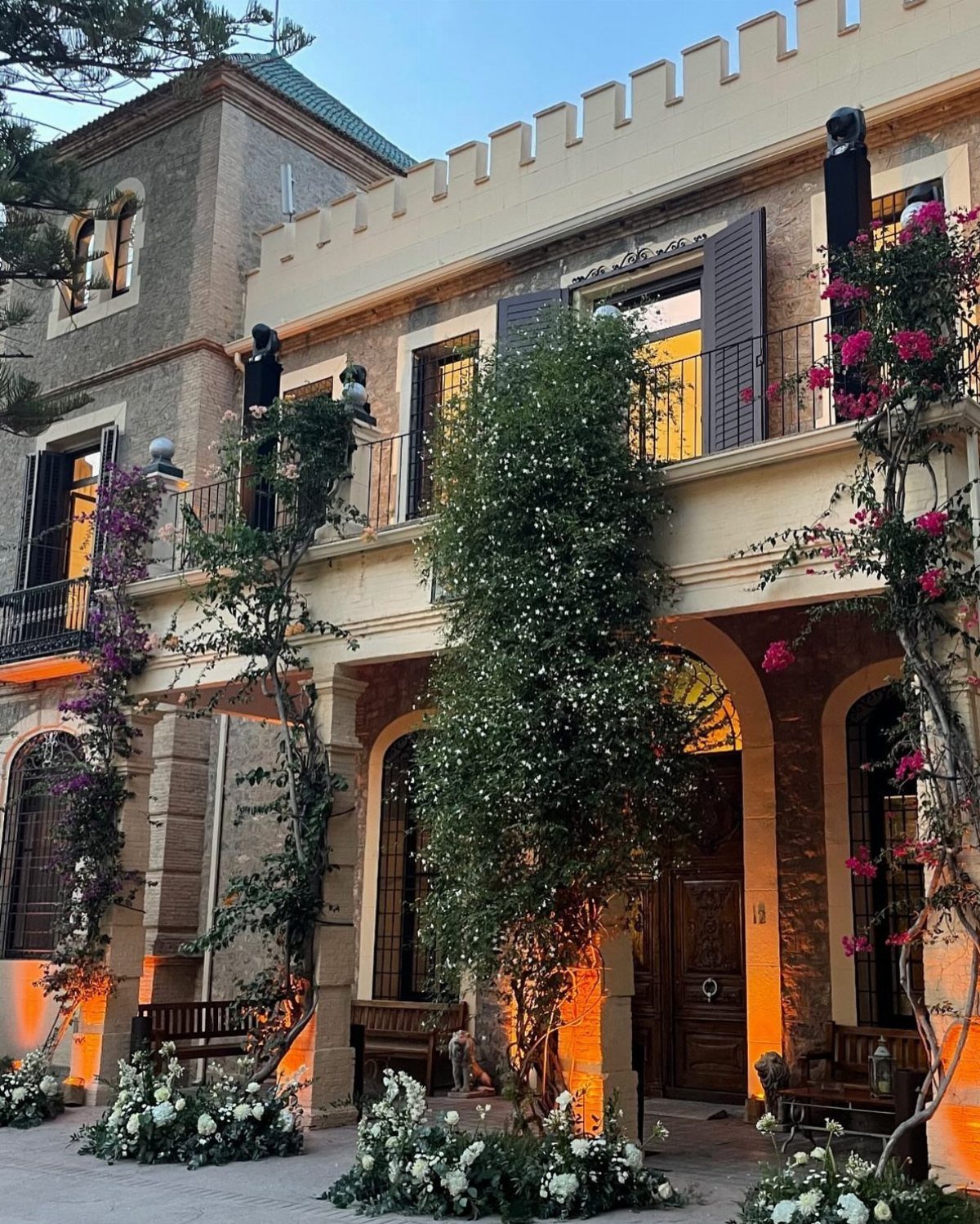
A vine-covered stone villa gives you a building that already dressed for the party.
The climbing greenery softens the facade, the arched doorways frame entrances without extra fabric, and the balconies levels the eye upward so the structure reads as architecture, not just a rental.
Most properties of this kind sleep 20 to 30, which shapes the guest list before you send a single invitation.
Villa Almanita, formerly Villa Catalina, fits this scale; Villa Talaia in Catalonia holds similar numbers with countryside views toward the Mediterranean. Both are 18th-century stone, both carry the weight of age in their walls.
Up-lighting on the facade extends the usable hours. The real work is finding a property whose vines are maintained, not overgrown; dead wood and sparse leaves read as neglect against stone that costs enough to imply care.
Ask how many nights the rental requires. A three-night minimum is common, and that changes the per-guest math significantly.
Tips for Saving Money
Weekday weddings in Spain can cut venue costs by 30-40%, and Spanish venues often relax music restrictions on Thursdays and Fridays.
Your guests will likely turn the trip into a long weekend anyway, which spreads the travel cost across more days.
Local vendors save more than just money on exchange rates and import fees.
They know which olive groves hold water after rain and which courtyards get the afternoon wind. That knowledge cuts down on last-minute rentals and weather backups.
Off-peak season runs differently in Spain than in the US.
February ceremonies on the coast can feel like May, though August inland demands infrastructure most outdoor venues do not fully have. Ask specifically about cooling or heating capacity, not just whether the space is available.
Planning Timeline
Twelve to sixteen months is the real minimum for Spanish venues, not a conservative estimate. Olive groves in Andalusia that double as wedding venues tend to fill their September slots by March of the year before.
A couple I read about fell hard for a venue only to learn the calendar was already closed 2 years ahead.
This timeline works best if you already speak Spanish or share working hours with the people you are hiring.
Add buffer if you are planning from the US without a local coordinator. Email response times from Spanish vendors run slower than American couples expect, especially in August when much of the country shuts down.
Booking early buys more than a date on a calendar.
Cultural Insights
Spanish weddings run on a different clock than American ones. The unplanned moments, morning coffee on the terrace, sunset conversations stretching into darkness, are not gaps in the schedule.
They are the point. Build them in on purpose.
Language matters if your guest list mixes Spanish and English speakers. Bilingual staff during toasts keeps the room connected; without it, half the guests sit through speeches they cannot follow.
Gift protocol differs too.
Guests in Spain usually slip cash into envelopes instead of shopping from a registry. Set that expectation early with your American guests so no one arrives awkward.
Photography timing needs padding.
Family photo sessions draw a bigger crowd than most American couples anticipate, with relatives you may not have heard of yet. Budget 20-30 extra minutes or watch your cocktail hour shrink.
Dress code translation is real.
"Cocktail attire" signals something dressier in Spain than it does at home, at least among the older generation. Your invitation language should reflect that or prepare for a visual mismatch.
Guest Experience Enhancements
Remote venues shift costs onto guest logistics. Welcome drinks, group transport, and recommended accommodation blocks stop being extras and start being necessities when the nearest town is half an hour away.
Transportation is where budgets bleed. A single shuttle run from Barcelona to a Costa Brava cove is manageable; multiple runs over a weekend multiply fast.
Putting everyone in one hotel removes a lot of friction, and the breakfast table chatter between people who just met makes up for some of the expense.
Group activities need the same realism.
A flamenco lesson sounds memorable until you price it for eighty people and find the space that fits them. Smaller guided options, a winery walk, a morning market tour, let guests self-select without requiring full-group coordination.
Welcome bags matter more in Spain because guests traveled farther to get there. Local olive oil, a printed schedule with Spanish phrases, a fan for August heat: small items that acknowledge the distance they covered.
Frequently Asked Questions
How much does a destination wedding in Spain cost?
A typical Spain destination wedding runs €35,000–€50,000 for 50-80 guests, with budget-friendly celebrations starting around €25,000 and large luxury events reaching €80,000–€120,000 or more.
That converts to roughly $30,000–$60,000 USD for the mid-range tier. Your guest count and whether you choose a weekday, which can cut venue costs 30-40%, move the number more than anything else.
Can US citizens get married in Spain?
Most American couples handle the legal marriage at a courthouse back home, then fly to Spain for the ceremony itself; Spanish law makes a civil marriage binding only if one of you lives there or holds citizenship, which few destination-wedding couples do.
The symbolic route lets you design the ceremony freely and hold it anywhere, from a sea cave to an olive grove, without the months of paperwork a Spanish civil marriage demands.
Is it cheaper to get married in Spain or Italy?
Spain tends to cost less and ask for fewer forms than Italy or France, which is why most couples I read about end up picking it anyway.
Food, venues, and guest experience cost less at the mid-size range, and the legal side is more flexible for Americans who do not have residency in either country.