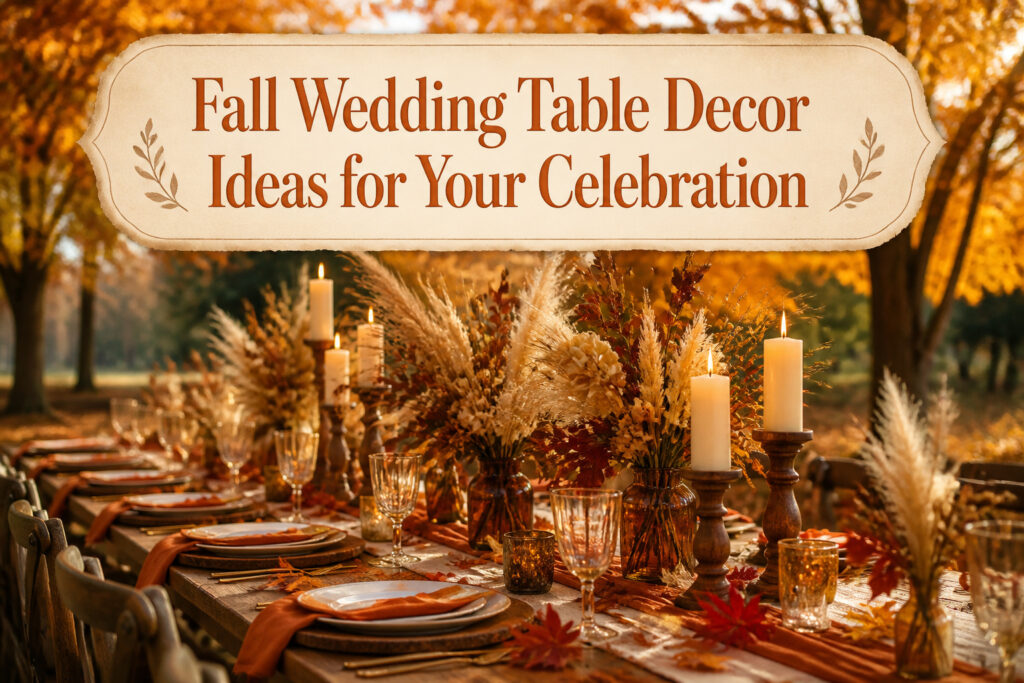
Fall wedding table decor runs from $10 grocery-store centerpieces to rented velvet and brass, and the right choice depends less on budget than on how much setup labor you can actually handle days before the event.
Dried pampas grass ordered weeks ahead removes the wilting risk that fresh stems carry through cocktail hour, while solid wood chargers look grounded until you factor in who hauls forty pounds per table from the rental warehouse.
1. Pampas Grass Centerpieces
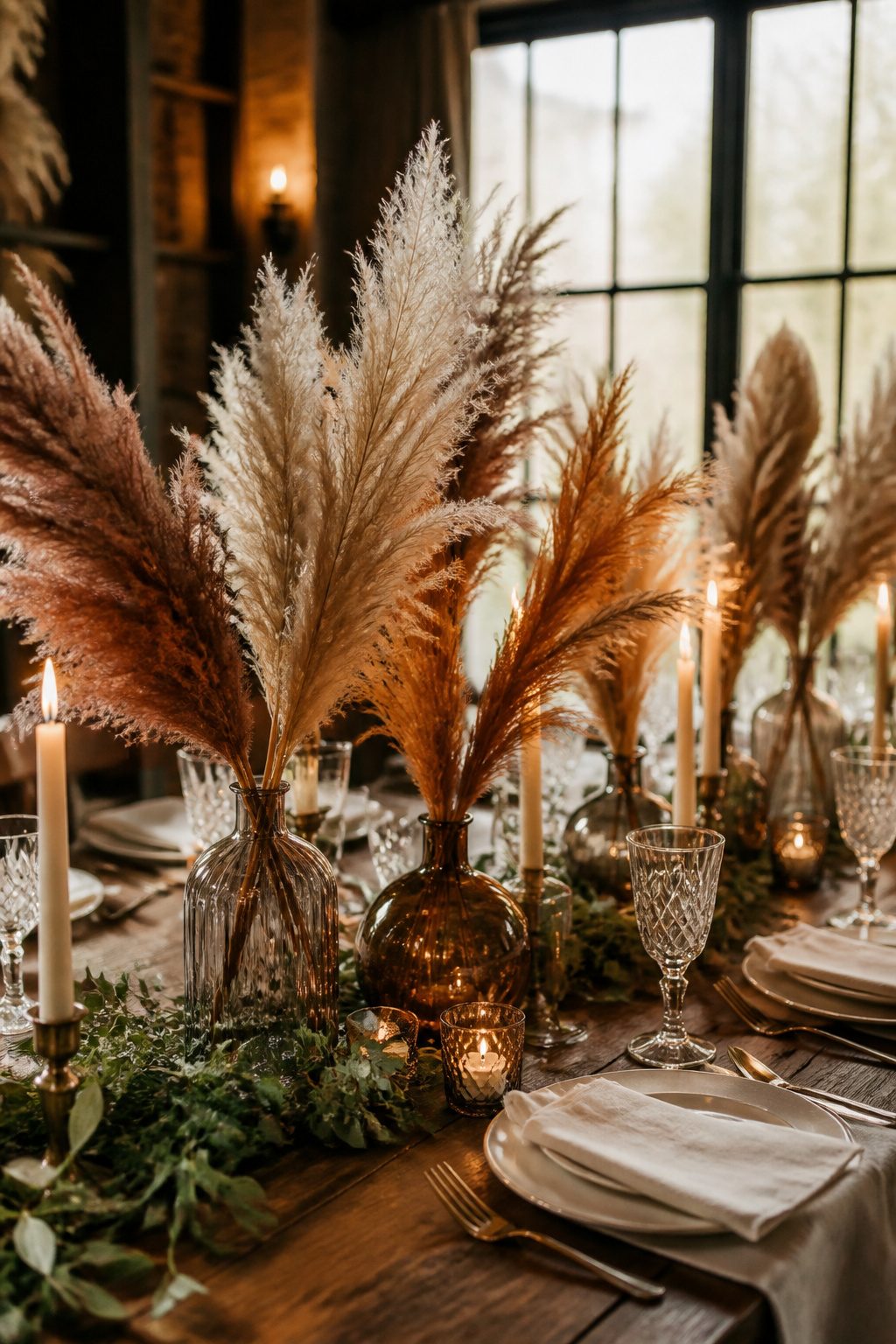
Pampas grass brings a texture to fall wedding table decor that fresh flowers rarely match on their own. The feathery plumes catch candlelight and hold the warm, muted tones of autumn without fighting against them.
At budget weddings, this matters more than people expect: a few stems in tinted glass vases can anchor a whole tablescape, and the grass costs far less than traditional floral arrangements.
I have seen mini pampas centerpieces paired with a simple greenery garland create an elegant look with no actual flowers in the room.
Dried pampas can be ordered weeks ahead and arranged without water, which removes the wilting risk that fresh stems carry through cocktail hour.
For 2026 weddings, the move is to use pampas as a runner base with ivory taper candles set between the plumes so the light filters through.
The same bundles work with wheat stalks, preserved magnolia leaves, or feathers if you want to push the autumnal mood further.
The limit is height: keep centerpieces low enough that guests can see across the table, or cluster tall plumes at alternating tables rather than every single one.

Versatile Aesthetic: Ideal for a variety of decor styles, including boho, farmhouse, and rustic, this dried flower bouquet adds a touch of elegance to any room.

Versatile Boho Centerpiece Decor Set: this 10-piece dried flower bundle includes 5 Pampas grass styles (2 bouquets each) for varied textures and colors; Perfect for weddings, tablescapes, or rustic home styling; The mini vases (2.17x4.06inch) and 32.81ft jute rope allow endless DIY arrangements
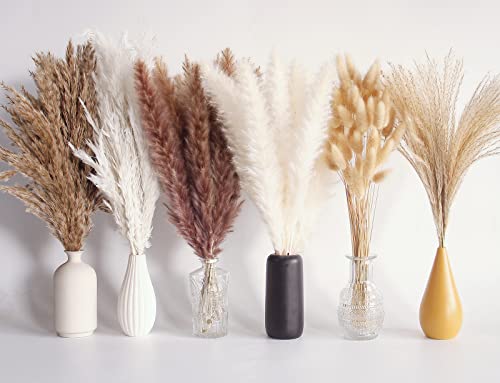
6 Kinds of Dried Floral: pampas grass bouquet bulk contains bunny tails dried flowers 50, mini reed grass 20, white pampas 15, brown pampas 15. white reeds 5, brown reeds 5, a total of 120pcs. sufficient quantity
2. Colored Glass Bottles
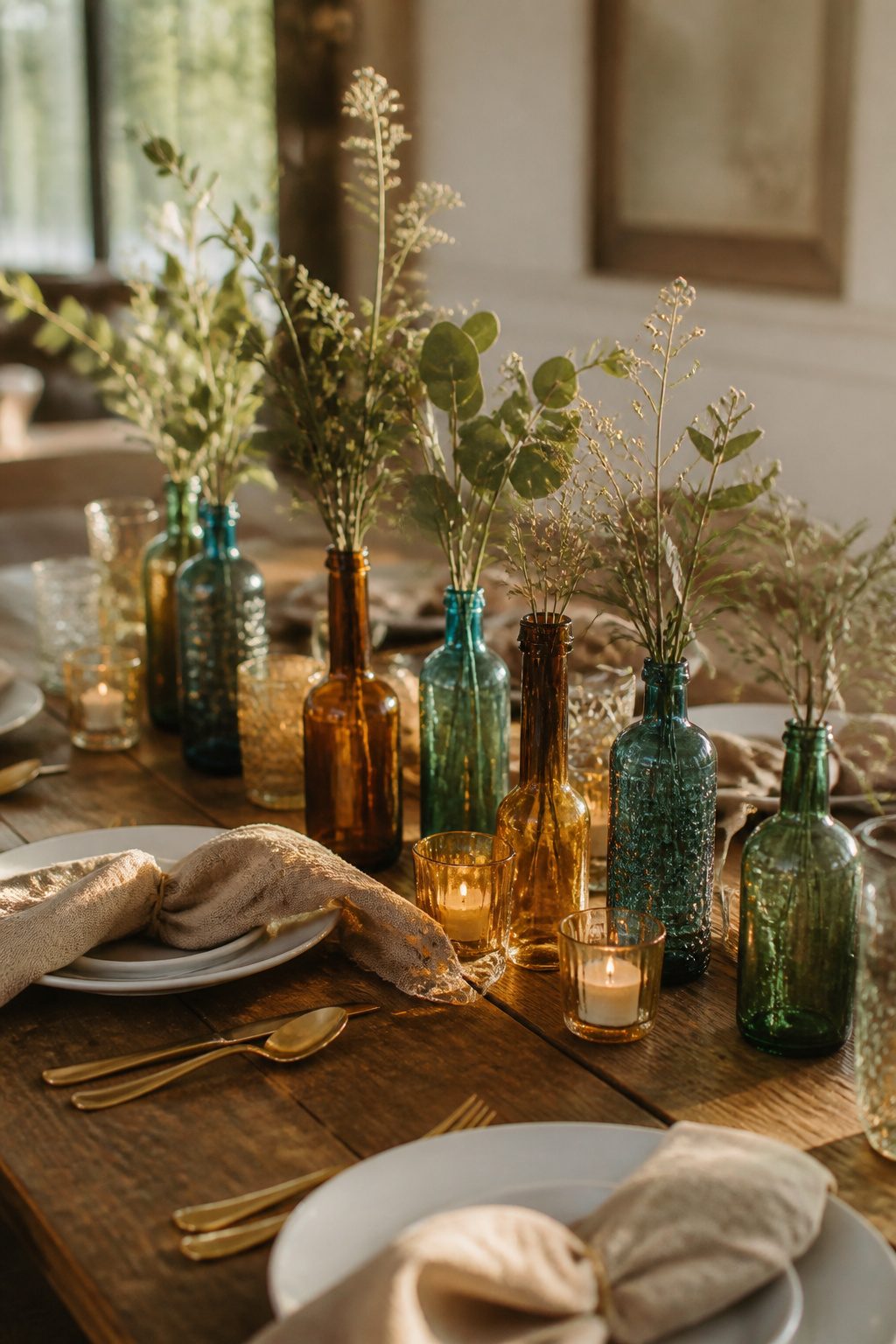
Vintage-style colored glass bottles bring a whimsical, lived-in quality to a fall table without trying too hard.
The shape matters as much as the color: slender necks and rounded shoulders catch candlelight and twinkle lights in ways straight-sided vases never manage, and that reflected glow is half the reason they work after sunset.
Amber, teal, and deep green read autumn without drifting into orange-and-black territory. Orange glass exists, but it fights the season rather than suggesting it; teal and green against fall foliage create the contrast that makes both colors feel intentional.
The hunt is part of the payoff. Estate sales and thrift stores are where these bottles accumulate, mismatched in height and slight wear, which is exactly the point.
A table of identical new vessels looks rented. A cluster of bottles with faded labels still ghosted on the glass, or with the soft clouding that decades of use leaves behind, looks gathered over time.
Pair them low: three to five bottles per table, none over eight inches tall, so guests can see across without craning.
A single stem or a few sprigs of greenery in each keeps the arrangement loose and the cost minimal. The bottles do the heavy lifting; the florals should barely interrupt the view.
【Premium Ivory Taper Candles for Elegant Ambiance】Crafted from high-quality paraffin wax and natural cotton wicks, Everymoment's 10-inch ivory taper candles deliver a dripless, smokeless, and non-toxic experience. Each candle burns for up to 8 hours, providing a steady, soft glow ideal for weddings, Christmas, dinners, parties, and home decor. Their classic ivory color complements any setting, from formal events to casual gatherings.

12-PACK IVORY TAPER CANDLES — Each candle measures 0.78" x 12" and slides into most standard taper holders for a unified, table-ready look. Ideal for dinner parties, wedding receptions, and holiday tablescapes that need more than 6 candles.

Introducing our elegant Ivory Taper Candles, the perfect addition to your home decor or special occasions. These premium candles effortlessly combine style and functionality, creating a warm and inviting atmosphere that will leave a lasting impression on your guests.
3. Baby’s Breath Arrangements
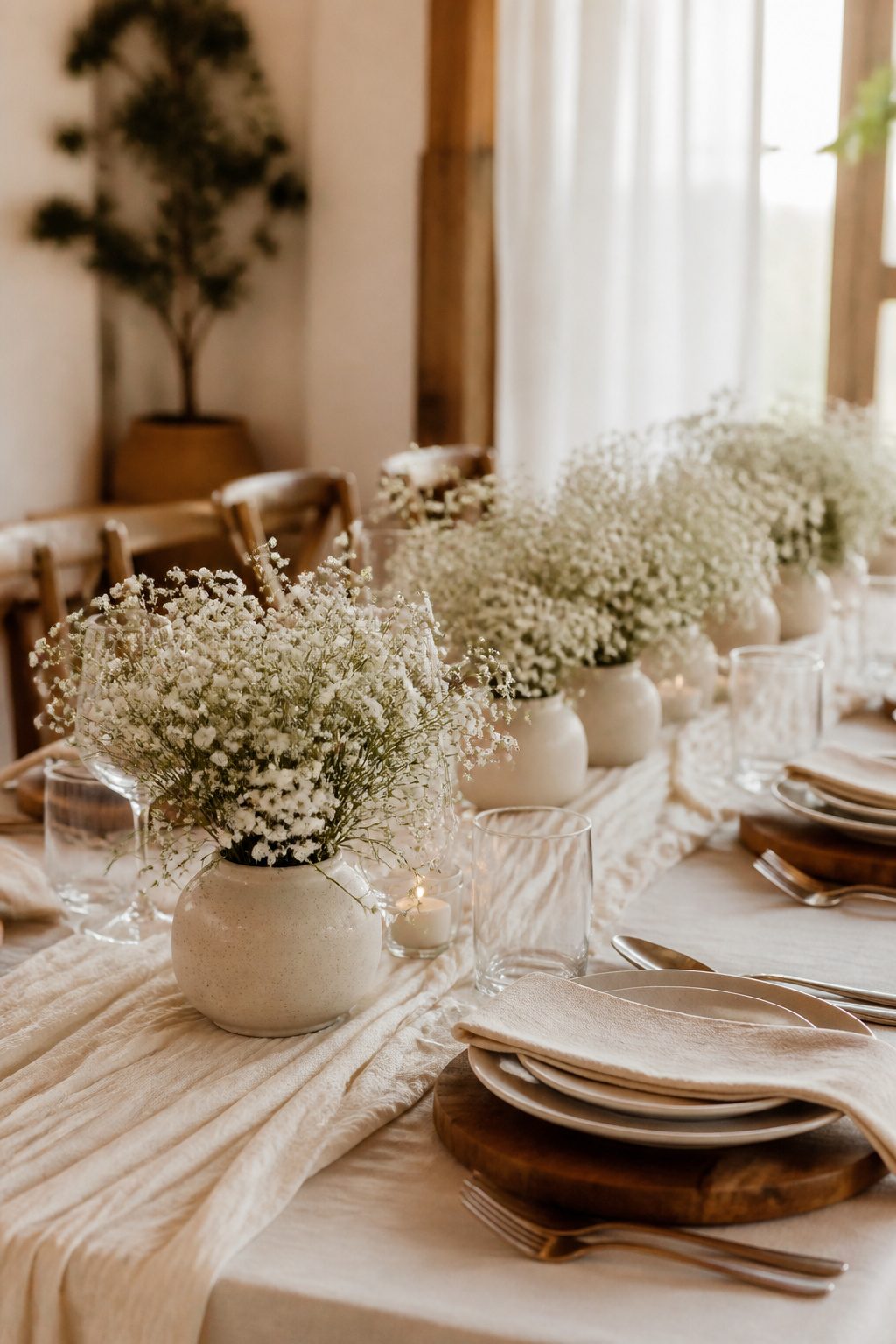
Baby’s breath works best for fall wedding table decor when you commit to the minimal look rather than fighting it.
A single stem runs somewhere around a dollar, maybe two, which sounds like a bargain until you realize a sparse cluster of three stems reads as forgotten, not intentional.
The mistake I see most often is someone ordering two dozen stems to "save money" and spreading them so thin the table looks half-finished.
For an understated setup that actually holds the room, plan on roughly one stem per place setting as a minimum, gathered in low ceramic bud vases or clustered in a shallow bowl.
At that density the cloud-like texture reads as deliberate, airy, Scandinavian. Drop below it and guests start wondering whether the florist no-showed.
The real savings come from skipping filler greenery entirely. Baby’s breath needs no fern or eucalyptus to look complete; its own branching structure fills space without extra cost.
A full centerpiece of mixed fall florals might run ten times the per-stem price, so the budget difference is dramatic if you stay disciplined about quantity.
The risk is exactly that discipline: ordering too few stems and trying to stretch them across too many tables. Order the number that feels slightly generous, then use every last stem.

UNIVERSAL DIMENSIONS: Measuring 120"(10ft), this cheesecloth table runner is ideally sized to fit standard 6-8ft tables, offering suitable coverage with just the right amount of drape. The 12" to 24" drop on both ends adds a graceful touch that enhances the overall presentation of your table.

Fall Centerpieces with Pampas Grass Bouquets: this 2-pack fall table decor set features pampas grass floral arrangements, terracotta cheesecloth table runners, clear glass vases, wood slice bases, and rope; Create two coordinated rustic boho centerpieces for Autumn dining tables; Each runner measures 35 x 118 inches, and each vase is 7.9 inches tall; Ideal for Thanksgiving, fall weddings, and seasonal home decor

Elegant and Versatile Design: enhance the ambiance of any gathering with these exquisite fall table runners, expertly crafted from soft and graceful chiffon fabric; The elegant drape and lightweight nature of the material add a touch of sophistication to your dining setup, perfectly complementing a variety of occasions with their fall autumn atmosphere
4. Candlelit Decor
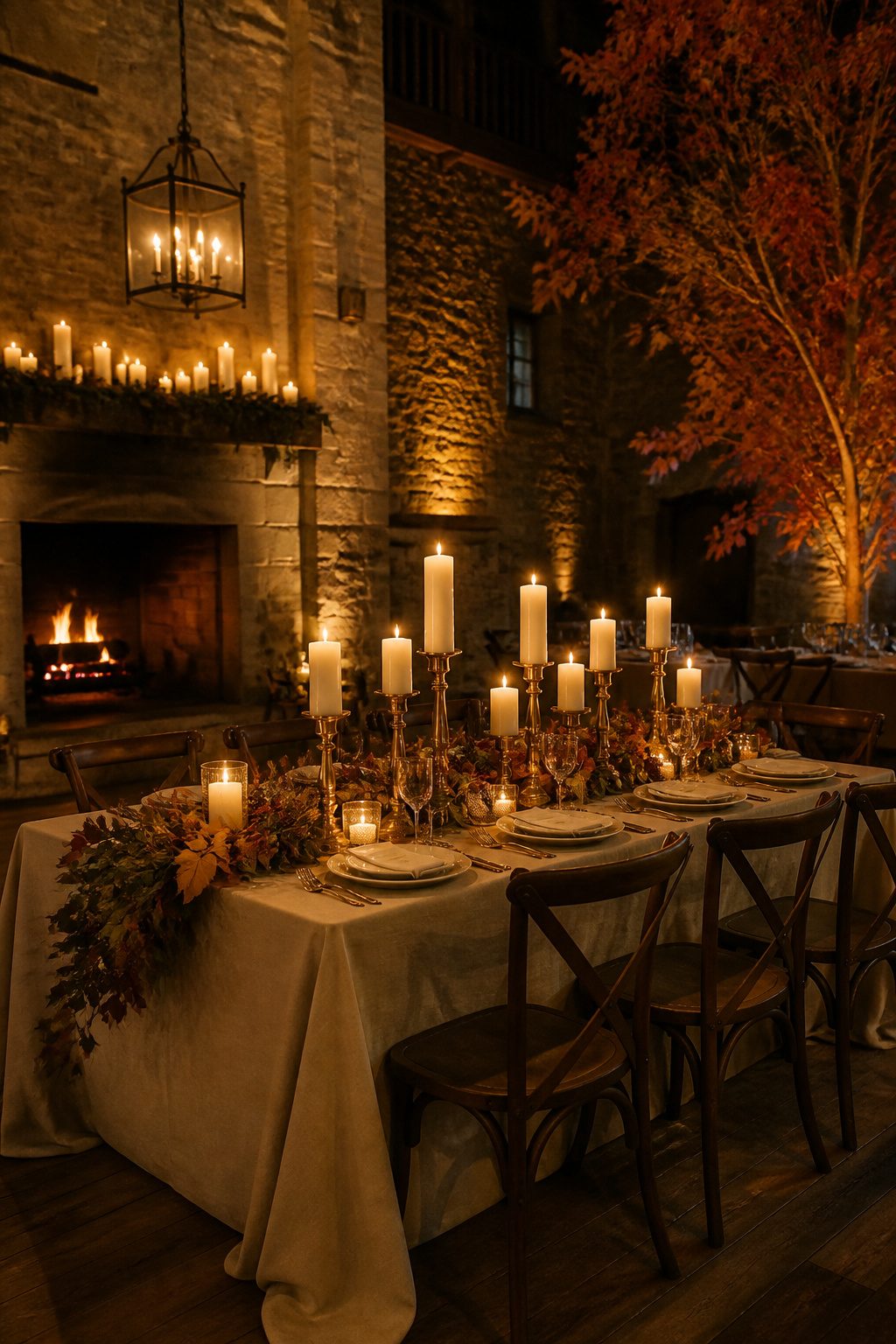
Unscented pillar candles in cream or ivory give the warm glow that makes a fall table feel intimate rather than theatrical.
The color reads softer against autumn linens than stark white wax, and the lack of fragrance is not a minor detail.
At one rehearsal dinner I assisted, the couple chose vanilla-scented pillars for every table. By the time salads arrived, the competing perfumes of lavender, pumpkin spice, and that vanilla had turned the room into a candle shop.
Guests left with headaches instead of leftovers. Unscented is the only safe choice when food is on the table.
Varying the heights matters more than matching the holders. Polished brass candlesticks at staggered heights create vertical dimension that flat rows of votives never achieve.
The look works best when the collection feels gathered rather than purchased as a set: one tall stick from a vintage market, a medium pair from a rental house, a low cluster of votives to anchor the ends.
Brass flatware against ivory linen photographs warmer than you expect, turning the table into something that feels like a very chic dinner party rather than a staged shoot.

【Soap Dispenser with Sunflower Embossed Design】The lotion dispenser is made of durable glass, and each bottle has a delicate raised sunflower embossed pattern that can be used as a chic bathroom decoration. The raised floral details add a touch of nature-inspired elegance, seamlessly blending functionality with artistic charm

Size and Capacity: The size of the glass spray bottle is 2.75 x 2.75 x 7.85 inch, and the capacity is 0.4L/13.5 oz. Medium size, easy to carry, fits in your hand but is large enough that you will not have to constantly refill.

【EXQUISITE GLASS】: TIMEFOTO glass vase is crafted of high quality leed-free glass with cylindrical shape.Both all sides and bottom of the vase is thickened design to ensure durability.
5. Seasonal Fruits
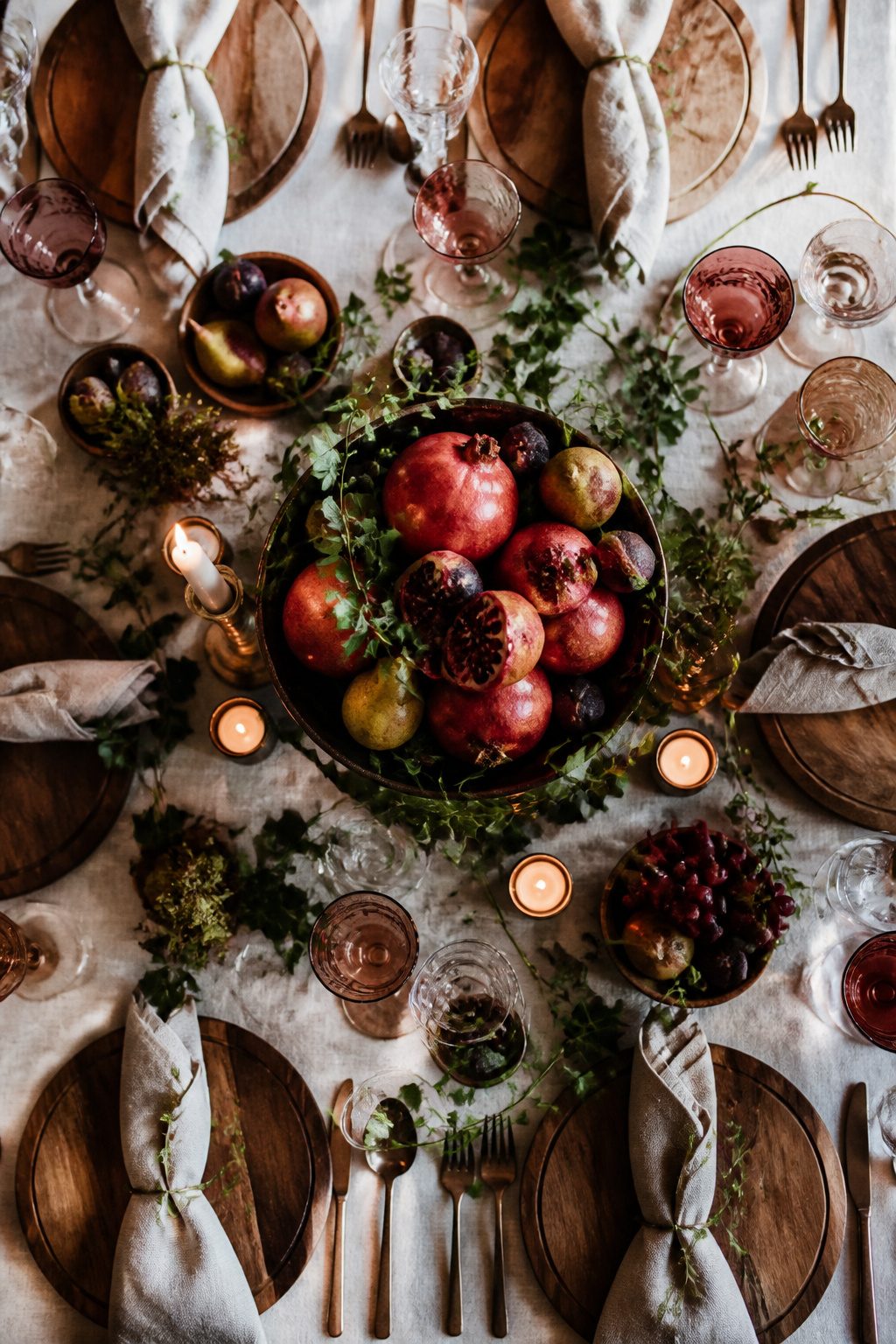
Pomegranates split open at the center of a table do something no silk flower manages: that raw, jewel-red interior catches candlelight in a way that makes guests lean in.
I photographed a wedding last October where the couple lined their compote dishes with figs, small pears, and loose garden roses, letting trailing ivy spill over the edges.
The whole arrangement sat low enough that people could actually see each other across the table, which sounds obvious until you have shot a reception where half the guests are craning around a tower of hydrangeas.
Seasonal produce in autumn runs cheap enough that your grocery bill becomes the floral budget.
The couple I worked with spent roughly a third of what neighboring tables at the same venue had dropped on all-flower centerpieces. The fruit added its own scent too, warm and sharp, without anyone plugging in a diffuser.
Wood chargers and raw linen napkins kept the rest of the place setting quiet so the centerpiece stayed the focal point. The look borrows straight from traditional European harvest tables, and it photographs with that same unstudied abundance.
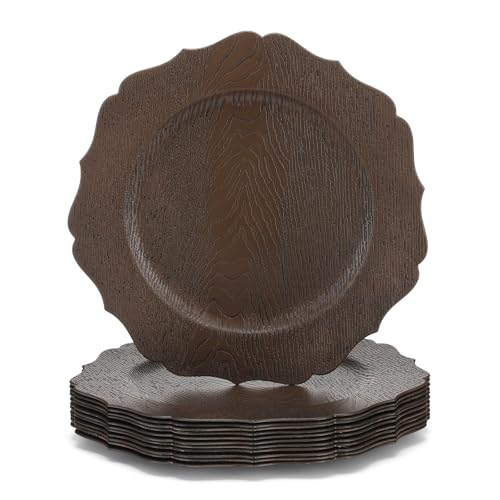
Package Quantity: you will receive 12 rustic brown charger plates, wood texture with scalloped edges, rustic style, adding warmth and style to wedding receptions, parties and dining tables

RUSTIC FARMHOUSE ELEGANCE: Elevate your dining experience with our 13-inch faux wood charger plates. Featuring a realistic, beautifully detailed wood grain finish, these underplates add a touch of vintage, natural charm to any table setting without the heavy weight, high cost, and maintenance of real wood. Perfect for rustic, boho, woodland, or country-themed decors.

HIGH QUALITY: The 13 inch dinner table chargers is made of high-quality plastic and does, ensuring safe use and durability, plates design combined with exquisite imitation wood texture makes each plastic plate chargers both practical and beautiful. The round chargers only is it scratch resistant and wear-resistant, suitable for frequent daily use, but it can also add an elegant and luxurious style to the dining table.
6. Rustic Wooden Elements
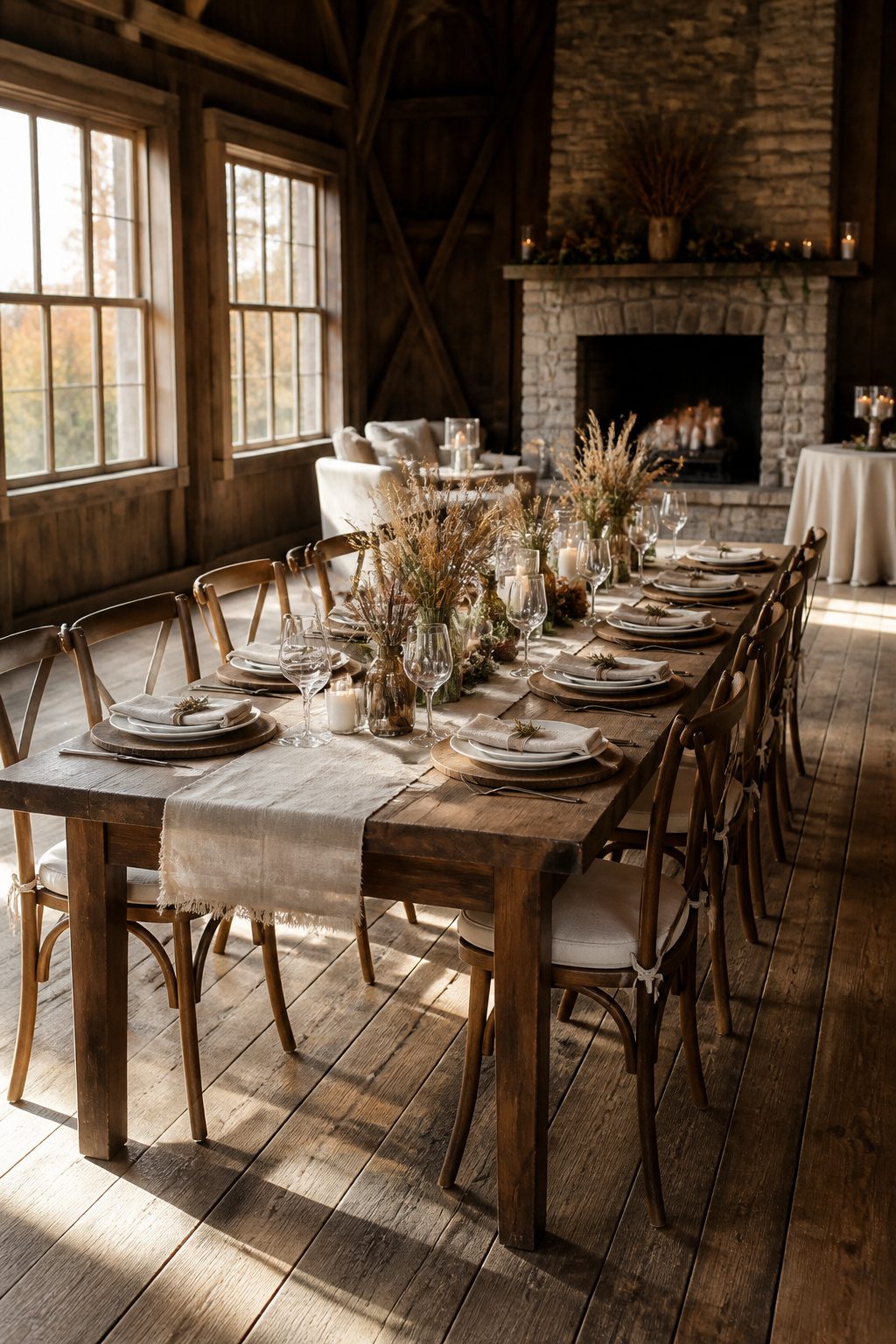
Wood chargers do the quietest work at a fall table, grounding the whole setting in something organic before a single stem goes down.
Slice-cut ones pair cleanly with cream ceramic plates and a linen napkin folded loose, that effortless look that actually takes some intention.
A sprig of rosemary or a dried flower tucked into the fold takes two minutes per setting, and guests notice every single one.
The weight is where I pause. A solid wood charger runs heavier than ceramic, and a full table of them adds up fast.
Transport from rental warehouse to venue means thinking about who carries what, and whether your coordinator’s team signed up for that labor. Rental wins on logistics every time for anything slab-shaped.
Stump bases and full wood slices for centerpieces run into the same math: purchase price on Etsy can look cheaper until you factor in the truck, the muscle, and the Monday morning return of forty pound objects you now own.
For one event, rental almost always beats purchase when you count the hidden costs of weight.
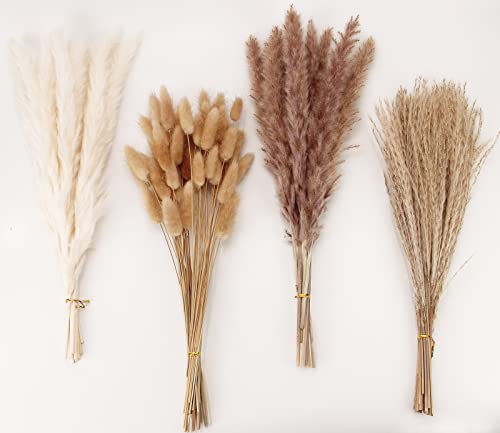
MORE THAN ONE KIND OF POMPOUS GRASS BOUQUET: carefully selected natural dried pampas grass decor, try to avoid deformation and breakage of dried pampas grass, 100 pieces of pampass grass contain 50 small pampas grass, 20 reed grass, 15 white pompas, 15 brown pompass grass branches(pampas grass vase not included) fill your vase, you can match it with different dried pompas floral bouquets according to your preference

Diverse Pompas Floral Embellishment: This decorative set includes 610 meticulously crafted pieces of dried pampas grass and dried flower bouquets, suitable for fireplace decor, table centerpieces for dining room, centerpiece table decorations, rustic home decor, boho room decor, western living room decor, nurseries, room decor aesthetic, boho-style rooms, dried flowers for vase, wedding decorations, and boho party decorations, adding natural beauty to various occasions.

Value Package Content: This set includes 5 pairs of knit baby boots in assorted colors and 5 bundles of mini dried flowers. The baby boots have a sole length of approximately 3.94 inches, and the dried floral bundles are about 7.09 inches long, matching half the size of an average palm for delicate display
7. Dried Florals
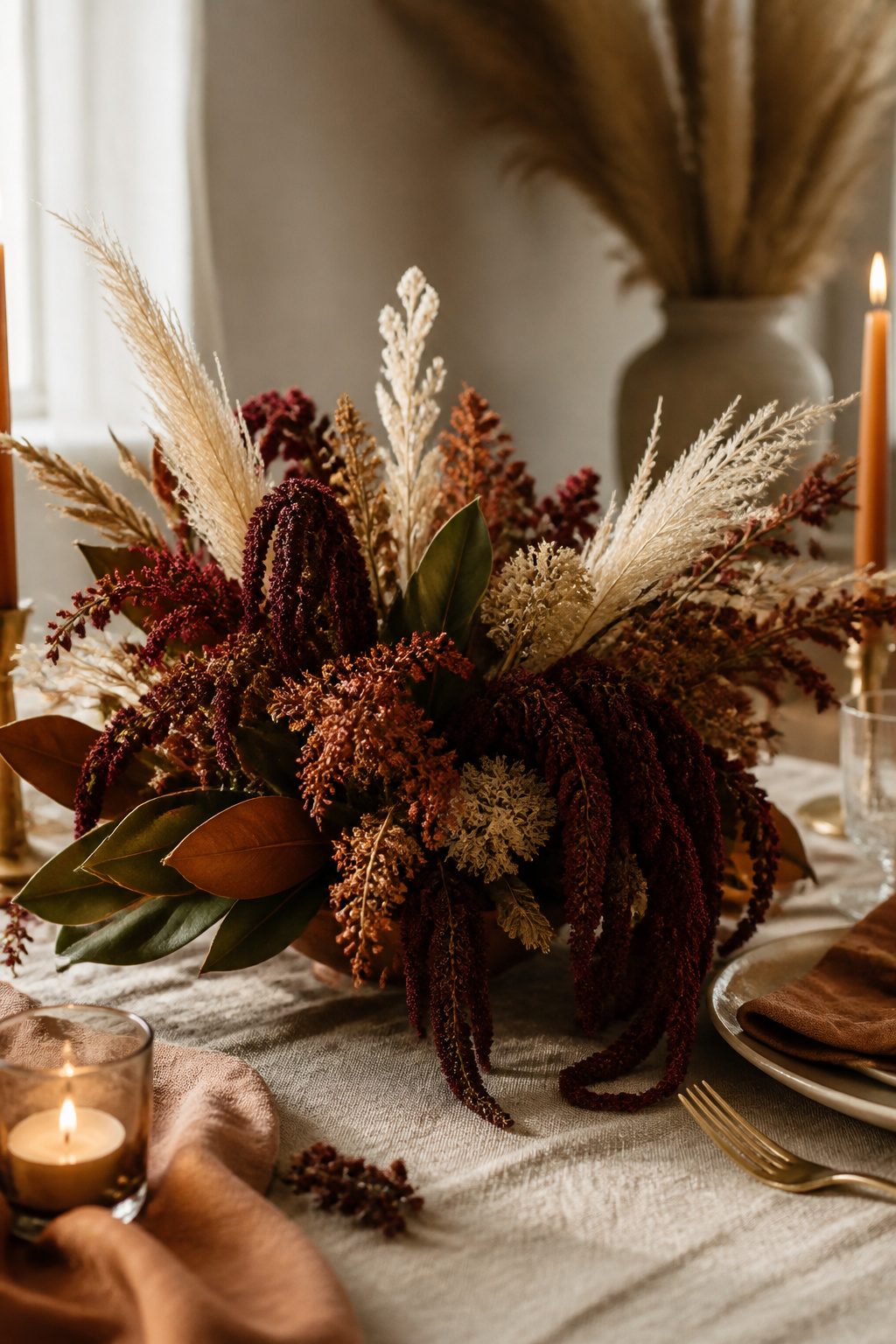
Dried florals carry a texture that fresh stems simply cannot match, especially for bohemian fall wedding table decor.
The wispy, trailing shape of amaranthus works particularly well in autumn arrangements; its deep burgundy and rust tones read as seasonal without trying too hard.
Unlike fresh flowers that demand water changes and climate control, dried botanicals can be arranged days ahead of the event. They will not wilt between setup and cocktail hour, which matters more than most couples expect when the timeline tightens.
Pampas grass, preserved magnolia leaves, and wheat stalks layer together for a runner base that holds its shape through the entire celebration.
The tradeoff is a quieter color range, but for tables where the goal is warmth and texture rather than bright bloom, that restraint reads as intentional.

【Premium Ivory Taper Candles for Elegant Ambiance】Crafted from high-quality paraffin wax and natural cotton wicks, Everymoment's 10-inch ivory taper candles deliver a dripless, smokeless, and non-toxic experience. Each candle burns for up to 8 hours, providing a steady, soft glow ideal for weddings, Christmas, dinners, parties, and home decor. Their classic ivory color complements any setting, from formal events to casual gatherings.

CRAFTED WITH QUALITY: Made with 100% paraffin wax and pure cotton wicks, these high quality candles burn cleanly and do not drip or create a mess. Ivory taper candles 10 inch 's burning time approaches 7-8 hours.

1**A coordinated place to start - Includes 1 ivory concrete tray and 3 metal gold taper candle holders in different heights. The pieces are already paired in color and scale, so you can create a composed dining table centerpiece without sourcing a separate tray. Candles are not included.
8. Velvet Table Runners
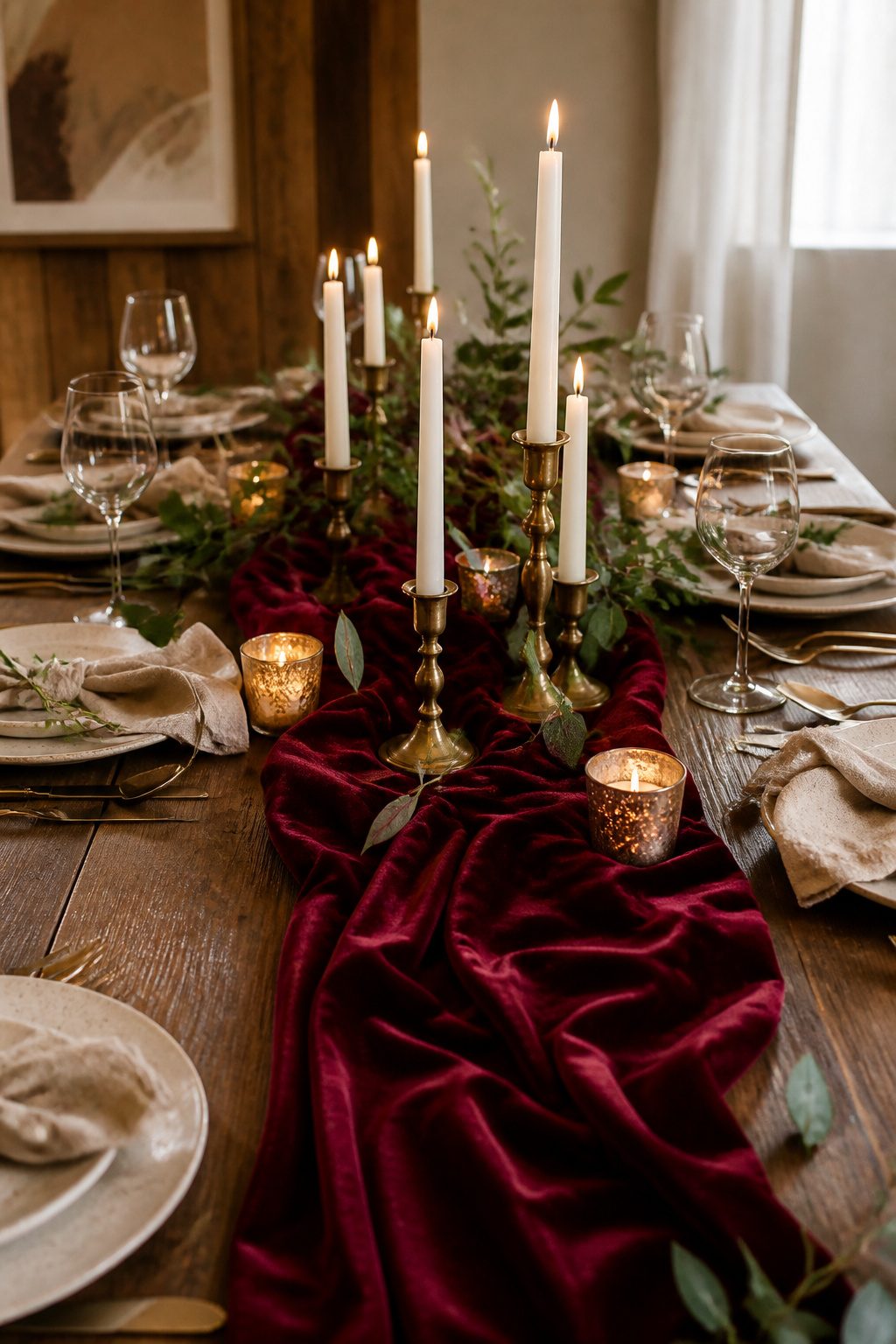
Burgundy velvet catches the low autumn light in a way linen never manages, and for a fall wedding table decor scheme that reads immediate warmth, that texture does half the work before a single candle goes down.
I have watched rental houses charge per runner what a full yard of decent velvet costs at a fabric store, which tempts a lot of couples to buy the bolt and DIY. The math shifts once you account for laundering.
Velvet nap crushes in a home washing machine, dry cleaning a table’s worth of yardage runs surprisingly high, and storing eighteen feet of fabric you will never use again is its own hidden cost.
Rental pricing usually wins for one evening if your venue handles the pickup and return.
Buy only if you are making something you can repurpose, a set of stockings or a throw, and even then, factor the cleaning in before you compare the two numbers.

High Quality & Durable : Made of 100% spun polyester, sturdy sewing, soft and durable, protecting your table's surface from hot pans, scratches, and spills

Cheesecloth Fall Table Runner - Made of excellent quality polyester. High temperature setting wrinkled design and delicate edges with seamless technology make sheer table runner more beautiful than traditional fabrics

【Package & Size】: You will receive 10 terracotta cheesecloth table runners, each measuring approximately 22 x 120 inches. The generous size works well for long tables, round tables, banquet tables, dessert tables, wedding arches, and party displays.
9. Pumpkin Accents
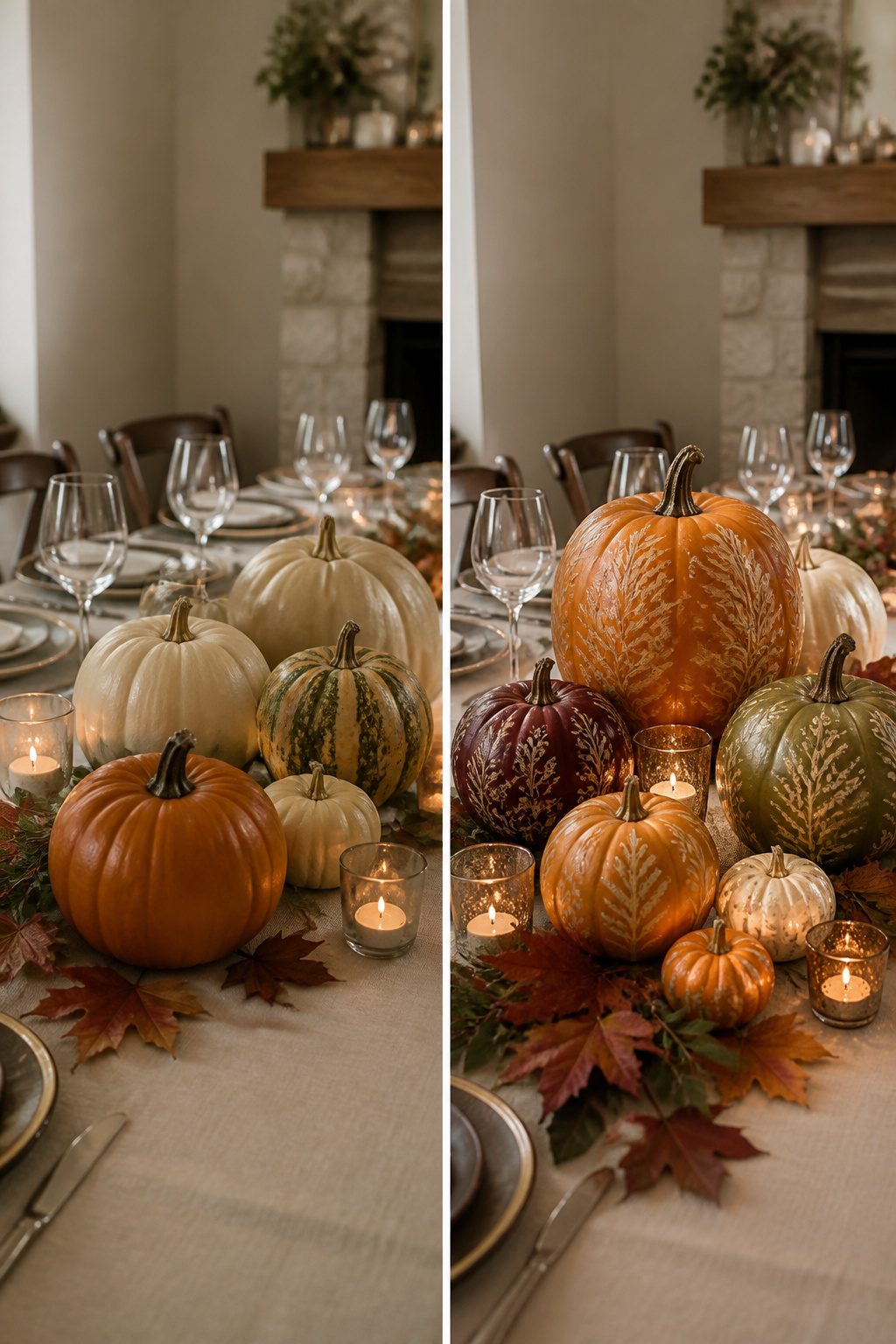
Pumpkins in varying sizes and colors are the most immediate way to signal fall at a table, though the classic orange is only one option.
Carve them too early and they collapse before the reception, a mistake I have watched ruin more than one centerpiece.
Paint or gilding solves this for couples working outside the orange palette; a solid coat in cream, deep burgundy, or even a metallic gold shifts the gourd from harvest decoration to something that reads intentional against your chosen colors.
Stenciling adds detail without the structural weakness of carving: a monogram, a simple geometric, or a lacy pattern gives the eye somewhere to land.
The work is cheap, the pumpkins themselves are cheap, and a painted surface lasts the full weekend where a jack-o’-lantern face does not.
BEAUTIFUL – Vintage inspired 16 ounce amber glass adds a touch of style to your home, kitchen and bath

【 Vintage Style 】TBWIND small flower bud vases set of 12, each amber glass vase is decorated with etched patterns to further enhance its attractiveness. The different desgin mini vase is pleasant to the eyes even without flowers. Whether you're aiming for a minimalist look or a more elaborate arrangement, these different desgin mini vases provide the perfect foundation for your creative ideas.

Classic Amber Glass – Crafted from thick, ribbed glass in a warm amber tone that complements modern, farmhouse, and vintage décor styles.
10. Garland Centerpieces
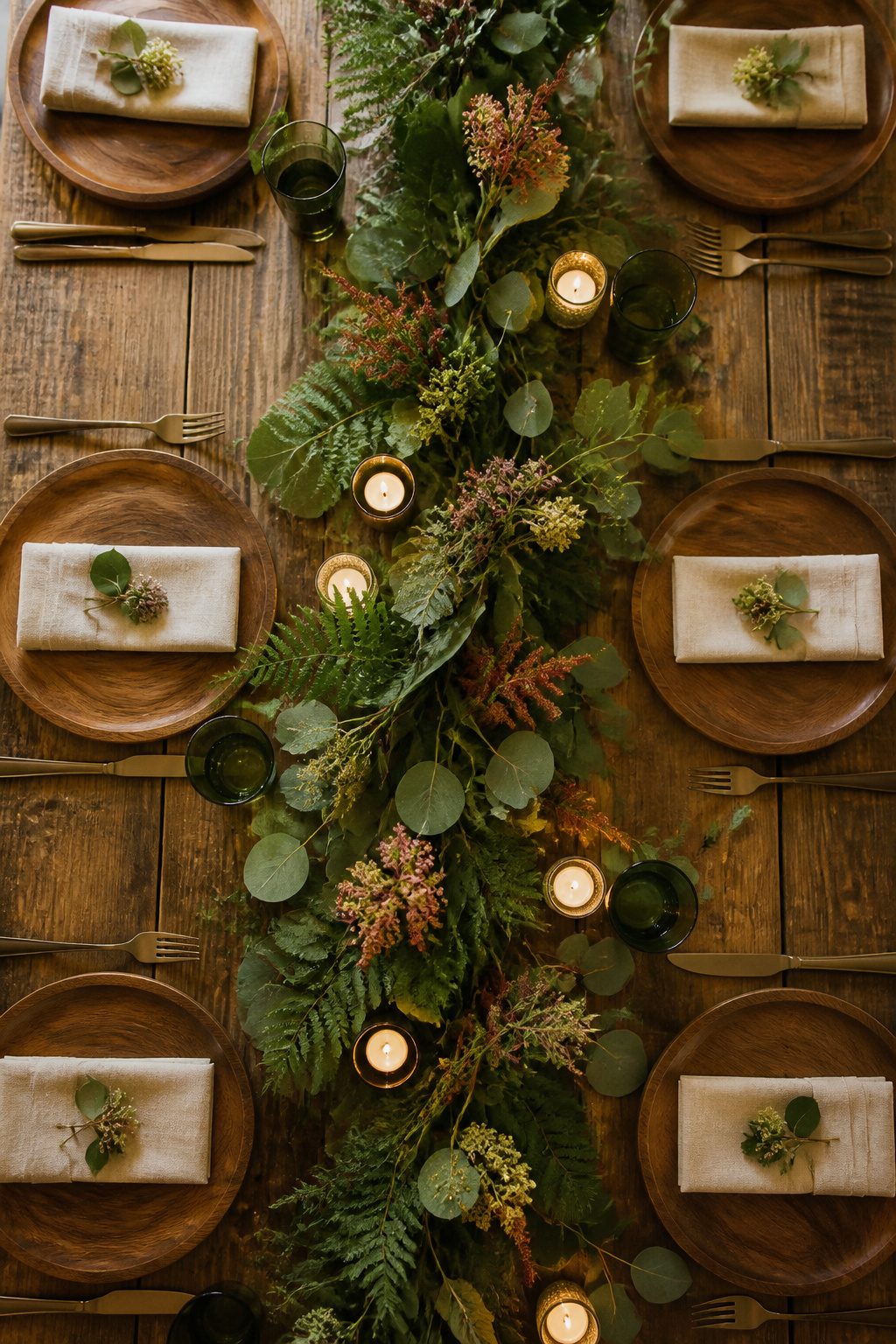
A continuous greenery garland running the full length of a reception table brings the outside in without fighting centerpieces for visual attention.
For standard farm tables, plan on garlands that run six to eight feet to cover the surface end to end with a little drape at each side.
Florists build these in sections of eucalyptus, fern fronds, ivy trails, and Italian ruscus, which makes setup quick on the wedding day itself.
Tuck in small seasonal blooms or dried flowers every few inches for color interest without overwhelming the green.
Low runners keep sightlines clear so guests can see and connect naturally across the table.
You have two ways to secure them: pin the garland down the center for a neat, controlled line, or let it drape loosely over the table edges for a more relaxed, organic feel.
The pinned route wins if your farm tables will be moved or rearranged during the event; loose drape works better when the tables stay put and you want the reception to feel social and intimate rather than ceremonial and stiff.

Charger Plate Quality: Crafted from lightweight, durable plastic, these plate chargers are resistant to fading, built to last, and suitable for patio dinners, restaurants, home dining gatherings or graduation table decor

Abundant Set for Your Events: this package includes 24 pcs round jute placemats, providing ample rustic placemats for your family gatherings, party activities, or baby showers; With enough quantity to decorate your dinner table, these round burlap placemats ensure you have everything you need to entertain with ease

FAUX WOOD GRAIN: These faux wood rustic dinner plate chargers are elegantly designed with a beautiful tree pattern, easily adding a touch of elegance to any dining experience, whether you are impressing your family, friends or others.
Color Palettes That Read Fall
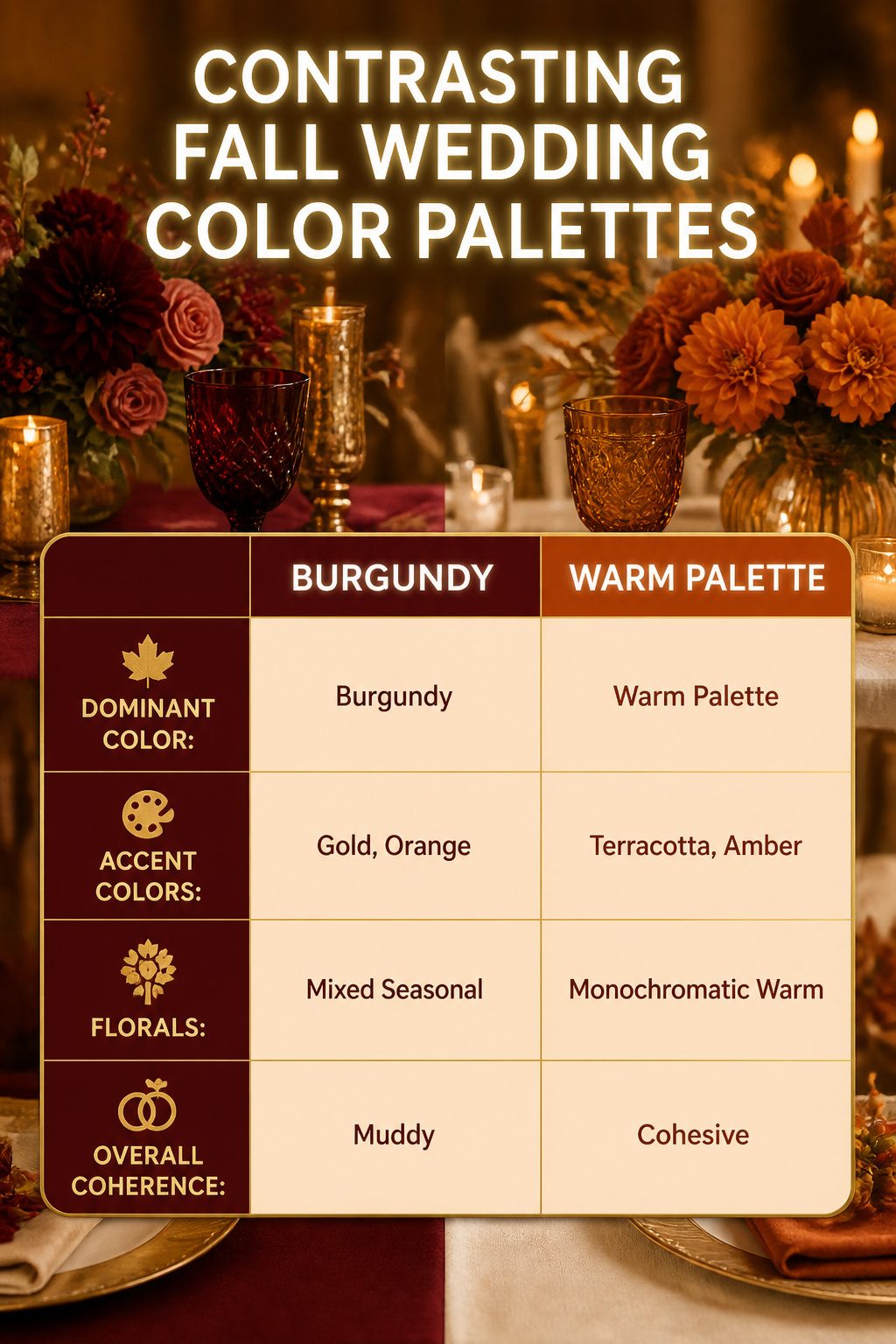
Burgundy reads as the color people picture when they say "fall wedding," and the couples I watch plan usually land there first.
Deep wine tablecloths against ivory linens give that dramatic, elegant contrast that feels intentional rather than seasonal by accident.
The mistake arrives when they try to layer in burnt orange florals, gold accents, and jewel-toned glassware all on the same table. Three warm palettes fighting each other turns the table muddy instead of rich.
The better move is to pick one dominant warmth and let everything else serve it. Burnt orange marigolds and dahlias against crisp white linen need terracotta or amber vessels to complete the family, not a competing burgundy runner.
If drama is the goal, burgundy cloth with dusty rose and gold vase details already carries enough weight without orange crashing in.
Jewel tones like emerald or sapphire work the same way, but only as the single bold choice paired with neutrals, not mixed with other saturated autumn colors.
Muted pastels can soften the whole look if the couple wants something lighter, though that path works best when they commit fully and skip the jewel-tone accents entirely.
The tables that photograph well and feel coherent are the ones that chose their warmth and stayed disciplined about it.
Budget-Friendly Fall Decor
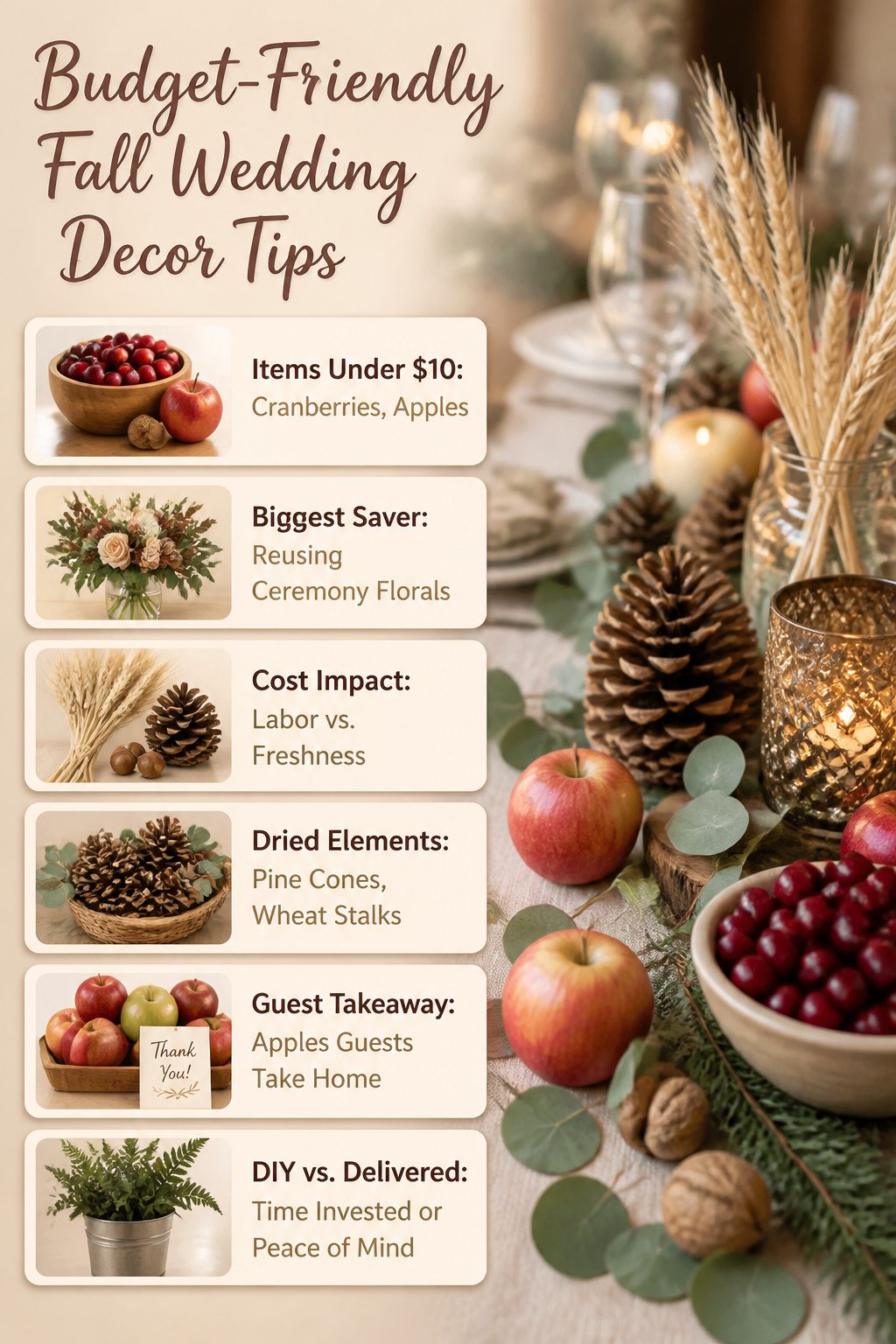
A $10K wedding means the table budget is usually hundreds, not thousands, and that changes what "fall wedding table decor" can look like. The couples I watch make this work start with what the season gives for free.
Cranberries and whole unshelled walnuts fill a bowl for under ten dollars. Assorted colored apples line a runner and guests take them home.
Reusing ceremony florals at the reception tables is the single biggest saver I have seen: the arch sprays become centerpieces with nothing more than a pair of shears and a borrowed vase.
Dried elements stretch further than fresh. Wheat stalks, pine cones, acorns, and eucalyptus hold their shape for months, so you can collect and arrange ahead of time instead of paying a florist for a morning-of rush.
The trade-off is labor versus freshness. One couple I advised spent three evenings foraging branches and ferns from a family property; another paid roughly triple for delivered pampas grass and called it sanity.
Both tables photographed fine. Neither guest noticed who had sweated for the look.
Height Variation for Visual Interest
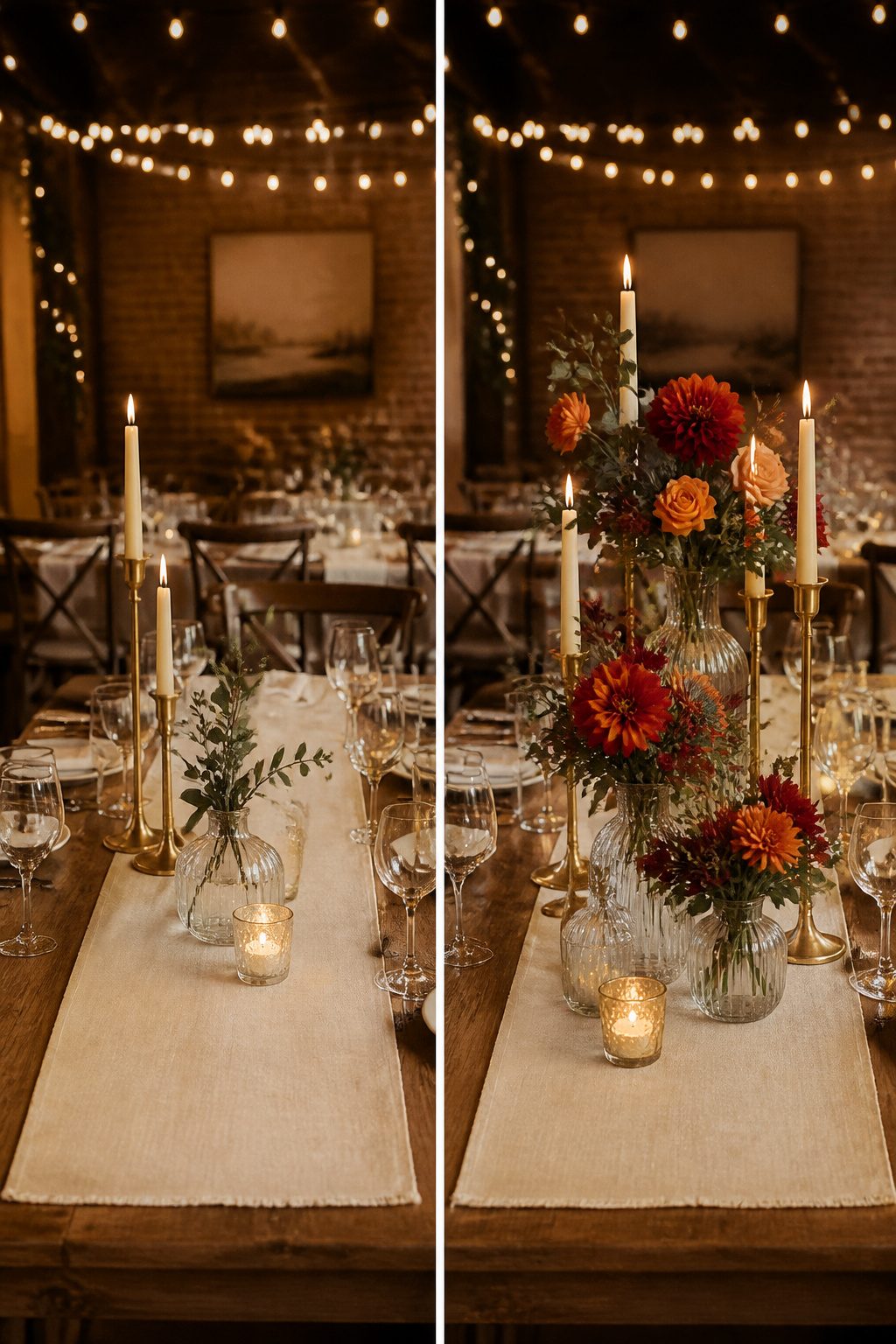
Varying the height of your centerpieces keeps the eye moving across the table instead of landing on one flat row.
I group candlesticks in three or four different heights, then set shorter vases between them so nothing sits at the same level.
The staggered look reads as elegant in person, but anything above about twelve inches blocks faces in reception photos, which is the shot couples usually want of their guests laughing across the table.
Taller pieces work fine at the edges of a long table or on a dessert display where no one is seated behind them.
For the seating area itself, I keep the tallest element low enough that a seated person can see over it, and I cluster the height toward the center of the table rather than in front of each individual place setting.
The same rule applies to vases: a trio in graduated sizes, using one flower type and a unified fall palette, gives you that dynamic look without turning the table into an obstacle course for conversation or for my camera.
Lighting for Warm Ambiance
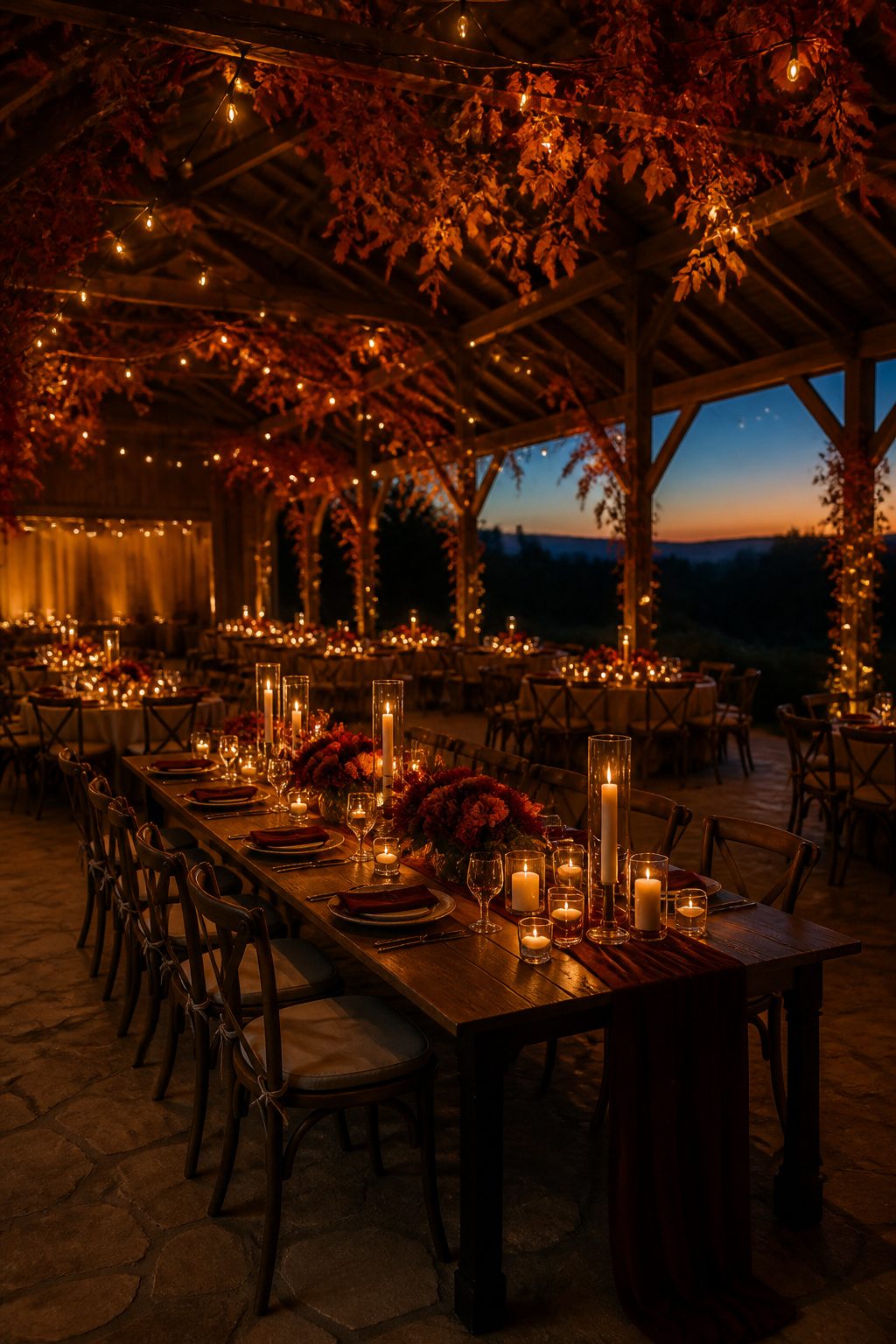
Candlelight does the heavy lifting for fall wedding table decor once the sun drops, and the trick is building layers of height so the glow reaches every face at the table.
A mix of tapers in glass vases, votives tucked into water-filled holders, and low tea lights keeps the light from flattening out at a single level.
Colored wax works here too; orange or deep red candles read as intentional against autumn palettes rather than accidental.
String lights need an honest look at what the venue actually offers. Outdoor tent hookups and indoor outlets are rarely where you want them, and extension cords across guest walkways are a liability I have watched planners regret.
I bring a full box of battery-operated tea lights to every fall wedding now, enough to replace any centerpiece that loses power or any candle the wind claims during cocktail hour.
The backup costs little and has saved more than one reception from going dark before the first dance.
Frequently Asked Questions
How can I decorate for a fall wedding on a budget?
Start with what autumn gives for free or cheap.
Cranberries, whole walnuts, and apples fill bowls and line runners for under ten dollars, and guests can take the fruit home. Reusing ceremony arch sprays as table centerpieces with shears and borrowed vases is the single biggest money saver.
Dried elements like wheat stalks, pine cones, and eucalyptus hold their shape for months, so you can collect and arrange ahead instead of paying a florist for a morning rush.
What flowers are in season for fall weddings?
Asters, calla lilies, chrysanthemums, dahlias, gerbera daisies, gladioli, marigolds, roses, hydrangeas, sunflowers, and zinnias are all popular choices for autumn celebrations.
The article focuses more on how to use them than which varieties to pick: marigolds and dahlias pair with terracotta or amber vessels for a burnt orange palette, while deeper tones like burgundy amaranthus work in dried arrangements that last the full event without water.
How can I create height in my wedding centerpieces?
Group candlesticks in three or four different heights, then set shorter vases between them so nothing sits at one flat level.
The staggered look reads elegant in person, but keep anything above twelve inches away from where guests sit; taller pieces block faces in the photos couples usually want of friends laughing across the table.
Save your tallest elements for table edges, dessert displays, or areas where no one sits behind them.