A backyard wedding under $10,000 is possible only if you treat the yard as a starting point, not a free venue. Rain turns a lawn into a $800 tent problem, and noise ordinances can cut your reception short at 9 p.m. The real budget move is knowing which costs swap: the $10,000 venue fee becomes your food, photography, and decor fund, but only if you track every dollar in a shared spreadsheet or labeled envelopes. String lights overhead run $200–$400, while professional lighting starts in the thousands, and that gap is where backyard weddings win or lose.
1. DIY Decor Ideas

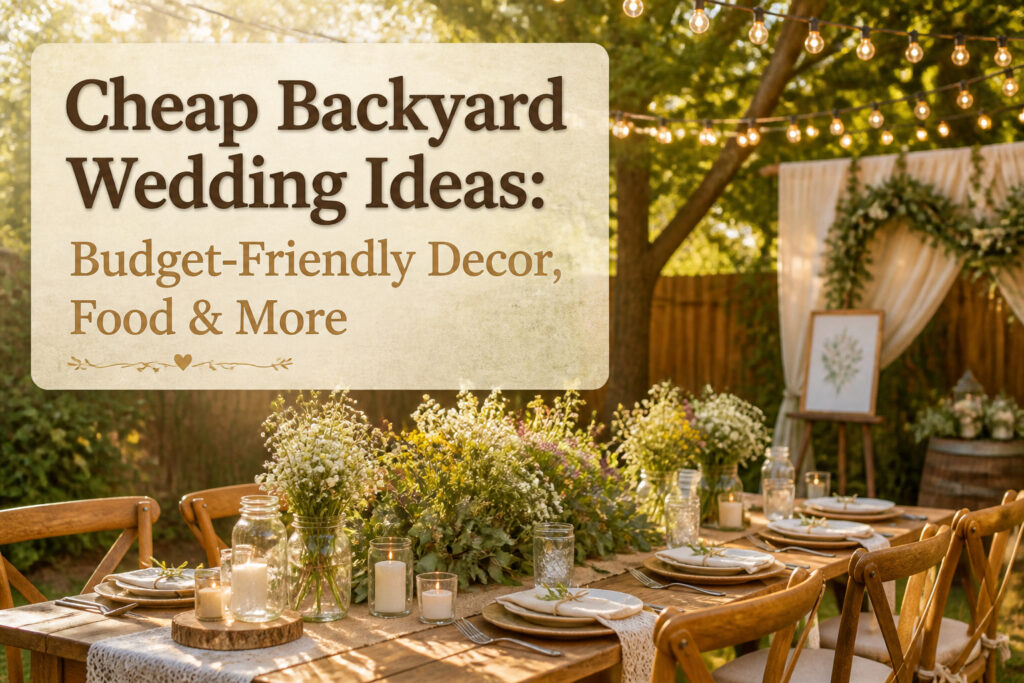
The best backyard wedding decor starts with what you already have around you. Trees, garden beds, and existing landscaping do more than any rented arch ever could, and they cost nothing to feature. When you do buy, thrifted glassware and borrowed table runners cut the bill without cutting the look. Pressed flowers tucked into mismatched bottles, fabric scraps torn into ribbon lengths for chair ties, these read as intentional rather than improvised.
The line between charming and cluttered is thinner than most couples think. I photographed one wedding where the bride had collected twenty-seven mismatched mason jars, every surface held one, and the result felt more like a yard sale than a celebration. Three or four groupings would have told the same story with room to breathe. Borrow what you can from family, a sentimental tablecloth from an aunt carries more weight than anything bought new, but borrowed pieces need restraint too. One or two meaningful items anchor the space; a dozen compete for attention. String lights help unify a scattered look, warm amber bistro strands overhead pull the eye up and give mismatched tables a single glowing canopy to sit beneath.
2. Affordable Food Options

Traditional wedding food and drink budgets land at $3,000–$4,000, which is nearly half the cost of a modest backyard wedding before you have bought a single chair. The backyard format drops this because you are not locked into per-head catering contracts or venue kitchen fees.
BBQs, potlucks, and homemade dishes are the backbone. A taco bar with slow-cooked proteins, a pasta station with two sauces, or grilled chicken and sausage with bulk sides like roasted vegetables and macaroni salad all work at scale. The proteins stretch because the sides do the filling. Competitors mention "BBQ" or "potluck" but stop there; what matters is the per-person math, and these formats get you under $10 a head if you shop the proteins yourself.
Potlucks fit smaller guest counts where you know who cooks reliably. For everything else, assign one or two people to run the grill or buffet rather than hiring staff. Skip the full bar and offer a simple drink menu, beer and wine plus one signature batch cocktail. The savings sit in the labor you replace, not just the ingredients you choose.
3. Unique Entertainment

Guests remember what they did, not just what they saw. Lawn games fill the hours between ceremony and dancing without adding a line to the rental bill. Cornhole, bocce, and giant Jenga all photograph well, which matters more than it should when your whole gallery is one photographer in a backyard. I have watched a game of Kan-Jam turn strangers into allies inside ten minutes, and that energy carries back to the tables.
A DIY photo booth needs only a fabric backdrop and props to work. One couple I read about hung colorful paper fans behind a sheet and set out Polaroid cameras with painted clothespins so guests could pin snapshots to a wall collage. The booth became part of the decor without anyone hiring a vendor.
Live music carries risks a playlist does not. I once saw a three-piece band arrive to find no flat surface for their equipment. They set up on the grass, ran extension cords across it, and by the second set those cords were a trip hazard in low light. The fix is obvious in retrospect: check the ground before you book the musicians, and tape down anything that crosses a walkway.
4. Budget-Friendly Invitations

Digital invitations run under $50 for the whole guest list, and that alone was enough to make me look twice at them for our backyard wedding. Paperless Post handles the RSVP tracking, which matters more than you might think when you’re chasing down meal counts two weeks out without a wedding planner to do the chasing. The templates look polished enough that nobody misses the envelope.
For couples who still want something physical to hand to parents or photograph, Canva designs print cleanly at most local copy shops. Budget $100–$200 for good cardstock and the shop’s bulk rate, which lands you somewhere between the free digital route and the $800-plus that traditional letterpress starts at. I nearly talked myself into letterpress early on, then realized the same money covered our entire bar tab. The cards would have ended up in the same recycling bin three months later.
5. Creative Seating Arrangements

Table and chair rentals for a backyard wedding land at $800–$1,200, which is real money when the whole event needs to stay under $10,000. Borrowing drops that line item close to zero, but only if you control what the camera sees.
Church basements, community centers, and family attics are the places to ask. A church basement often has stacks of folding chairs going unused on a Saturday. Community centers may lend to residents for a small deposit or nothing. Family attics yield the mismatched wooden chairs that read as intentional eclectic rather than accidental chaos.
The difference is planning, not luck. I saw one wedding with forty borrowed folding chairs in four colors, shot from the wrong angle, and the result looked like the hosts had run out of time rather than curated a look. The photographer had stood at the aisle entrance facing the crowd, so every mismatch hit at once. From the side, grouped by color into blocks, those same chairs would have read as design.
Straw bales, ottomans, and tree stumps work for lounge areas if your ground is level and your guests are not in heels they cannot afford to sink. The borrowed route saves the rental budget for things you cannot source free, like the tent or the plates.
6. Lighting Ideas

String lights are the most popular choice for backyard wedding lighting, and the reason is practical: a 50-foot strand setup runs about $200–$400, where professional event lighting starts in the thousands. LED strands draw less power than incandescent, which matters when you are running extension cords from a single outdoor outlet. Those cords need an outdoor rating; the difference is printed on the jacket, and indoor cord insulation cracks in weather.
Lanterns and candles fill the gaps string lights leave along paths and tables. Grass is the problem with candles. Standard holders tip on soft ground, so weighted glass hurricanes or enclosed lanterns are worth the small extra cost. Battery-operated LED candles remove the fire concern entirely, though they read dimmer in open air than flame.
The mistake I notice most is over-lighting. Backyard darkness is part of the setting. A few strands overhead, lanterns at ankle height along walkways, and candles only where people sit still. That is usually enough.
7. Personal Touches

The favors guests actually take home are the ones that feel like a small piece of the couple, not a factory order. Seed packets with the wedding date stamped on the back cost next to nothing and fit a garden setting without explanation. Homemade jam in recycled jars, sealed with a handwritten label, takes an afternoon of cooking and an evening of labeling; the labor is the point. Local candy in folded paper bags works for a St. Louis crowd, something they recognize from the neighborhood shop rather than a bulk warehouse.
Themed decor follows the same rule: narrow beats broad every time. One couple I photographed centered everything on St. Louis breweries. Beer bottles became vases, cardboard coasters became place cards, and the whole thing photographed cleanly because every object answered to the same two-word idea. Another couple tried "vintage" so widely that milk crates sat next to lace doilies next to a typewriter, and none of it cohered in the frame or in person. Pick the single reference, repeat it three times, and stop.
Budgeting Tips
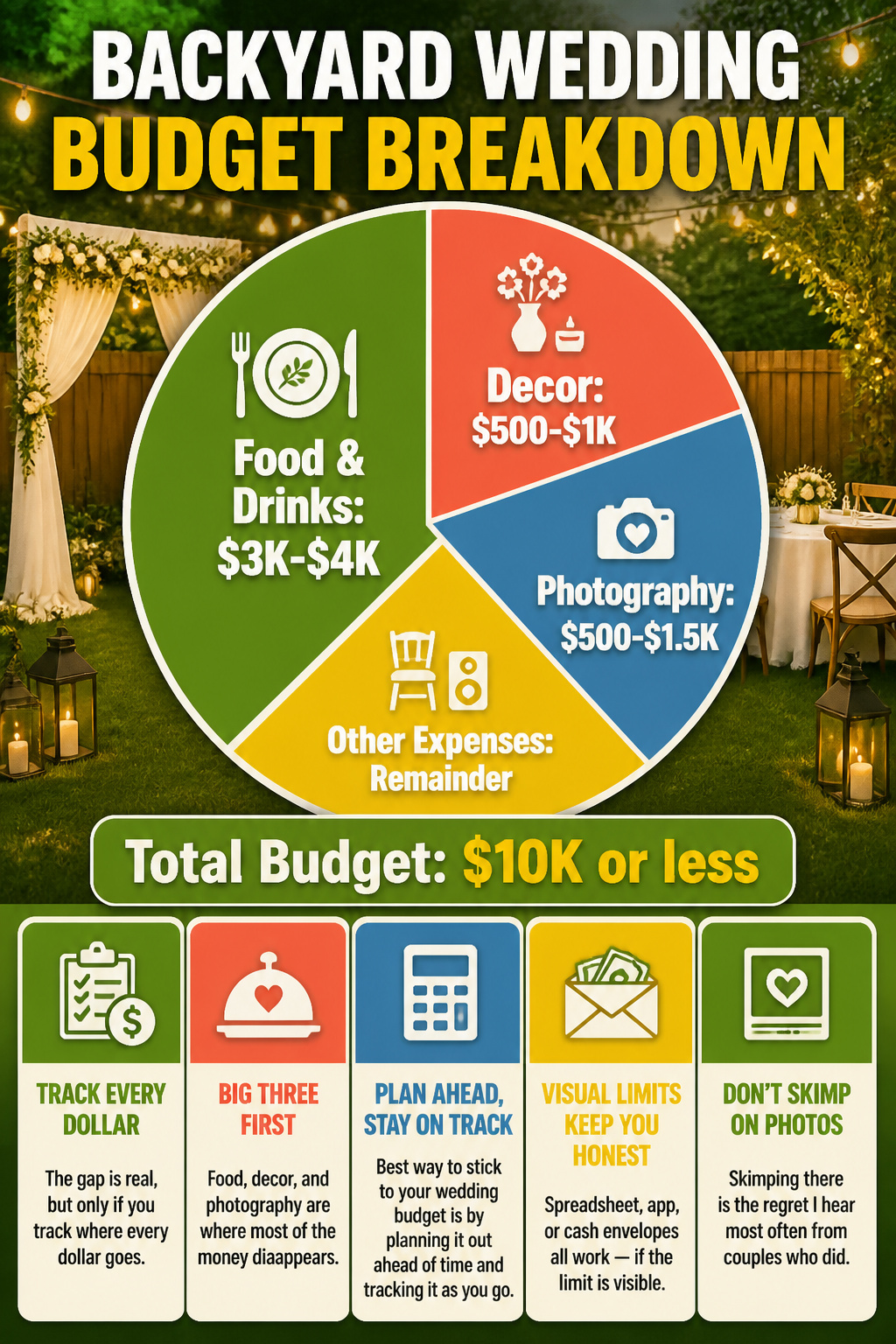
A backyard wedding can land at $10,000 or less, which is what some couples spend on a venue alone. The gap is real, but only if you track where every dollar goes.
Food, decor, and photography are where most of the money disappears, so those are the categories to lock down first. For food and drinks, plan on $3,000–$4,000. Decor runs $500–$1,000. Photography lands at $500–$1,500, and skimping there is the regret I hear most often from couples who did. Everything else, rentals, attire, music, favors, should fight for what is left.
The best way to stick to your wedding budget is by planning it out ahead of time and tracking it as you go.
— Quicken
That tracking part matters more than the tool. A shared spreadsheet works. An app like Quicken Simplifi works. Even cash in labeled envelopes works, if the visual limit keeps you honest. What fails is checking the total once and trusting your memory for six months.
Guest List Management

Trimming a guest list from 120 down to 40 drops your per-head food and drink cost alone by roughly $60 to $80, and the savings do not stop at the plate. Fewer guests means fewer tables to rent, fewer favors to assemble, and fewer stamps to buy. The arithmetic is blunt, but the feeling of the day changes too; a backyard full of forty people leaves room for conversations that actually finish.
The hard part is explaining the cutoff. One couple I read about drew a hard line: immediate family and wedding party only. That rule sounds severe until you try to defend a more flexible one. "Immediate family and wedding party" gives you a reason anyone can repeat, which matters when a great-aunt asks why her neighbor’s son did not make it. The couple stuck to it, and the backyard they married in felt like a home again, not a performance.
DIY Projects

Supplies for a finished centerpiece run cheaper than the florist’s version, but the time math rarely gets checked. Two hours per table times twenty tables is forty hours, and the week before a wedding does not contain forty spare hours. I learned to price DIY in hours, not just dollars, after watching a friend abandon her half-strung paper garlands three days out.
Personal touches enhance the experience only when they are finished, not abandoned at eighty percent. That threshold matters because backyard weddings tempt you into projects that feel manageable in March and collapse in May. Printable invitations from free or low-cost templates cut the stationery bill sharply, and high-quality cardstock elevates the result enough that guests will not guess you printed them at home. Digital invitations skip printing entirely.
The projects worth keeping are the ones with clear endpoints: a single altar piece, not twenty table settings. Mason jars and string lights work because they scale without multiplying your labor. Food DIY, including desserts and cake, saves money only if your kitchen and your helpers can handle the volume without your oversight. Some couples bake their own cake; more should ask whether they want to spend the morning frosting while guests arrive.
Venue Considerations

A backyard wedding cuts the single largest line item most couples face. The typical venue now runs about $10,000, and that is money you can redirect toward food, photography, or simply keeping the total under $10,000.
The savings are real, but a backyard is not free. One couple I read about budgeted for zero venue cost, then spent $800 on porta-potties and a tent rental after rain moved in. They still came out ahead of traditional pricing, which is the point, not that the yard itself had no price tag.
Practical limits shape what you can actually do. Parking fills fast on residential streets, and some towns require permits for gatherings over a certain headcount. Noise ordinances usually carry hard end times, especially on weeknights, so notifying neighbors early beats an awkward shutdown at 9 p.m. Bathroom math is straightforward: one unit per fifty guests, or you are asking people to queue through cocktail hour.
The trade-off is control for labor. You choose the layout, the end time, whether the dog wanders through the ceremony, but you also become the venue manager, the parking attendant, and the person who remembers toilet paper. For couples who would rather spend the money than the Saturday, a backyard is the wrong call. For everyone else, it is the budget move that makes the rest possible.
Vendor Alternatives

Swapping vendors for people you already know can cut thousands off a backyard wedding, but the social math is trickier than the budget math. A friend who owns a good camera is not a wedding photographer; miss the kiss or blow the white balance, and you have no negatives to reshoot and a relationship strained by blame. The same risk sits across the table: asking your college roommate to spend the reception plating brisket means she clocks in while everyone else clocks out.
Specific arrangements land better. A photography student shooting at half a professional rate gets real portfolio stakes, real gear, and enough distance from the guest list to stay focused on the job. An uncle tending bar for the night works because the role has boundaries: pour, chat, repeat, with no expectation that he give a toast or dance with your mother. Trading services with a friend who DJs is cleaner still; payment is the set itself, and the contract is the swap, not the friendship.
The officiant slot is the safest handoff. Ordination runs cheap or free depending on the state, and the ceremony lasts twenty minutes. A cousin who married us last spring kept the paperwork simple and the tone personal, which is what most backyard weddings are after anyway. The savings on a hired officiant, typically $200 to $450, is real money for a couple staying under $10K.
The line to hold is work versus presence. Anyone you pull into service misses the party in proportion to the task. Keep that cost in mind when the spreadsheet shows zero.
Frequently Asked Questions
Can you have a wedding in your backyard?
Yes, backyard weddings are legal and practical in most U.S. towns, though you should check local noise ordinances and whether permits are required for gatherings above a certain headcount. You will also need to plan for parking, bathrooms, and a rain backup like a tent rental.
What is a realistic budget for a small wedding?
A small backyard wedding can land at $10,000 or less, which is roughly what some couples spend on a venue alone. Lock down food ($3,000–$4,000), decor ($500–$1,000), and photography ($500–$1,500) first, then fit everything else into what remains.
What are some unique ideas for backyard wedding decor?
Start with what your yard already offers: trees, garden beds, and existing landscaping cost nothing and photograph better than rented arches. Fill in with thrifted glassware, mismatched bottles with pressed flowers, fabric scrap chair ties, and string lights overhead to unify the look.
How can I save money on food for my wedding?
BBQs, potlucks, and homemade dishes get you under $10 per head if you shop the proteins yourself. A taco bar, pasta station, or grilled meats with bulk sides all scale well; skip the full bar and offer beer, wine, and one signature batch cocktail to cut labor and liquor costs.
What are some fun activities for guests at a backyard wedding?
Lawn games like cornhole, bocce, giant Jenga, and Kan-Jam fill the gap between ceremony and dancing without any rental fees. A DIY photo booth with a fabric backdrop and Polaroid cameras also works; guests can pin snapshots to a wall collage that becomes part of the decor.