Princess seams shape the bodice with vertical seams from bust to waist, and the price swings come down to fabric weight, how much hand-finishing the designer put in, and what the alterations will cost you.
Whether you want the seam lines to do most of the shaping or to support a full skirt, and how much structure you need up top, will steer you toward one of these four.
Satin catches light and pronounces every seam; crepe keeps the same sculpted construction quieter and more fluid in motion.
1. Flattering Fit Princess Seam Wedding Dress
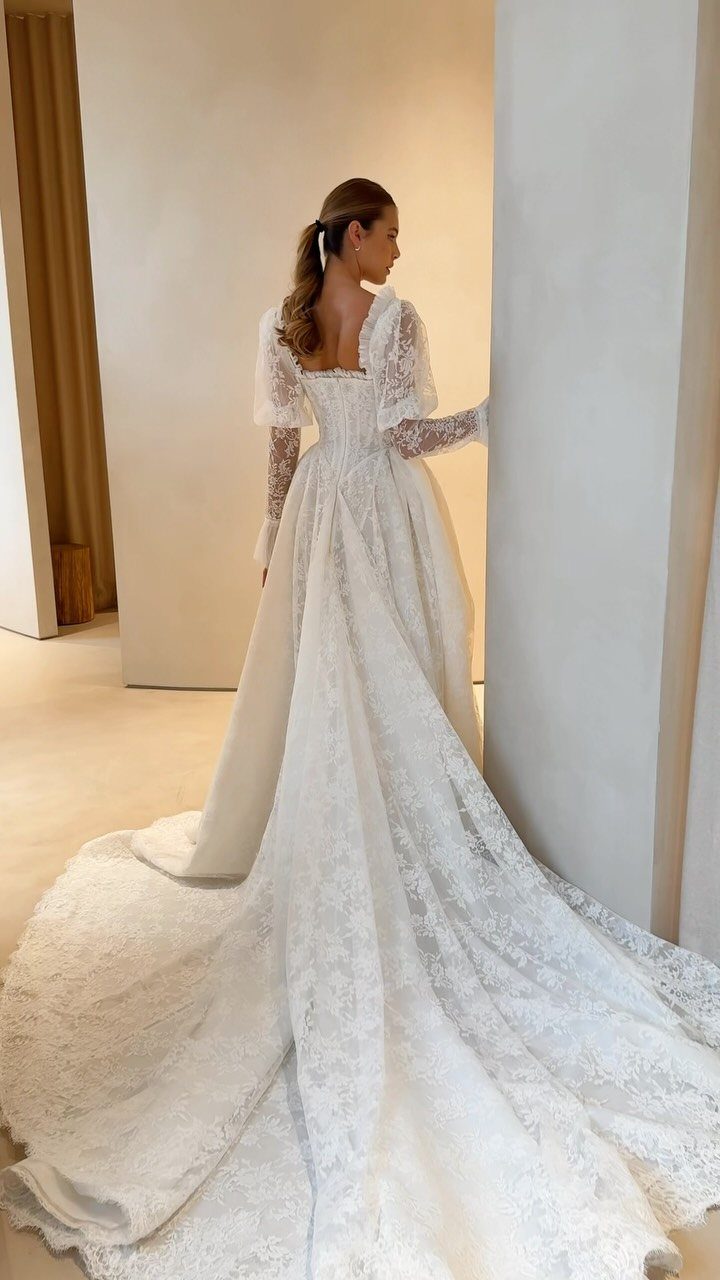
Princess seams run from shoulder to hem in one continuous line, shaping the fabric to the body without needing a waist seam.
That uninterrupted cut is what lets lace lie this smoothly across the back and torso, and what makes the style forgiving if you are between sizes or carrying most of your fit concern in the midsection.
If you are shopping with a modest budget, this is one silhouette where an alteration to the side seam often suffices instead of a full bodice rebuild.
Ask whether your shop includes post-purchase fittings in the gown price; some studios build one or two into the listed cost, which matters more than the initial tag if you are deciding between a sample sale gown and a made-to-order one.
The princess seam style of dress needs no waistline since it does its shaping by joining edges of different curvature.

Fabric: Baby girl dress formal dress infant wedding flower girl dress is made of premium fabric, the material is super soft to touch, breathable and skin-friendly to wear, no itchy to the tender skin, provides your girl a comfortable wearing experience, let your girl enjoy the best comfort. it's perfect as birthday party dress, Christmas dress, pageant dress, flower girl dress,family gatherings dress, or other special occasions dress.

Features:Satin long flower girl dress for wedding,sleeveless girls first holy communion dress features crew neck and button v-back with double-layer big bow,puffy a-line dress hem,and a bodice adorned with jacquard and beads that bodice gracefully into the dress.Elegant girls princess party dress, toddlers pageant ball gowns is perfect for creating unforgettable moments
2. Fitted Bodice with Voluminous Skirt
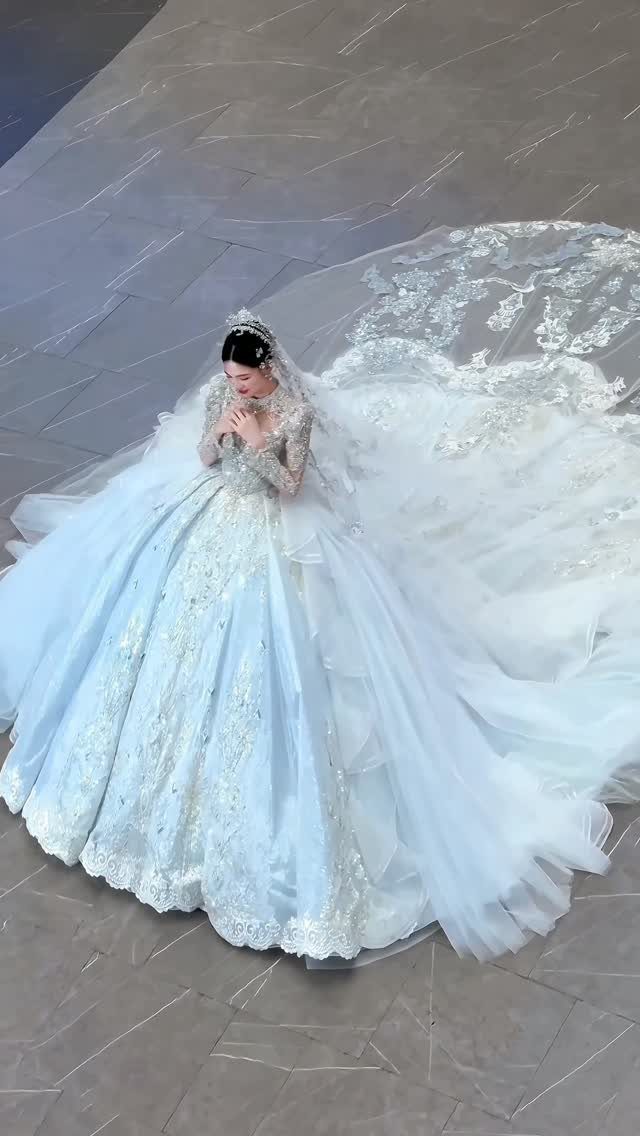
A fitted bodice with a voluminous skirt works when you want the structure of a princess seam up top and the freedom of movement below.
Light blue reads as bridal without committing to white, which suits a second wedding, a courthouse-and-reception combo, or any bride who has already worn white once.
Tulle this full adds weight that shows up in shipping costs and in how tired your arms get holding the skirt during portraits.
Before you try one on, ask yourself whether your venue has wide aisles and whether your photographer plans shots that require turning quickly.
A long veil with this much skirt can tangle; if you want both, budget for an attendant or plan to remove the veil after the ceremony.
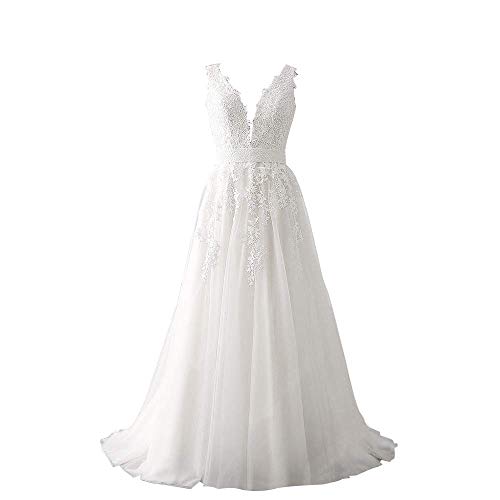
Fabric: Lace appliques, Tulle

IDEAL VALUE CHOICE: Flower girls summer sleeveless vintage floral lace embroidery organza pageant dress teenagers kids sequin faux pearl beaded flower appliques puffy ball gown dress, kids juniors bridesmaid school graduation first communion party long maxi tutu dress, girls birthday party cake smash wedding bridesmiad evening prom a line bowknot full length multi-layer tulle girls long princess dresses. Your little princess will be more elegant with this gorgeous dress.

Very delicate & super light wedding dress.
3. Strapless Princess Seam Wedding Gown
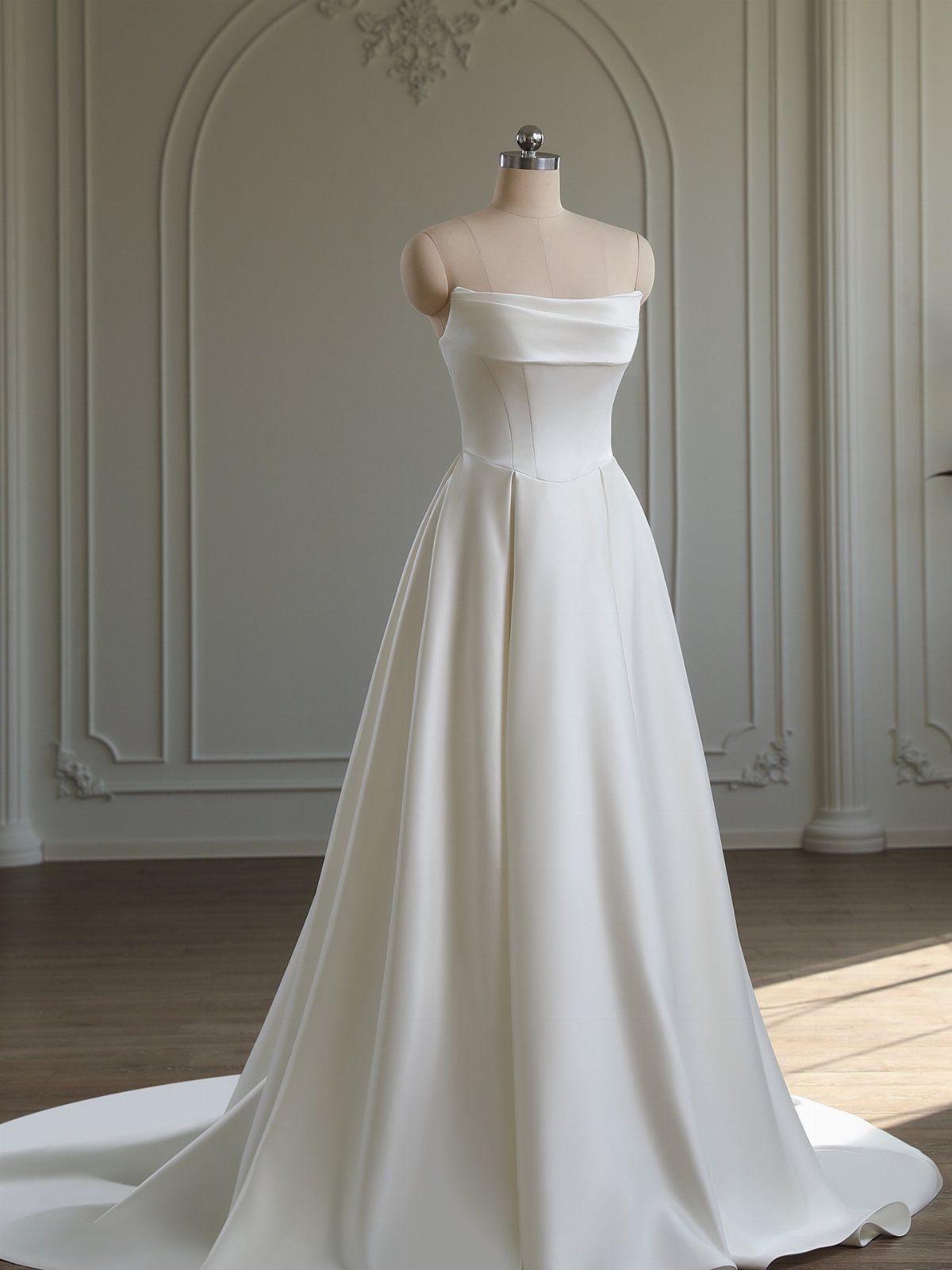
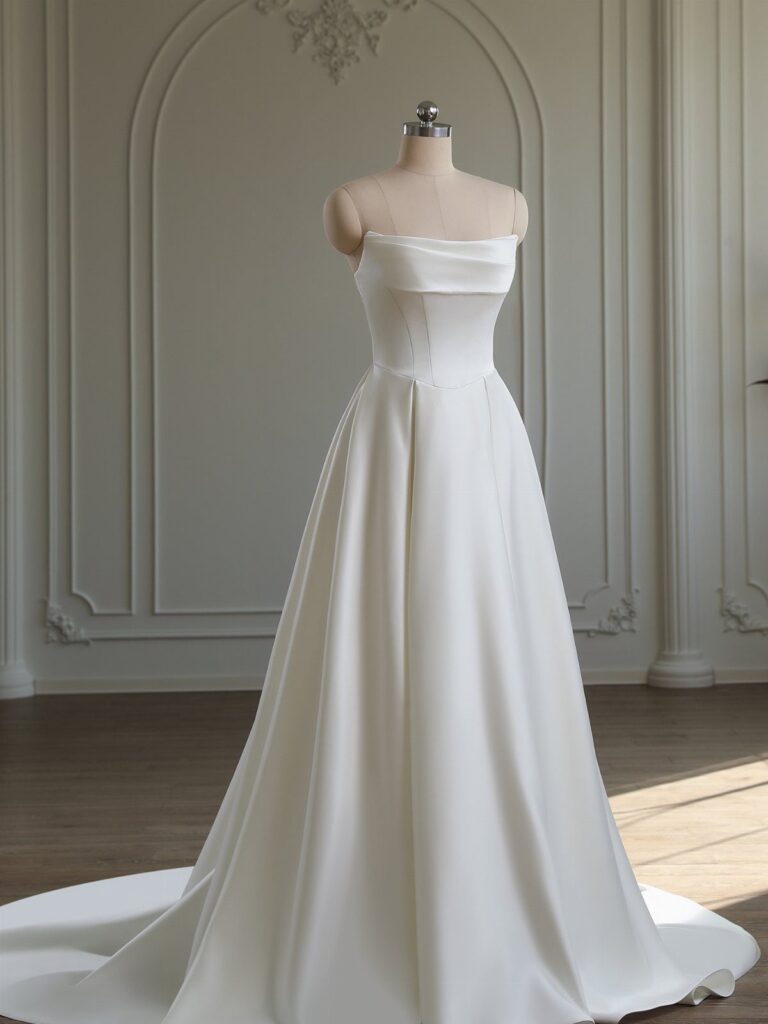
Strapless princess seam gowns in satin leave nowhere to hide: the seams must sit exactly right or the eye travels straight to the flaw.
That is why the mannequin display matters; in a photo you see ideal drape, but on your body the same fabric will pull differently across the chest and back.
Clean white satin and a simple neckline keep the focus on the princess seams running down the bodice.
If you are comparing, note whether the boning is decorative or structural; decorative boning looks the same but will not help the gown stay up through a long reception.
Budget around $2,380 for a named designer satin in this cut, though sample sales and last-season stock can drop that figure by a quarter or more.

OFF-THE-SHOULDER NECKLINE: Features a classic scalloped neckline with removable long lace sleeves, letting you switch between a romantic long-sleeve look and a sleek strapless style.

Girls tutu dress material: This beautiful rainbow tutu dress for your girls is made with an extensible crochet top and soft nylon tulle straps. For a more comfortable the dress have lined. For your girl the prettiest self day party.
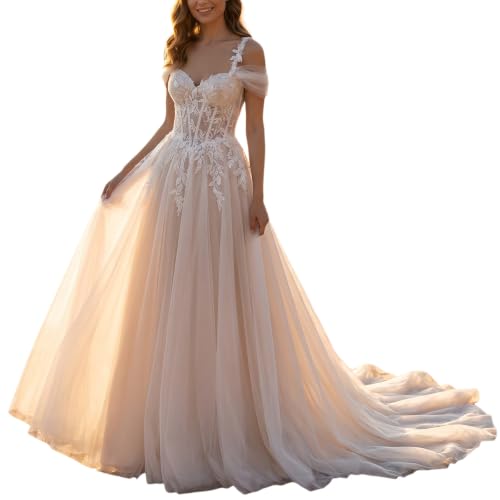
ELEGANT A-LINE SILHOUETTE: This romantic bridal gown features a flowing A-line skirt with a dramatic cathedral-length train, perfect for a fairy-tale wedding.
Importance of Fabric
The fabric you pick decides whether those long seams stay subtle or turn into the whole story on a no-waist gown.
Satin catches light and makes every line feel more pronounced; crepe stays matte and quieter. Both let the seams show with clarity, but the effect is different enough that trying both in the salon is worth the time.
The sheen of satin emphasizes the sculpted construction, which works for formal settings where you want the gown to carry the room.
Crepe moves more fluidly and reads as modern; it suits a fitted silhouette if you want the shape without the statement.
See how each fabric frames your body in motion, not just in the mirror. The way a material reflects light as you turn is what you will see in photographs, and that is the test that matters.

Features:Mermaid Satin Wedding Dresses for Bride 2026,Strapless Satin Wedding Dresses for Women,V Neck Bride Dress with Detachable Train,Satin Wedding Dresses 2026,Mermaid Strapless Wedding Bridal Ball Gowns for Women,V Neck Satin Wedding Dresses for Women,Vintage Tight Satin Beach Wedding Dresses,Mermaid,V-Neck,Strapless,Satin,Detachable Train,Backless,built in bra.The simple wedding dress is suitable for every bride!

Features:Mermaid Satin Wedding Dresses for Bride 2026,Strapless Satin Wedding Dresses for Women,V Neck Bride Dress with Detachable Train,Satin Wedding Dresses 2026,Mermaid Strapless Wedding Bridal Ball Gowns for Women,V Neck Satin Wedding Dresses for Women,Vintage Tight Satin Beach Wedding Dresses,Mermaid,V-Neck,Strapless,Satin,Detachable Train,Backless,built in bra.The simple wedding dress is suitable for every bride!

【Unique Design 】The mermaid wedding dress is a new style,it is a soft satin wedding dress for women bride, flowy long summer bridal gown, bodycon sexy wedding bride dress,off shoulder wedding dress for brides,long train bridal dress,lightweight lining wedding bridal gown for bride.the strapless creates an elegant and unique style.It also has other design details worth paying attention to,tight,backless,empire waist.
Frequently Asked Questions
What is a princess seamed dress?
Long curved seams trace from the shoulder all the way down to the hem, molding the fabric to your shape without any seam cutting across the waist.
These seams contour the bust and torso to create a tailored, smooth fit. That continuous line keeps lace lying smooth and gives you wiggle room if you are between sizes or if your middle is where fit gets tricky.
Are princess seams difficult?
Princess seams are not especially difficult to sew or alter, which is part of why the style works well for budget-conscious brides.
You can usually get away with tweaking just the side seam rather than rebuilding the whole bodice from scratch.
A few studios fold one or two post-purchase fittings into the gown price, so it pays to ask before you decide between sample sale and made-to-order.
What is the difference between a princess seam and a regular seam in sewing?
A princess seam forms a continuous curved line from shoulder to hem that follows the body’s contours for shaping, while a regular seam does not necessarily follow those curves.
Where the seam releases into the skirt, it carries a flow that moves with you while still looking pulled together. Regular seams may simply join pieces of fabric without the same sculptural intent.