
Pagan wedding attire ranges from flowing white gowns with hooded sheer capes to dark green embellished gowns and celestial ballgowns, with each piece carrying its own seasonal and symbolic weight.
A sheer lace cape that lifts off for the reception suits summer handfastings, while heavy wool cloaks with embroidery carry the symbolism through a winter circle.
The embroidered yellow hooded cloak stands out for its clean visual line, though if you want to carry ritual items inside it you will need to ask your maker about adding interior ties or a hidden seam pocket.
1. White Gown with Hooded Sheer Cape
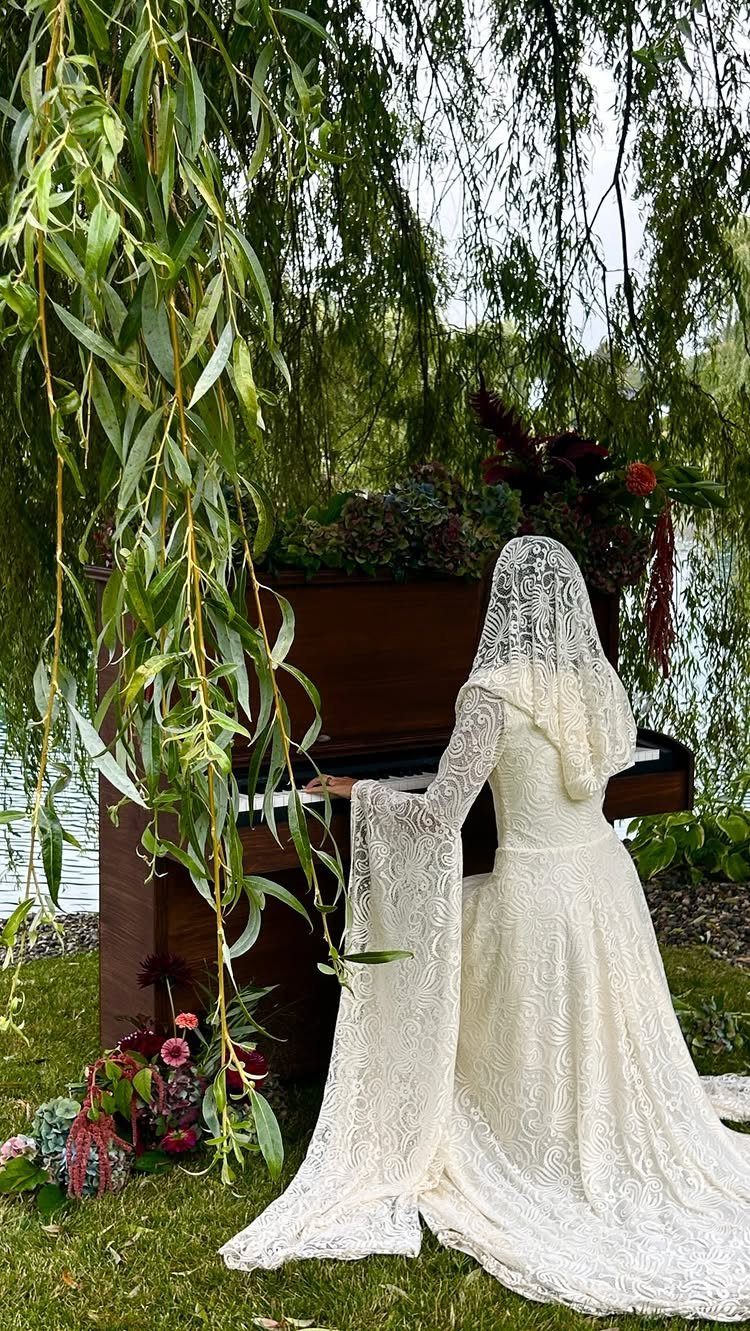
A hooded sheer cape turns a white lace gown into something that moves between worlds. The hood frames the face without hiding it, and the sheer fabric keeps the look light enough for a summer handfasting or an outdoor circle.
I would look for a cape that fastens at the throat or shoulders so it can lift off for the reception.
Armstreet’s wool "Heritrix of the Winter" runs heavier, with faux fur trim and geometric sleeve embroidery, but that same construction in sheer lace gives you the silhouette without the weight.
A custom medieval-style hooded overdress with bell sleeves starts around $260 on Etsy, though sheer fabrics run less.
Check the cape length against your movement: kneeling, dancing, walking on grass. A willow tree or any low-hanging branch gives the same dappled light if your venue does not have a piano to pose beside.

White hooded cape is soft lace fabric with floral edges.

Stunning Design: transform your Halloween look with our lace hooded cloak, featuring a striking elegant lace design that adds a touch of gothic elegance to your outfit or costume
2. White Lace Maxi Dress
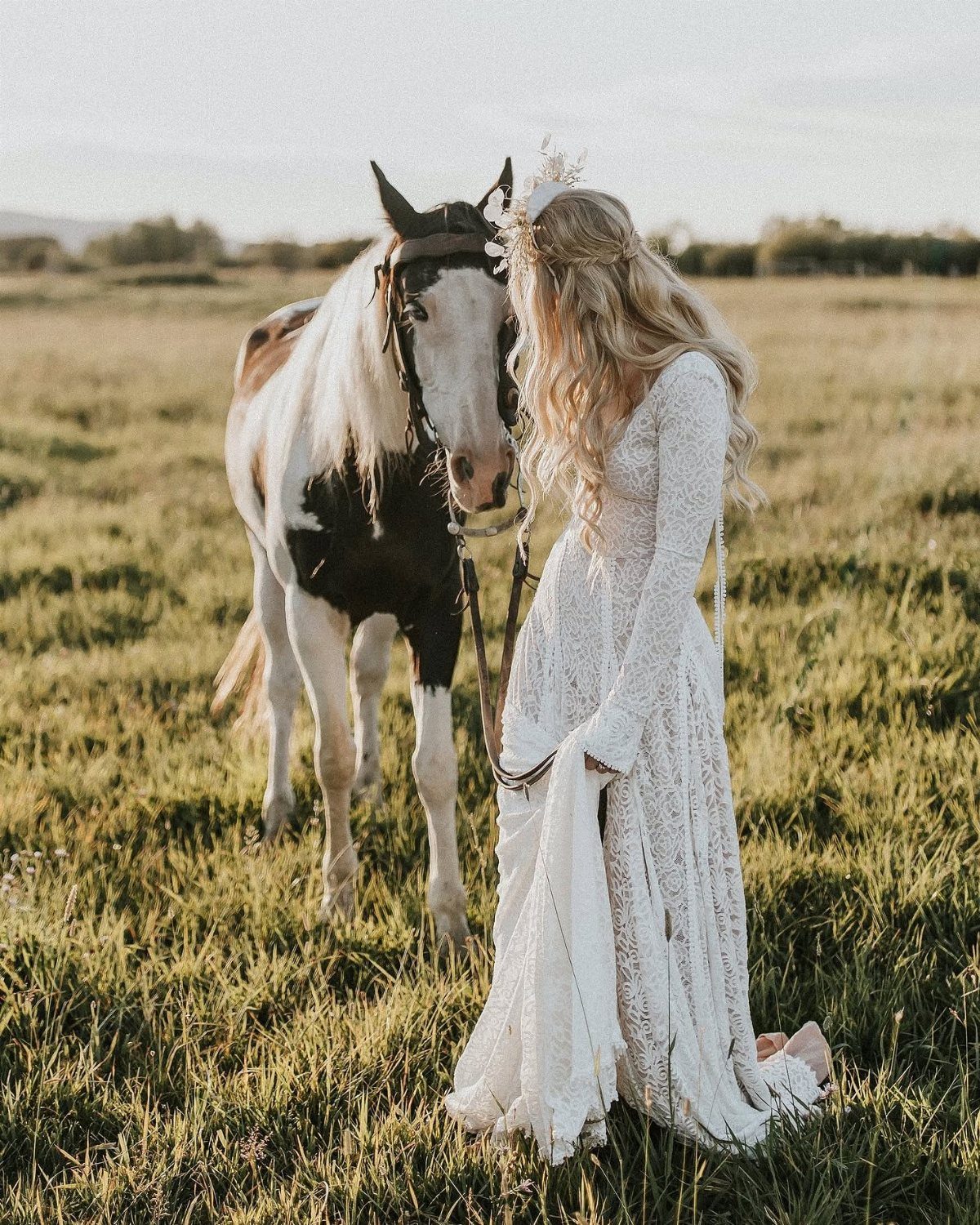
Long bell sleeves and a brown braided leather belt give this white lace maxi its pagan character without leaving everyday dress territory.
The belt matters more than it looks: it breaks the lace into proportions that read ritual rather than costume.
The floral crown is the easy part. Bramble, dried lavender, or silk flowers from a craft store all work; wire the stems to a plain headband and tuck in ribbon ties for security.
Cheaper versions often skip the sleeve length needed to pool slightly at the wrist, so budget time for hunting down lace that gets this detail right.
I like this option for couples splitting costs, since a maxi dress without the bespoke markup leaves room in the budget for the belt, the crown, and alterations if the sleeves come up short.
A floral headpiece like the one visible adds a second natural element that photographs softer than all-dryad green.

Material: This lace dress made from stretch 100% Polyester floral lace.skin-friendly and Comfy,Fully stretchy knit lining.

US Size: Small=(US 4-6), Medium=(US 8-10), Large=(US 12-14), X-Large=(US 16-18), XX-Large=US 20, soft and high quality eyelash lace fabric, lightweight and breathable. Comfortable to wear and touch in spring or summer

Material: This lace dress made from stretch 100% Polyester floral lace.skin-friendly and Comfy,Fully stretchy knit lining.
3. Red Lace Gown with Hooded Cloak
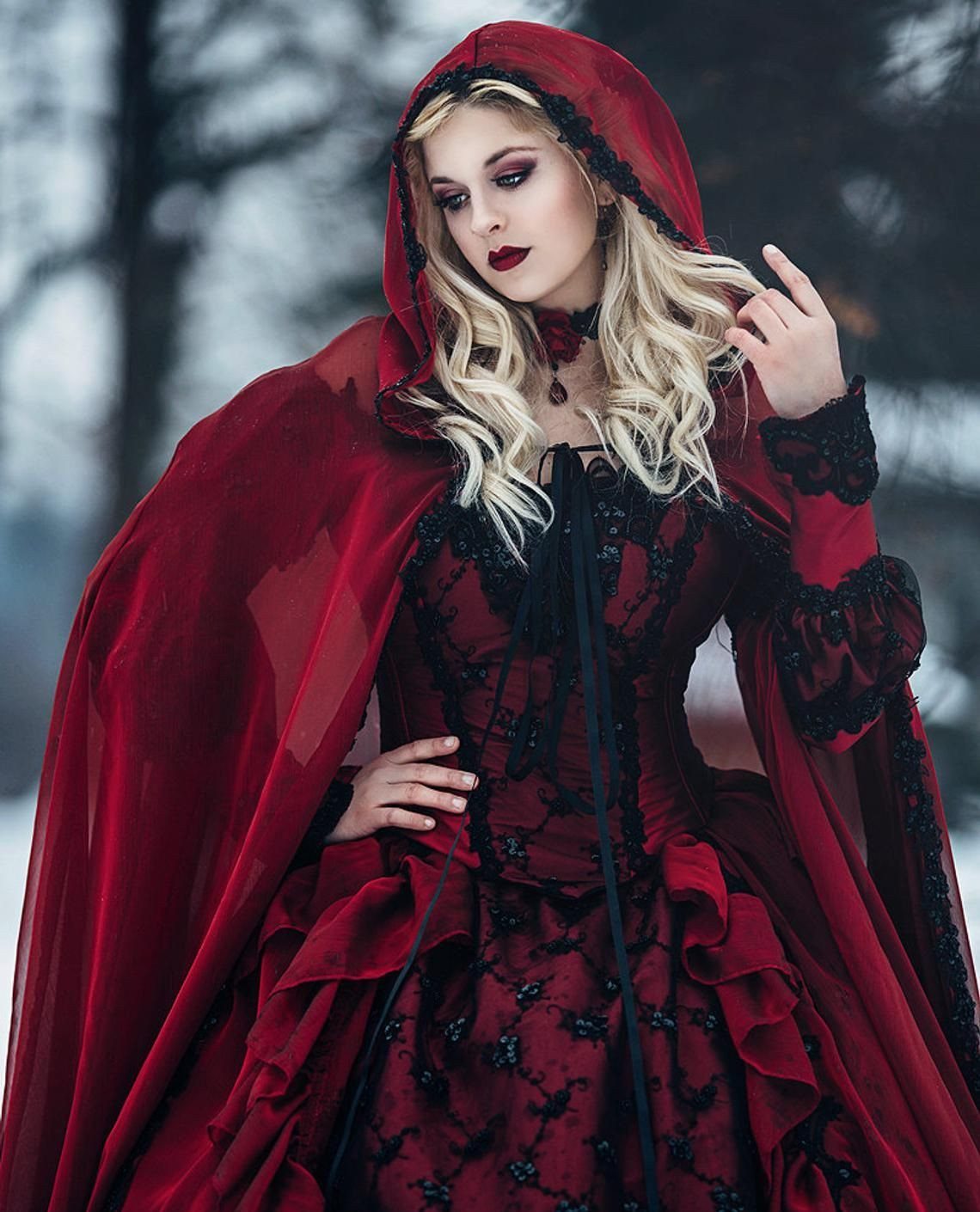
Black floral lace over deep red reads gothic first, pagan second, which suits couples whose ceremony borrows from both currents.
The matching hooded cloak is not an add-on; it completes the color block and gives you something to remove for dramatic effect at the handfasting cord moment.
The corset bodice shapes the silhouette but needs fitting time.
Budget for alterations to the lacing panels, or the dress gaps or pinches in photos. RomanticThreads makes the visible version; their construction pairs a structured bodice with flowing sleeves that do not tangle in the cloak’s inner lining.
The heavy fabric and full coverage make this a natural choice for a winter wedding, snow or no snow.
The red photographs strongly against white or bare branch backdrops; against green summer fields it can read harsh. A cream silk skirt with red embroidery, as one variation runs, softens the contrast if your setting is leafier.

Halloween costume cloak for women is made of lace. Exquisite, soft lace and comfortable to wear.

Women Tulle Hooded Cape with Long Train Elf Cloak with Hood for Halloween Wedding Cosplay

LEAVE THEM SPELLBOUND: The perfect accessory for magical wizards, sinister witches, and bringers of doom! We’ve combined vibrantxb red, shiny velvet, and an attention-grabbing drape to create a hooded cloak that will bring in compliments.
4. Black Floor-length Lace Maxi Dress
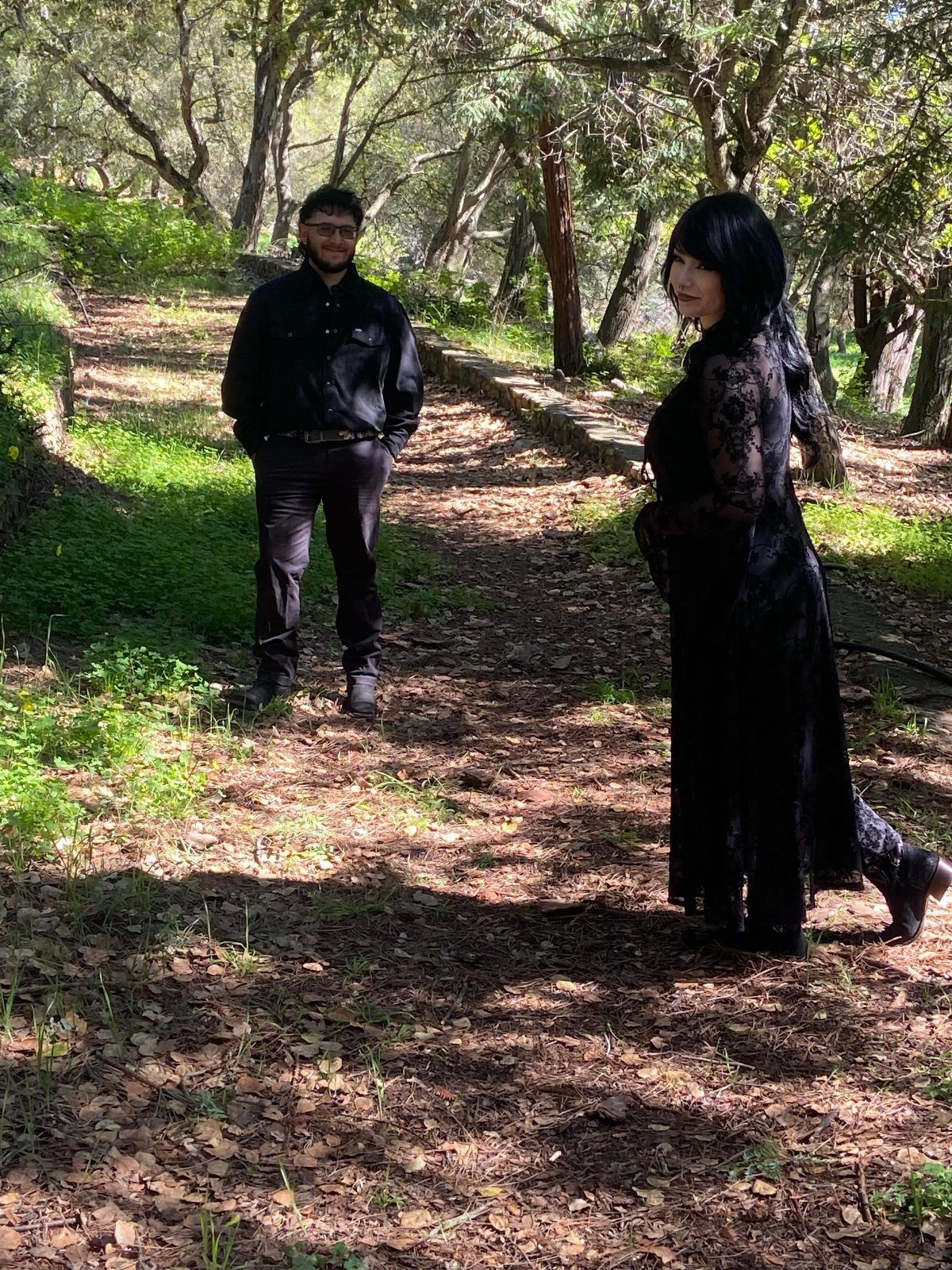
Black lace for a wedding gown still startles some guests, which is either the point or a reason to warn your officiant.
A deep V-neck and long flared sleeves give the look its shape; a gold tassel necklace draws light upward to the face.
This is the entry on the list that works for a non-white dress code without requiring a cloak, embroidery, or other overt pagan marker.
The lace itself carries the symbolism: protection, the veil between worlds, the color of earth and the Morrigan’s feather. I would keep jewelry minimal beyond the one statement piece; the neckline does the rest.
French lace gowns in this cut run from fast fashion to formal wear.
Check whether the lining stops short of the sleeve hem or runs full length; sheer lace to the wrist needs a nude underlayer or confidence in your lighting.
A floral crown, as one paired version uses, adds back the ritual signifier if your circle expects one.

DURABLE WOOL BLEND & FULL SATIN LINED: This full-length cloak is made of soft, warm, durable anti-pill wool blend, very well made and fully lined a quality silky satin lining. This cloak is thick and heavy, comfortable and warm enough for cold days and nights.

The long cape is 55.2 inch in length(except the hood), the short cape is 36.7 inch in length(except the hood).

SIZE REFERS: We updated the Wool Blend Cloak with Hood to US SIZE, Small-Medium=US6 - US12-----Chest: 47''/120cm----Length (include hood): 59''/150cm; <br>Large-X-Large=US14 - US20-----Chest: 57''/145cm---Length (include hood): 64''/163cm. Please choose YOUR US SIZE!!! Red riding hood costume adult vampire cloak women, black hooded cloak cape
5. Dusty Rose and White Gown
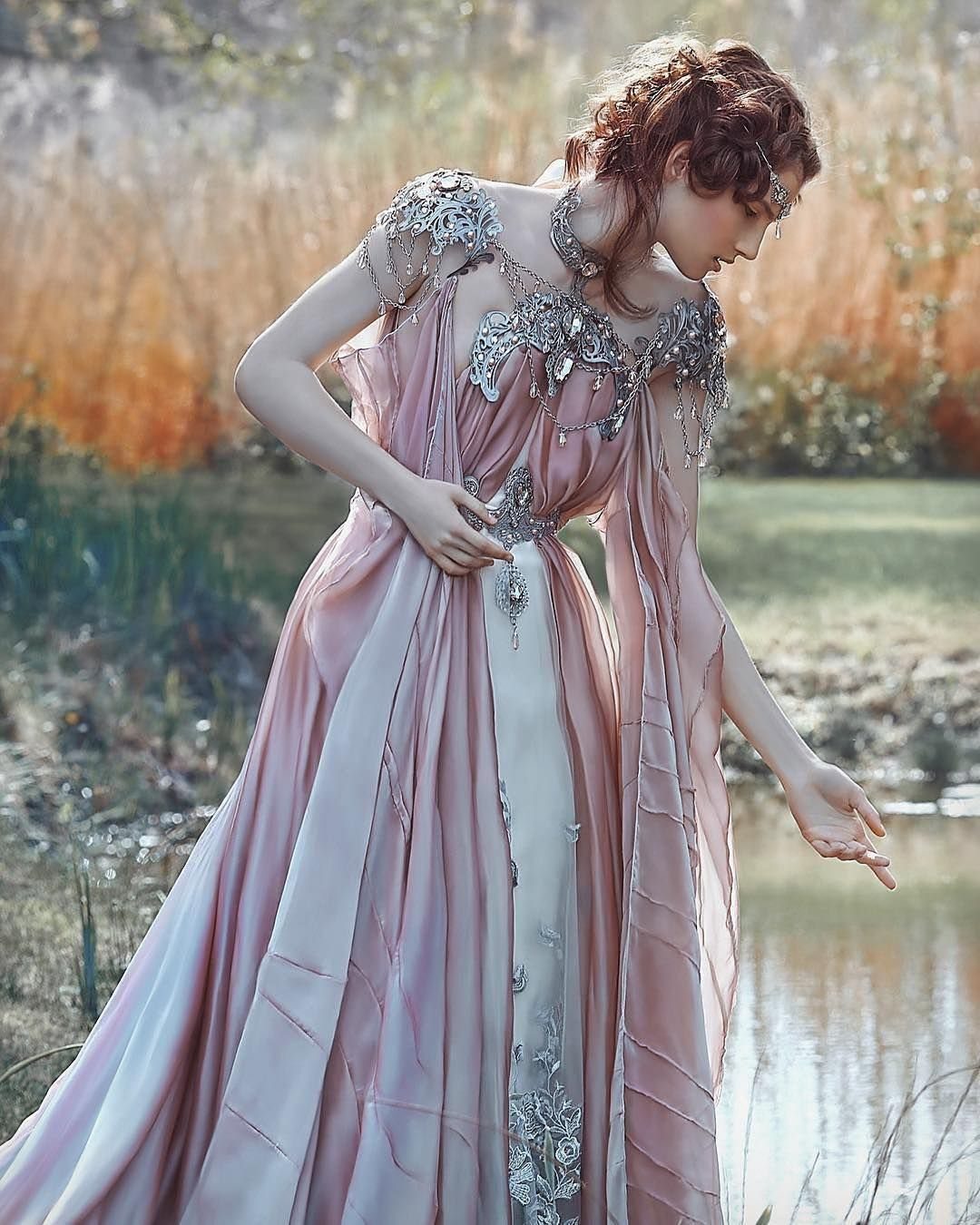
Dusty rose with silver filigree embroidery lands between the white traditionalists and the black-clad gothic camp, which is useful if your families span both. The metallic beadwork across neckline, shoulders, and waist catches candlelight without reading as costume armor.
Firefly Path builds these gowns with chiffon layers that move in wind and photograph as mist.
The silver jewelry and headpiece are not afterthoughts; they extend the filigree pattern onto skin and hair, and I would budget for them as part of the look rather than borrowing from another set.
This option trades some pagan immediacy for versatility.
You could wear it to a formal reception afterward without explaining the aesthetic. The beadwork shows up best in controlled light; dusk or indoor candlelight, not full midday sun, even if the setting is outdoors.

Impressively Packaged: the package holds a woman's black witch costume adorned with a star and moon pattern, a design guaranteed to meet to your daily wear needs, and on Halloween, weeding and other parties to show your charm

Elegant Midi-Length Silhouette: Designed with a sophisticated midi-length cut that falls gracefully below the knee, this cape offers a balanced look that is both dramatic and practical. Unlike floor-length styles, it allows for greater freedom of movement, making it an ideal choice for social gatherings, cocktail parties, or evening dinners where you want to make a statement without the hassle of a long train.

Package: full length hooded cloak+full length tunic+belt
6. Embroidered Yellow Hooded Cloak
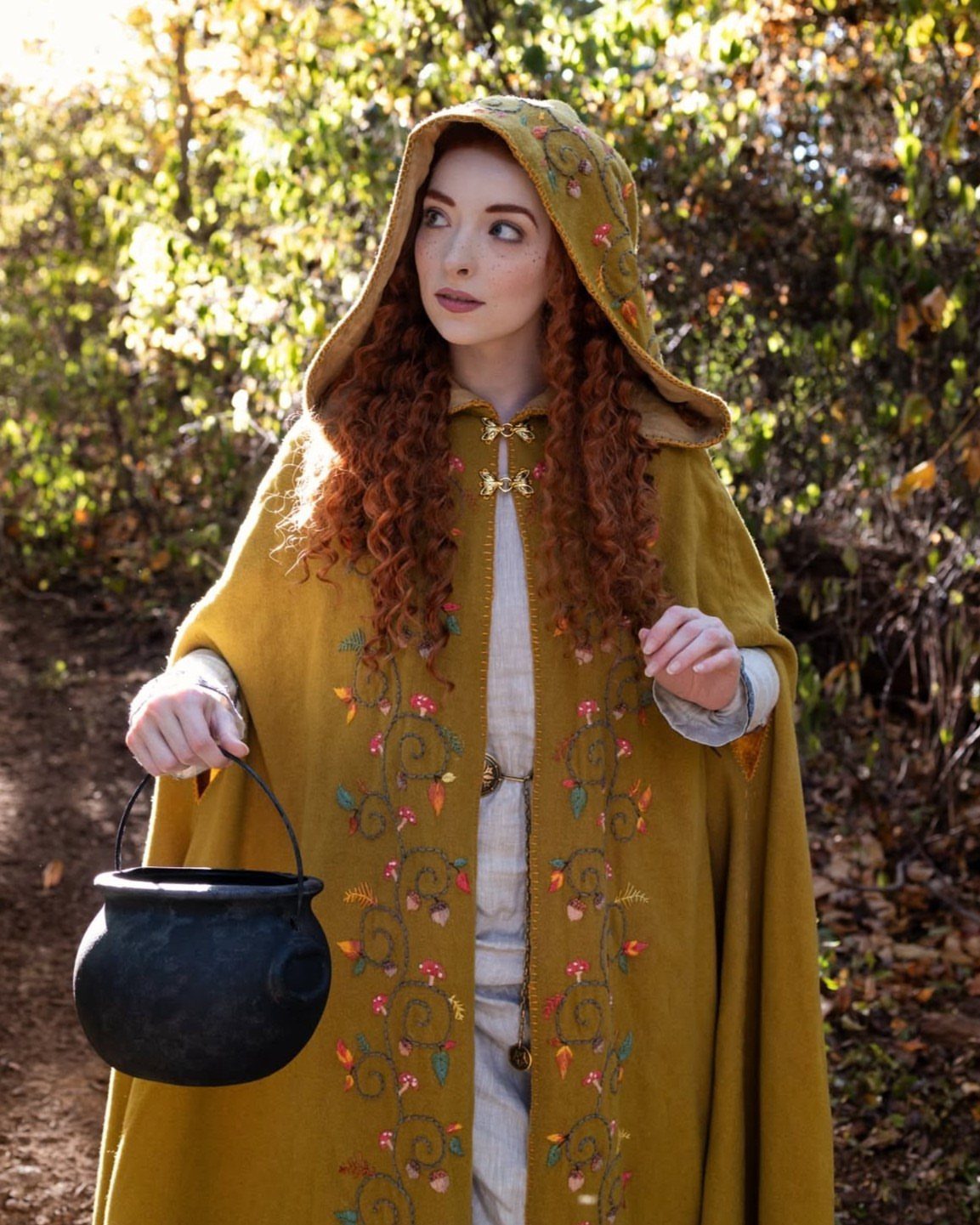
Mustard yellow is a color you choose because it means something: sun, harvest, the turning wheel.
The embroidered floral accents on this hooded cloak keep it from reading as plain outerwear, and the hood itself signals ceremony before you reach the altar.
A cloak in this weight works as your only layer for a fall handfasting, or as removable warmth over a simpler dress.
Darker thread in the embroidery matches your other colors rather than contrasting; the effect is folk, not folk festival.
What to check: the hood depth. Too shallow and it slides back; too deep and it frames your face like a tunnel.
The cloak’s size suggests practical use for carrying small ritual items in pockets you cannot see, cauldron or no cauldron. Ask your maker about interior ties or a hidden seam pocket if you want that function.

Material: Made by lightweight, flowy sheer mesh fabric. Drapes beautifully over the body, semi-transparent chiffon adds a delicate, romantic touch while keeping cool, great for layering over swimwear, lingerie, or casual outfits

Lace cloaks for women made of polyester. Festival cover up is lightweight and soft for women rave outfit.

Halloween costume cloak is made of sequins and polyester. Exquisite, soft and comfortable to wear.
7. Gold Damask Corset Gown
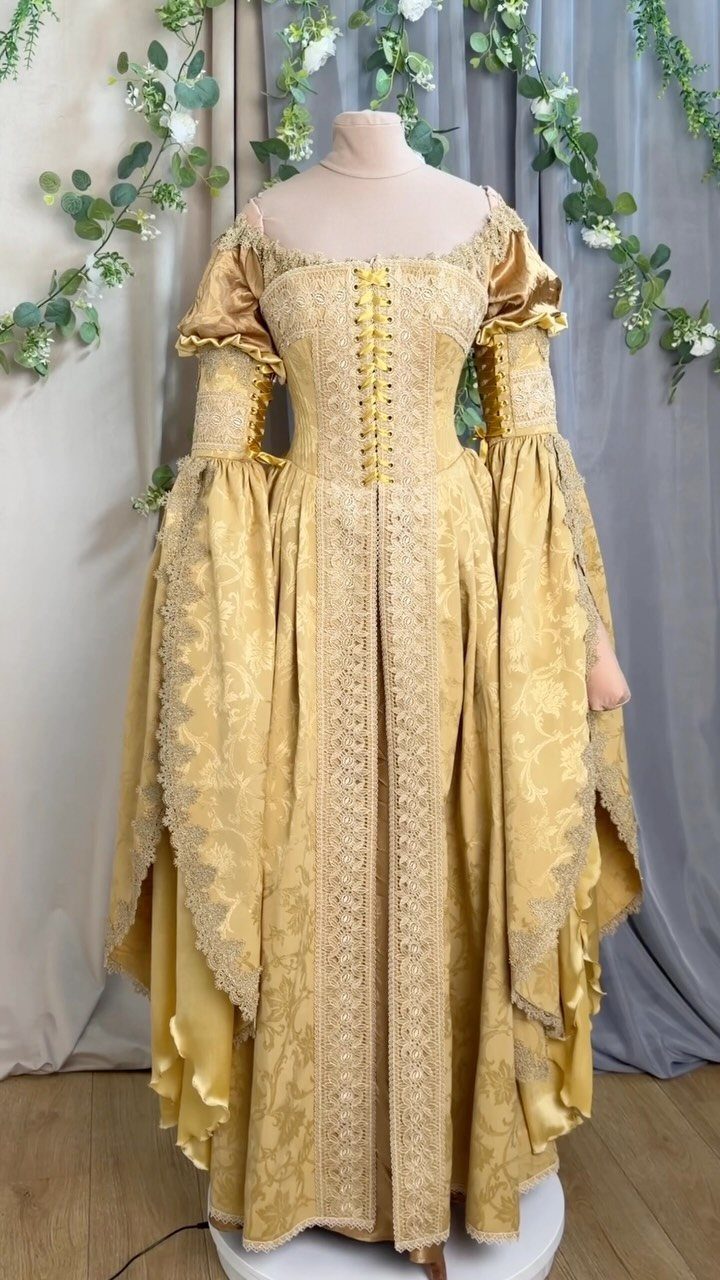
Gold damask reads as sunlight made cloth, which suits a harvest-season handfasting or any ceremony that calls the sun into the circle.
The corset lacing lets you adjust fit across the day; a lace-up front also means you can re-tighten after a long meal without leaving the reception.
The wide hanging sleeves need attention. They photograph as dramatic triangles of fabric, but they also dip into candles, wine glasses, and the arms of chairs.
Check the sleeve length against your table height if you are eating seated, or pin them back with a simple brooch for the meal.
A deep green velvet overdress, as one paired version runs, layers over the gold for outdoor warmth and adds a second color for the ceremony’s removal moment.
Material: This lace dress made from stretch 100% Polyester floral lace.skin-friendly and Comfy,Fully stretchy knit lining.

Material: This lace dress made from stretch 100% Polyester floral lace.skin-friendly and Comfy,Fully stretchy knit lining.

ELEGANT DESIGN: Features a square neckline and flowy bell sleeves for a romantic, feminine silhouette perfect for special occasions.
8. Embellished Dark Green Gown
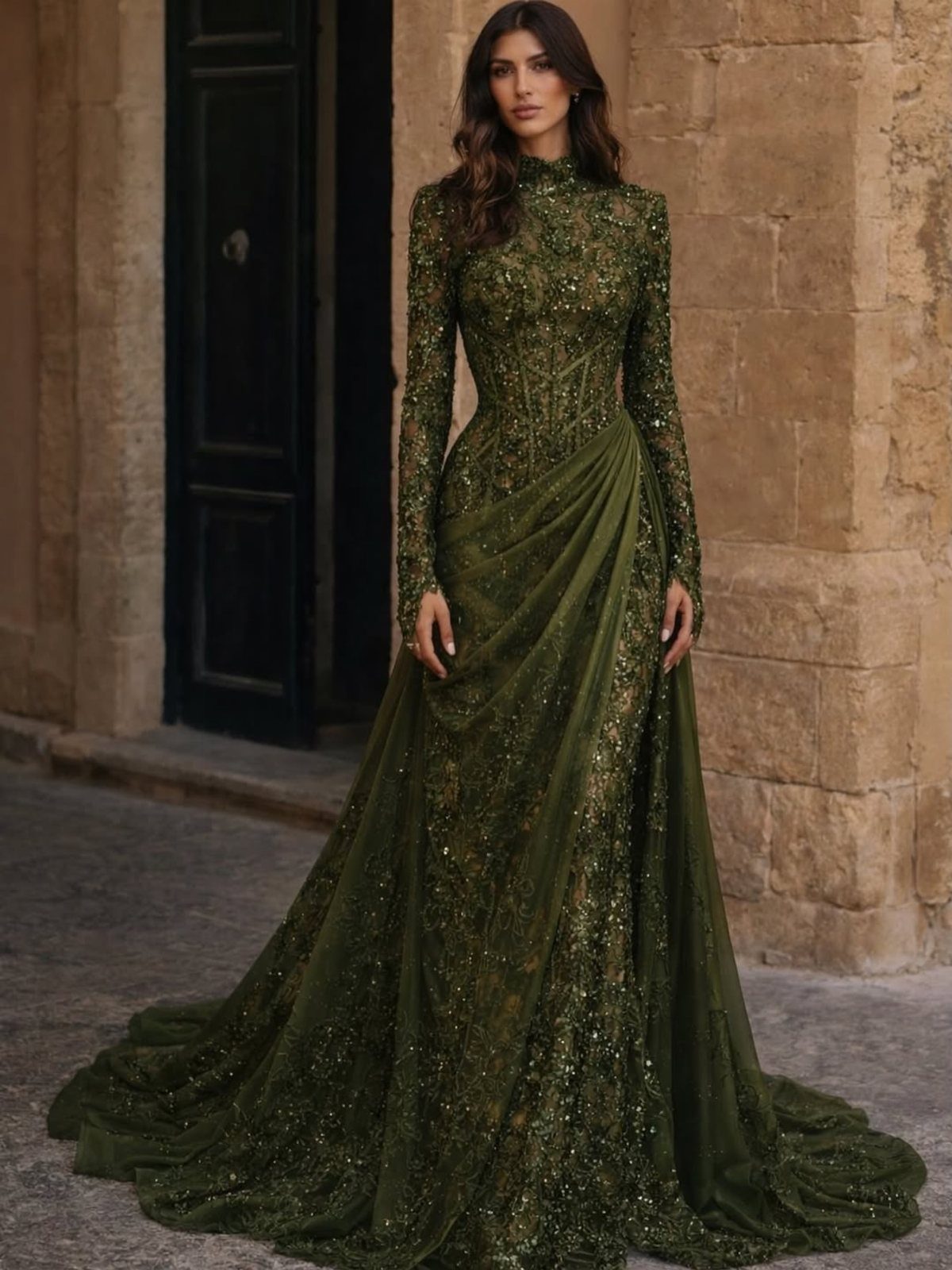
Dark green with heavy embellishment reads forest floor and formal wear at once, which is useful if half your guests are pagan and half are not.
The shimmering detail shows up in low light; against stone or wood it reads as texture first, sparkle second.
The draped skirt adds volume without a separate petticoat, but that same drape trips easily.
Check the hem length with the shoes you plan to wear, not against bare feet, and budget for a single point bustle or wrist loop if the ground is uneven.
Long sleeves in this weight run warm; an outdoor summer ceremony needs a lighter underlayer or a willingness to sweat.

Halloween or Christmas Red Hooded Cloak Costume Crafted with premium red velvet fabric decorated with delicate white lace trim. Total cape length is 80cm/31.5 inch, hood height 36cm/14.17 inch. The look brings strong festive vibe for Halloween or Christmas dress up.

Multiple Size & Color Options:Three length sizes available: 23.62in / 25.59in / 27.56in (60/65/70cm, measured from shoulder to hem). Comes with 5 stylish colors to pick, easily match different cosplay makeup and outfits to satisfy diverse matching demands.

Lace hooded cape is made of polyester. Black cloaks are exquisite, soft and comfortable to wear.
9. Dark Purple Celestial Ballgown
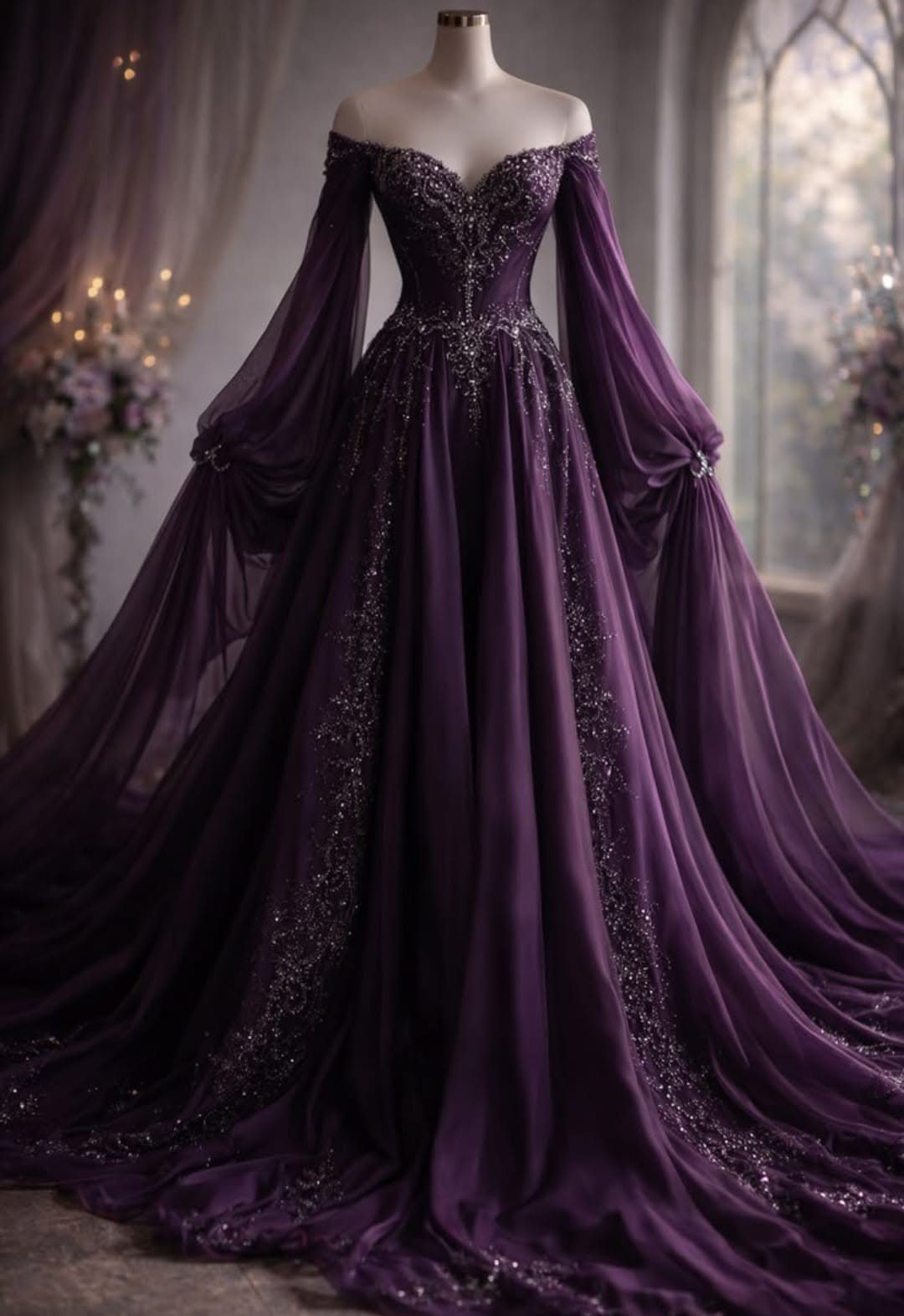
Dark purple carries celestial associations without needing stars sewn on: the color itself does the work.
The off-the-shoulder cut and sheer sleeves keep the gown from reading as heavy despite the ballgown volume, which matters if you are moving between indoor and outdoor spaces or standing for a long ceremony.
The crystal embellishments catch light, but they also catch on everything else. Check the sleeve sheer against your hair, your partner’s buttons, and any greenery you will walk through.
A silver underdress or trim, as one variation uses, brightens the purple for photography; without it, the color can sink toward black in dim spaces.

Material: The cloak made of 50% wool & 50% polyester, softness, lightness and comfort make them a perfect choice for those who value luxury and well-being in their clothing. Rustic, classic and modern style to wear everywhere and all the time.

SIZE REFERS: We updated the Wool Blend Cloak with Hood to US SIZE, Small-Medium=US6 - US12-----Chest: 47''/120cm----Length (include hood): 59''/150cm; <br>Large-X-Large=US14 - US20-----Chest: 57''/145cm---Length (include hood): 64''/163cm. Please choose YOUR US SIZE!!! Red riding hood costume adult vampire cloak women, black hooded cloak cape

WARM & DURABLE WOOL BLEND FULL SATIN LINED: This full-length cloak is made of soft, warm, durable anti-pill wool blend, very well made and fully lined a quality silky satin lining. This cloak is thick and heavy, comfortable and warm enough for cold days and nights.
10. Medieval Lace-up Tunic Dress
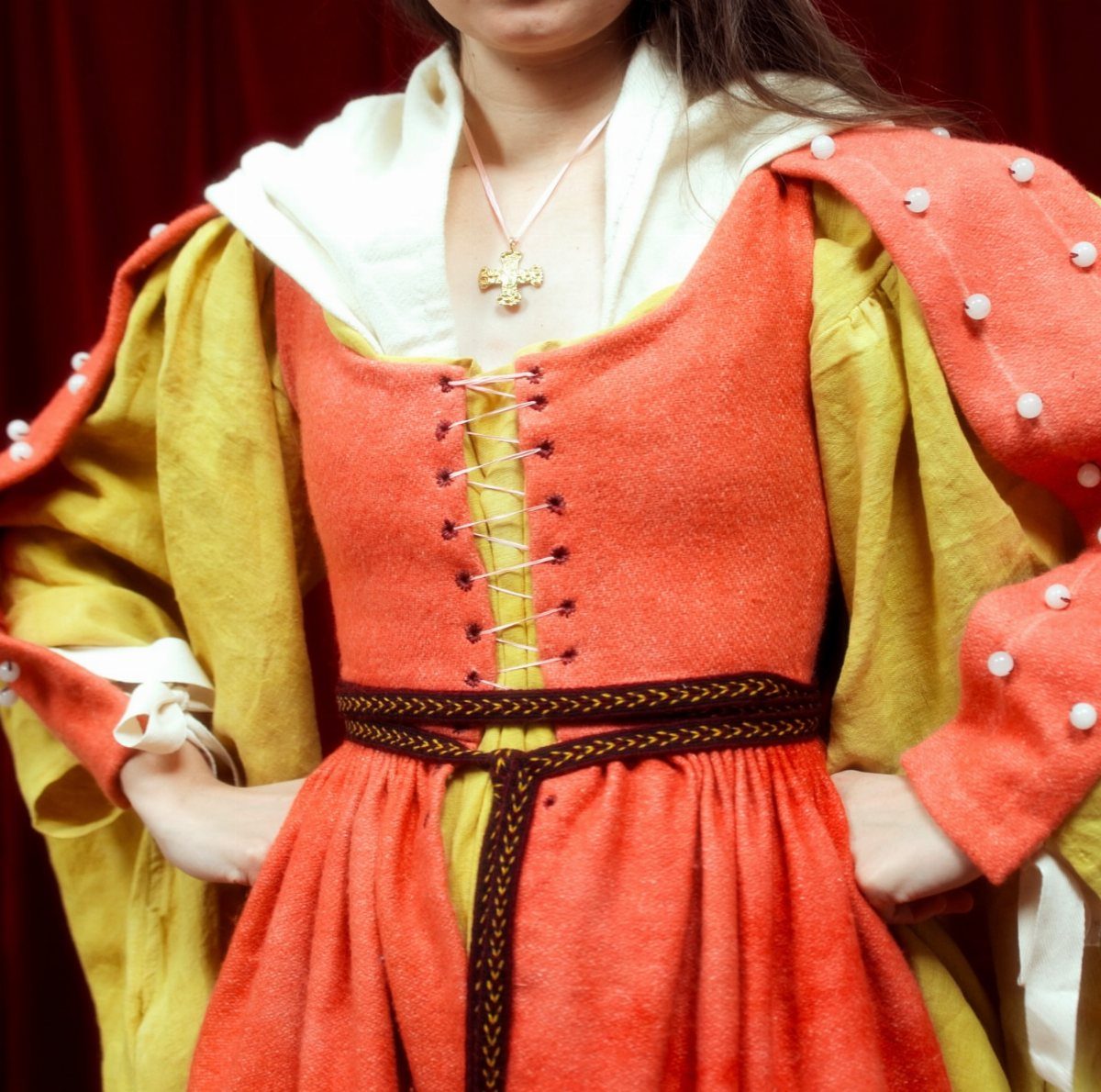
A tunic cut with a lace-up bodice gives you adjustability that a zip or button closure never will; the lacing also reads as period detail without full historical accuracy.
The split sleeves with bead details move when you do, which photographs well during processional or dance.
The braided belt is doing structural work here, not decorative: it gathers the tunic waist to a defined point that the cut alone does not provide.
Choose your belt after the dress, not before, since the wrong proportion turns tunic into sack.
The collar adds formality; without it, the neckline reads more casual. A matching headpiece extends the line upward, but the look stands alone if your budget stops at the dress.

Elegant Midi-Length Silhouette: Designed with a sophisticated midi-length cut that falls gracefully below the knee, this cape offers a balanced look that is both dramatic and practical. Unlike floor-length styles, it allows for greater freedom of movement, making it an ideal choice for social gatherings, cocktail parties, or evening dinners where you want to make a statement without the hassle of a long train.

Floor-Length Sheer Cloak Length: 130cm, Neck: 45cm. Please check the fit before ordering

Women Tulle Hooded Cape with Long Train Elf Cloak with Hood for Halloween Wedding Cosplay
Accessories for Pagan Weddings
A floral crown is the accessory most guests expect at a pagan wedding, but the metalwork underneath deserves its own budget line.
A sterling silver woodland circlet with leaf patterns and a central moonstone or amethyst runs about $300 on Etsy, and the weight changes how it sits through a long ceremony.
I would try it on with your hairstyle, not just imagine it; a heavy piece slides on loose braids and grips too hard on an updo.
Metallic jewelry extends the beadwork or embroidery of your gown onto skin.
Pearl drop earrings, as one paired look uses, read softer than crystal if your gown already carries heavy embellishment. The headpiece and earrings should be chosen together; one statement piece per zone, not both competing.
Pagan Wedding Traditions
Handfasting is the ceremony most people picture when they hear "pagan wedding," and the cord moment is the one that needs planning in what you wear.
A cloak with a clean fastening at the throat or shoulders lets you lift it off for the binding without untangling sleeves or asking a bridesmaid to work laces. The removal itself becomes part of the gesture.
You can re-tighten after the meal, after dancing, or after the handfasting cord itself has compressed your waist.
A zip or button closure locks you into one fit; lacing acknowledges that bodies shift. Budget the time to learn the lacing pattern, or bring someone who knows it.
Color Symbolism
White in pagan ceremony carries the expected meaning of purity, but it also reads as the blank page, the unworked candle, the cloth before ritual use.
Gold fabric has a unique advantage: it photographs as a light source even in dim rooms, which matters for indoor winter ceremonies where actual sun is absent. The metallic thread in the weave does this work without additional jewelry.
A deep red or burgundy lace gown with black overlay holds the meaning of passion and life blood, and it carries the gothic tone some couples want running through the day.
The symbolism is in the hue, not the embellishment, but the embellishment is what saves the hue from disappearing.
Nature-inspired Elements
Natural motifs in pagan wedding attire tend to appear in the materials rather than as literal leaf prints.
Check your site at the hour of your ceremony; a branch that reads magical at 4 PM is shadow soup by 6.
Pockets in a cloak are not standard but are worth asking your maker about. The function is practical; the effect is that you arrived prepared, which is its own kind of ritual statement.
Frequently Asked Questions
What color were pagan wedding dresses?
White, gold, and burgundy are the colors that show up most often in pagan wedding attire.
Is a pagan wedding legal?
Yes, a pagan wedding is legal as long as it complies with local laws.