
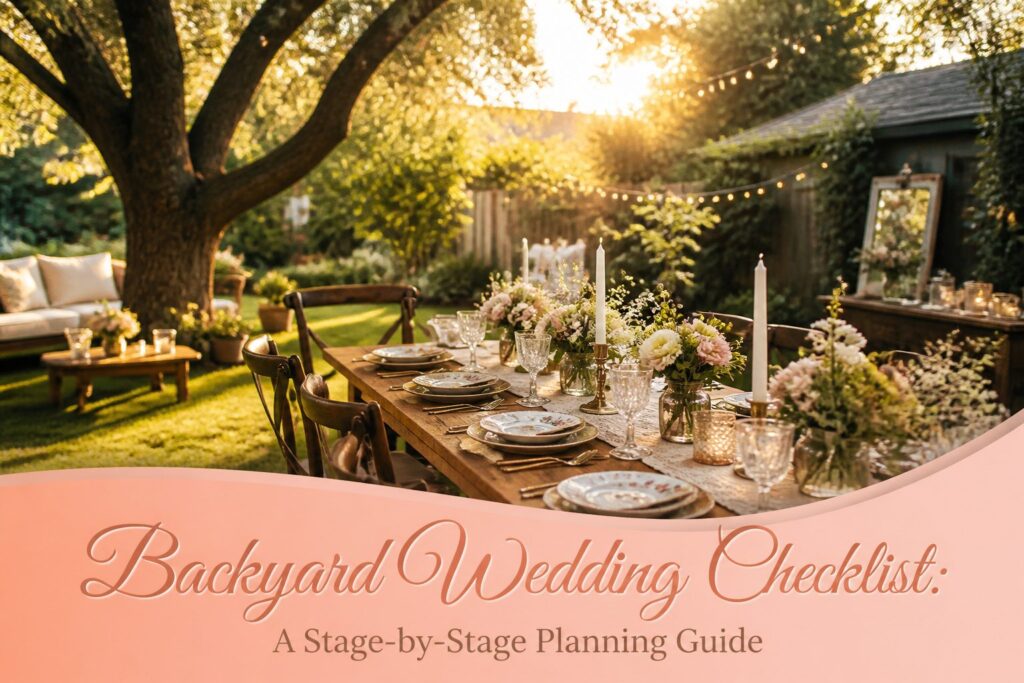
You need this checklist the moment you walk the yard with a tape measure, not after you have already fallen in love with a layout that only seats thirty fewer people than you invited.
Working through it takes six to twelve months, and starting at the bottom of that range already risks losing your preferred rental company to another couple who called first.
The exception that trips most people up is the assumption that your own property means your own rules: some jurisdictions require permits for generators over a certain size or for any restroom trailer, and rental companies only pull those permits if you ask early enough.
One bride’s father once daisy-chained three extension cords across a damp lawn because nobody ordered a generator until the rehearsal dinner, when the DJ’s subwoofer kept tripping the breaker.
Guest List and Space Planning
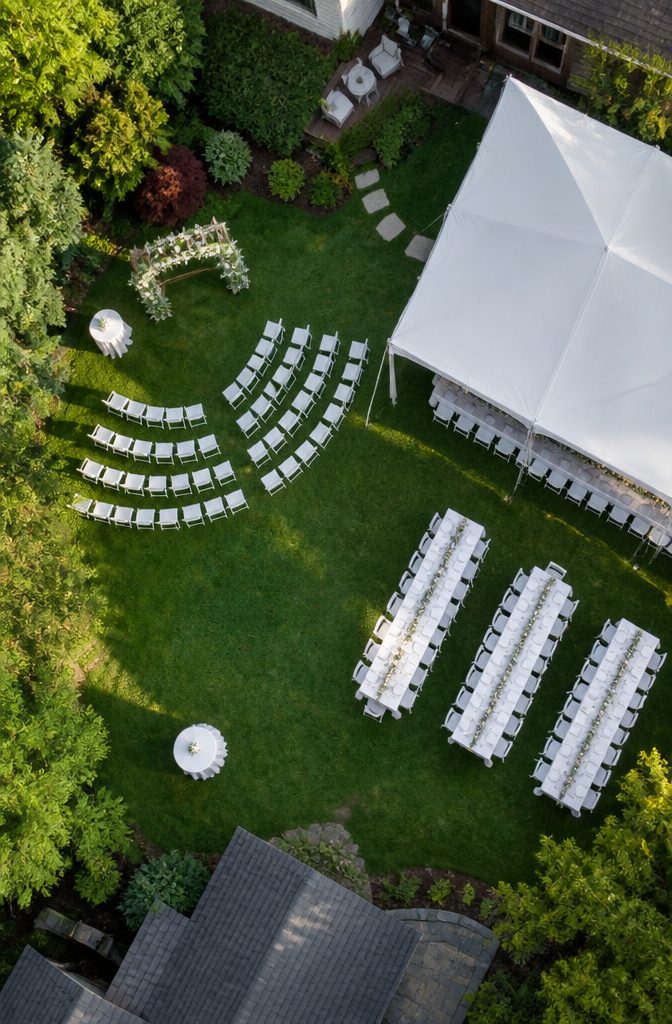
A typical suburban backyard runs out of space faster than most couples expect.
Before calling any rental company, walk the yard with a tape measure and a hard number: the count of guests you can actually seat, feed, and move through the space without bottlenecks.
I start every layout the same way. Graph paper mock-ups let you see where ceremony chairs, dinner tables, a bar station, and a dance floor all fight for the same square footage.
Think of your yard as a series of zones with transitions between them, not one open blob where guests wander.
The bulleted list of what to account for in that layout:
- Ceremony chairs and any altar or arch footprint
- Reception tent, chairs, and tables
- Cocktail, serving, and dessert tables
- Gift and guest book tables
- Bar and barware storage
- Dance floor
- Sound and lighting equipment placement
- Food prep and storage area
- Power generator positioning
- Portable restrooms
- Waste and recycling bins
Limited space means a limited guest list.
That trade-off arrives early, and it stings. The couples who handle it best make the cut before they fall in love with a layout that only works for thirty fewer people than they invited.

【Spacious 10x30 FT Event Coverage】This 10x30 FT party tent provides generous space for outdoor gatherings, celebrations, and temporary event setups. It is a practical choice for weddings, birthdays, graduations, backyard parties, and other occasions where large shaded coverage is needed at an affordable price.

【Sturdy and Durable】:Camphill camping chair set is built with a heavy-duty powder coated steel frame. The sofa supports 500 lbs. (250 lbs each side) and measures 35”H, 37.4”L, 19.3”D (open). The chair supports 300 lbs. and measures 35”H, 19”L, 19”D (open).Oversized camping chair set is designed to provide ample space for relaxation.
【Spacious 10x30 FT Event Coverage】This 10x30 FT party tent provides generous space for outdoor gatherings, celebrations, and temporary event setups. It is a practical choice for weddings, birthdays, graduations, backyard parties, and other occasions where large shaded coverage is needed at an affordable price.
Permits and Neighborhood Rules
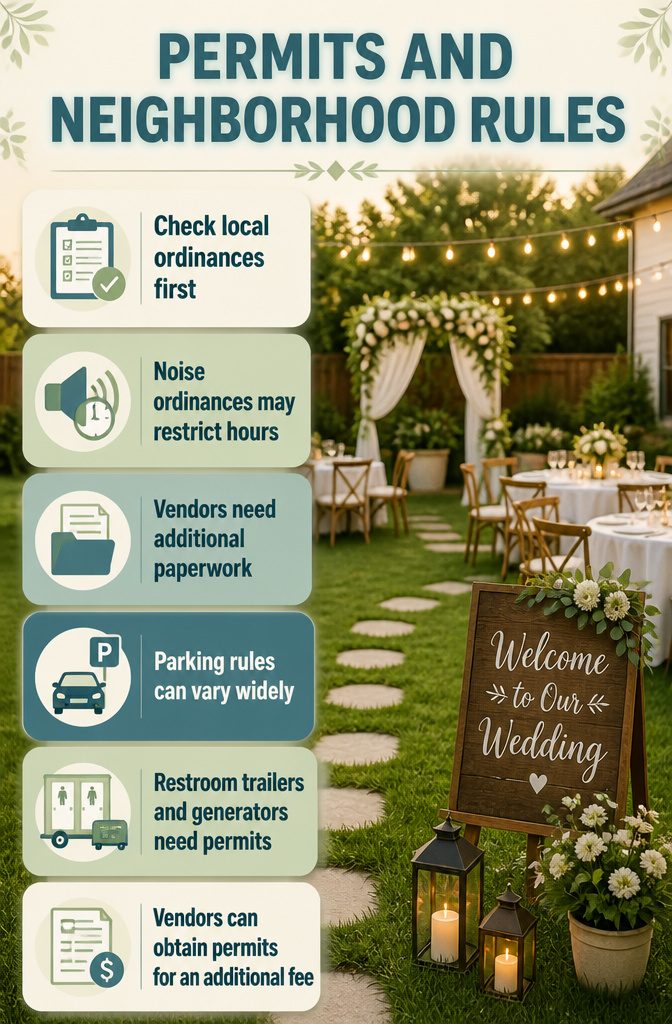
Some towns require permits for home events, and the only way to know is to ask city officials directly.
Check local ordinances on noise and parking before anything else, because the week of your wedding is when you find out, not when you fix it.
- Noise ordinances in many areas forbid high sound levels after evening hours, so your timeline needs to start early enough for dancing to finish legally.
- Vendors may need additional paperwork regarding your private residence, so keep your wedding planner in all communications with officials and vendors.
- Parking rules vary by neighborhood; if street parking is restricted, direct guests to a nearby lot or book valet service.
- Restroom trailers and generators sometimes need their own permits, and vendors can usually obtain these for an additional fee.

5 IN 1 DJ Lights Bar - Telbum PartyBar combining rotating disco ball light, colorful par light, red & green pattern light, black light and white LED strobe light. A variety of beautiful colors and patterns can be presented at the same time in auto mode to help you set up a fabulous party or gig. (Using the remote control, you can specify any of the effects to play independently.)

Moving head light powered by a 25W cool white LED engine stable output,color wheel and gobo wheel create a variety of stage lighting effects; 8 Gobos + Gobo shaking + Gobo rotation,8 colors + half-color effect + color rotation. And the speed of change can be adjusted

✅PROTABLE DJ PARTY LIGHTS - Rotating disco ball light*2, rgb par light*2, and comes with with a foldable/ detachable/ retractable tripod stand, easy to set up and tear down in minutes, great lighting system for parties with vivid colors, perfect lighting solution for the mobile band/ wedding/ DJ/ stage.
Parking Arrangements
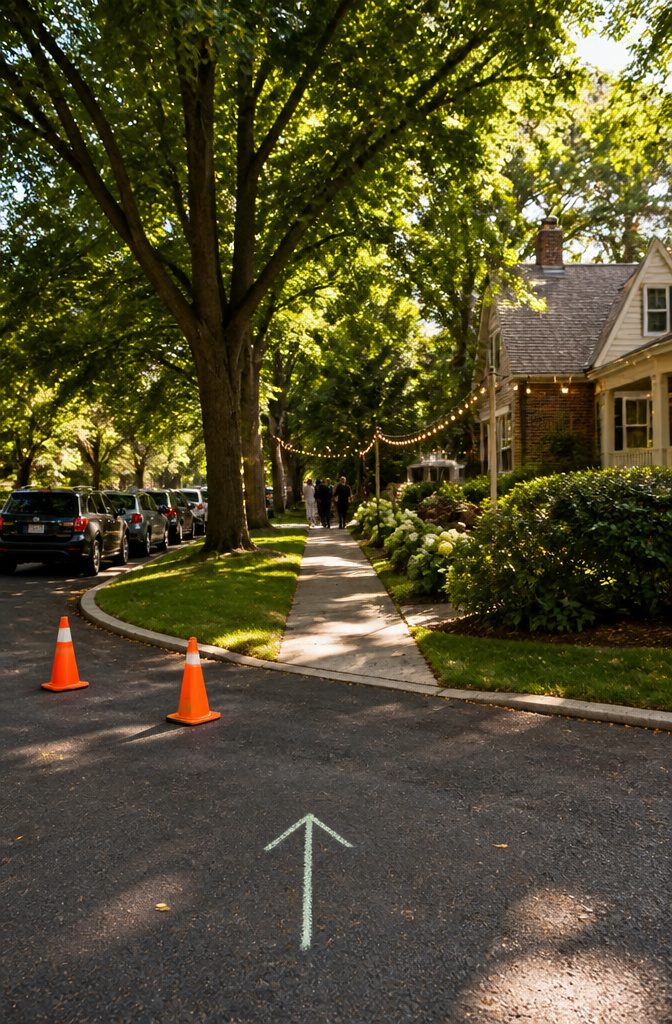
A backyard wedding lives or dies on whether people can actually get to it. The moment your guest count climbs past what fits on your driveway, parking becomes a logistics problem that needs its own plan.
- Check your neighborhood’s street parking rules first. Some areas ban overnight parking, enforce odd-even restrictions, or require residential permits. Finding out at 9 PM the night before is the kind of mistake that turns a calm morning into a traffic crisis.
- If street parking is tight or restricted, book a nearby lot and shuttle guests in, or hire a valet service. In urban neighborhoods around St. Louis, the valet fee often costs less than the stress of watching guests circle blocks in dress clothes while your ceremony waits.
- Vendor vehicles need space too. The caterer’s van, the florist’s truck, the DJ’s loaded sedan: they all arrive before guests and stay through load-out. Blocking them in with guest cars costs you time you do not have.
- Mark the route from cars to your door. A string of lights or a chalk arrow on the sidewalk keeps people moving in the right direction after dark, when every backyard looks the same from the alley.

[ EXTRA-LARGE TANK CAPACITY (103 + 43 GAL) ] Built with a 103-gallon integrated waste tank and a 43-gallon clean water tank to support longer use between pump-outs and refills for busy sites and events.

Please Note: As a manufacture,we can do full custom according to your need. The price on the website is for reference. Please feel free to contact us via Whatsapp ⑧⑥ ①③⑥Ⓞ⑦⑥⑤⑤①⑦⑨ for more information.

💡【All-in-One Shower & Toilet Combo】 Integrated shower, toilet, and sink in one compact portable bathroom unit. The curtain-style shower enclosure provides flexible separation while the adjustable shower head supports hot & cold water connections—delivering practical hygiene access for job sites, camps, and temporary locations where permanent facilities aren’t available.
Tent, Table, and Chair Rentals
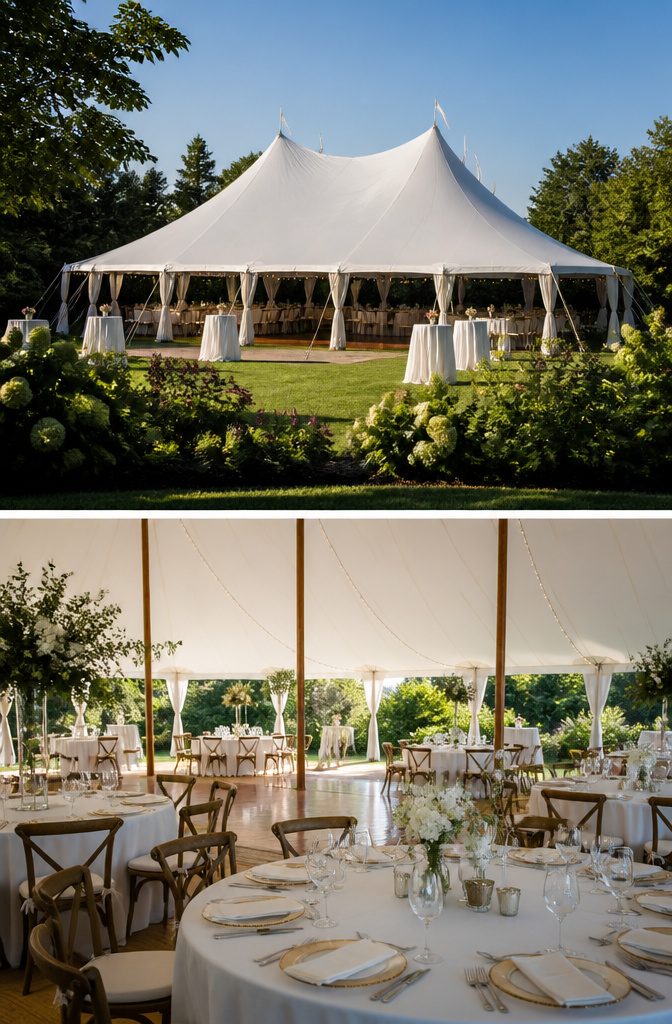
Tent, table, and chair rentals will swallow 40% to 50% of your backyard wedding budget, so the list needs to be complete before you call anyone.
- Confirm your guest count first. Every rental company will ask for it, and every item flows from that number. Guest count locked means table count locked, which means tent size locked.
- Request a layout from the rental company. They have software for this. One source mapped their whole backyard on graph paper first, measuring altar space, ceremony chairs, dinner tables, beverage stations, and dance floor. The rental team can level ground for tent placement and flag transitions between ceremony and reception that a flat yard hides until chairs arrive.
- Order more table types than you think. Dinner seating is obvious; easy to forget are cocktail tables, serving tables, dessert tables, gift tables, and guest book tables. Each needs its own surface and linens.
- Account for the full chain of service. That means bar and barware, linens and place settings, plus the food prep and storage equipment that a kitchen-less backyard demands.
- Ask about dance floor, sound and lighting equipment, power generators, portable restrooms, and waste and recycling bins. Some rental companies bundle these; others partner out. Know which before you sign.

Product Compatibility: This generator parallel kit specifically designed for Honda 08E93-HPK123HI and compatible with EB2000,EU1000,EU2000,EU2200,EB2000i,EU1000i,EU1000iK1,EU1000iT1,EU2000i ,EU2000iK1,EU2000iT1,EU2200iTgenerator. Please note: This cable does not work with the EU3000is electric start model—ensuring you get the right fit for your generator
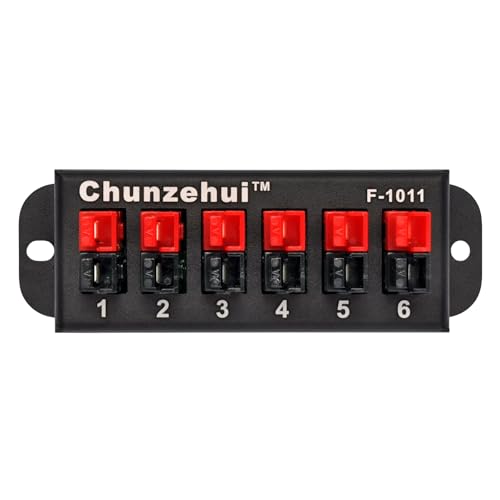
Connections: 6 Standard 45A power pole connectors. Can compatible 15A, 30A or 45A power pole connectors.

Cable length: 60cm/2ft, one end is terminated with Anderson connector, the other end is DC5521 male. Anderson Connector - red is positive, black is negative.
Power and Lighting
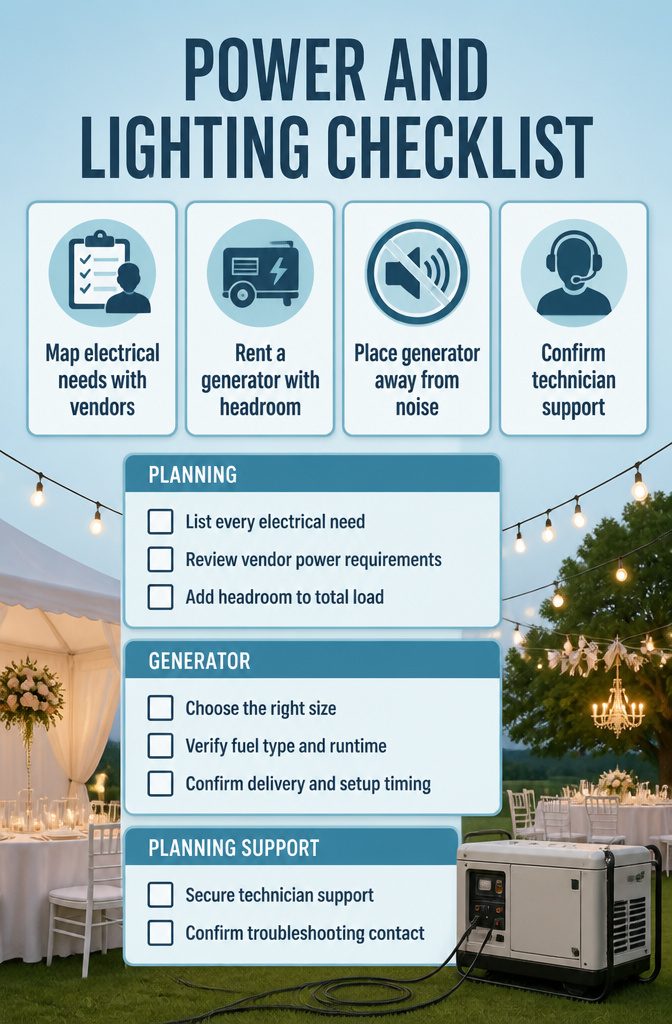
Backyards almost never carry the load a wedding drops on them.
The outlets you use for a phone charger and a string of patio lights won’t run catering warmers, a sound board, and the uplighting your photographer asked for all at once.
Rent a generator, and size it with every vendor’s draw before anyone signs.
- Map every electrical need with each vendor before booking: the caterer’s equipment, the DJ or band’s amps, the lighting designer’s fixtures, and any added outlets for guests. Add them up, then add headroom.
- Ask your wedding planner for generator rental companies they have used. A referral beats a random search because the company already knows event power, not just construction sites.
- Get the generator delivered with enough cable to sit where neighbors won’t hear it. Placement matters as much as wattage; a loud hum during vows ruins the moment a quiet generator ten feet farther back would have saved.
- Confirm the rental includes a technician on standby or at least a clear troubleshooting line. Power failures at outdoor weddings usually trace to someone tripping a breaker they didn’t know existed, and you won’t have time to become an electrician that afternoon.

Double-Sided Printing: Designed for maximum visibility, our signs feature double-sided printing, ensuring clear directions from any angle, ensuring your guests can easily find the parking area.

Package Contents: you will receive a complete love sign, ready to be placed immediately; Its romantic design and heartfelt meaning make it a perfect gift for newlyweds, engaged couples, or anyone who cherishes romantic moments; Celebrate eternal love and precious memories with this gift and surprise your loved one

Durable and Waterproof: Each sign is made of PP hollow board material, which has good durability and can withstand various weather conditions without being damaged even in rainy days. These signs can resist breakage, deformation, or bending
Catering Setup and Service Style
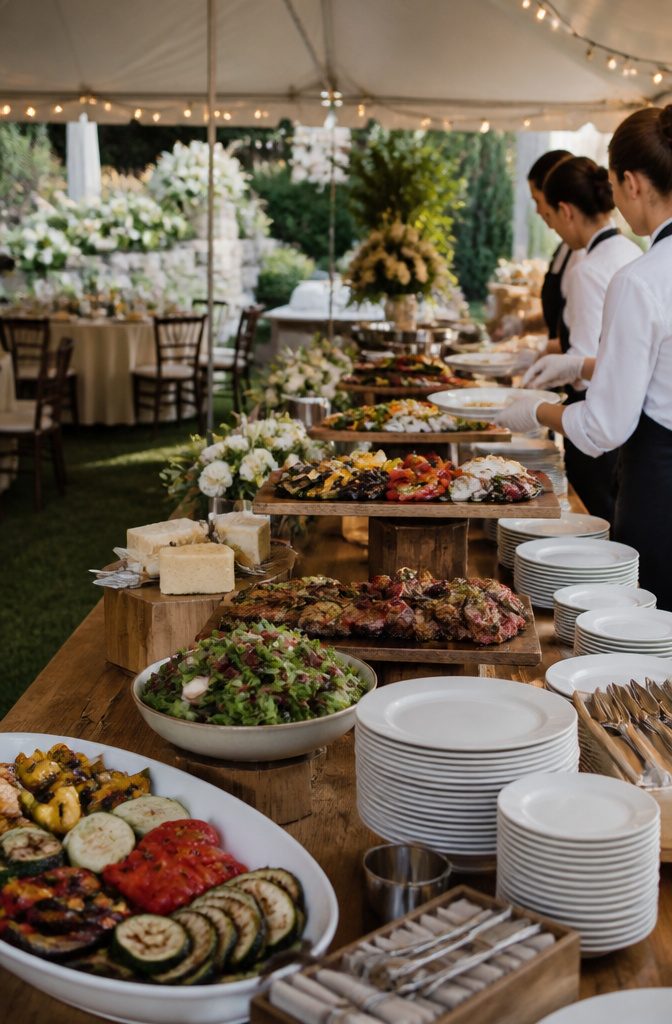
Catering choices for a backyard wedding narrow quickly once you picture guests balancing plates on their knees. The caterer you hire needs to know the setup before they quote, because service style changes tent size by hundreds of square feet.
- Buffet stations need floor space for the line and backup tables for chafing dishes. A seated dinner needs more tables, more chairs, and rental china the caterer must wash on site or truck back dirty.
- Plated service demands a full prep area, usually a second tent or access to the house kitchen. Some caterers work from their trucks; others need a staging tent with power for warmers and refrigeration.
- Passed hors d’oeuvres sound elegant until you count the bodies: servers weaving between rented tables need aisle width a layout drawn by hand almost always underestimates.
- Staffing ratios matter. One bartender per 75 guests is the usual rule. Waitstaff who bus tables stay through the end of the night, and their hours affect the final invoice more than the food itself.
The power draw for catering equipment runs on its own circuit if possible.
Coffee urns, warmers, and bar refrigerators together can trip a house panel mid-toast. Ask your caterer for an equipment list in amps, then confirm your rental electrician can isolate it.

Versatile & Convenient Folding Chairs: This plastic chair is suitable for various indoor and outdoor events such as parties, weddings, and commercial conferences. Our white chair provides practical seating solutions wherever you need them
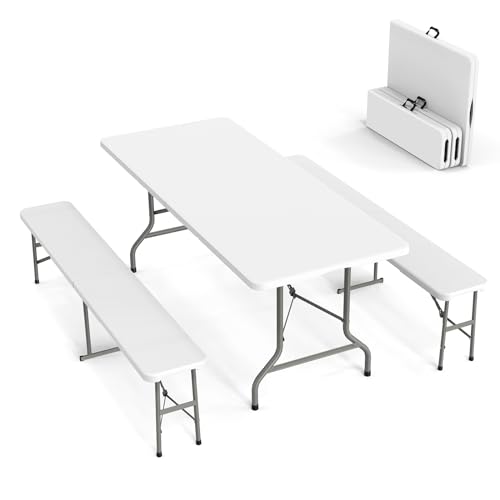
Quality and Sturdy: This 6ft long table and bench three-piece set is made with high capacity HDPE waterproof material, ensuring durability and stability. The non-slip matte surface provides a secure grip, and the sturdy triangular structure support and robust metal frame offer added strength. The fixed structure secure locks and anti-tipping safety design further enhance stability and safety

Complete Outdoor Chair Set: camping chair with canopy includes a folding directors chair, detachable umbrella shade, side table and cooler pouch, creating a practical seating setup for camping, beach days, fishing, lawn events, picnics, BBQs and outdoor travel
Restroom Rentals
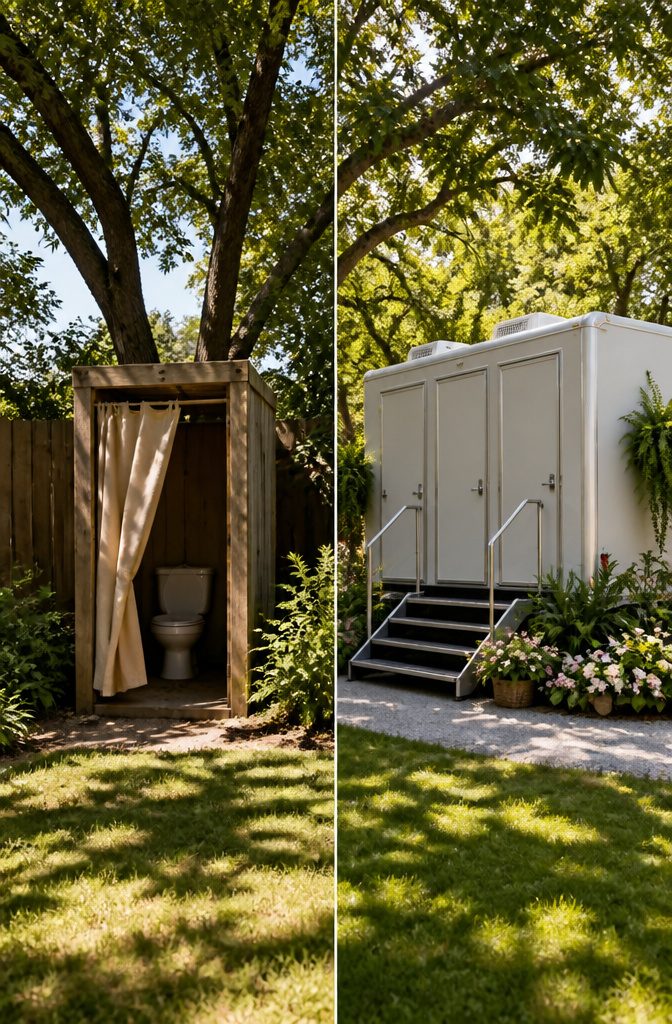
Home plumbing is not built for fifty people in a single afternoon. The septic system or municipal line backing up mid-reception is the kind of disaster that turns a wedding into a story no one wanted to tell.
I count one toilet per fifty guests as the baseline rule, and for anything larger than a casual family gathering that means renting.
The single standalone units work for smaller crowds, but once your guest list climbs past a modest backyard barbecue you need a restroom trailer.
The trailers hook to water and power, flush like a home bathroom, and keep guests from tracking through your house or standing in a line that curves past the dessert table.
A few things to lock down early:
- Ask the rental company whether your property needs a permit for the trailer. Some municipalities require one, and the company may handle the paperwork for an added fee.
- Check that the trailer can sit on level ground within reach of your water hookup and generator or outlet.
- Plan the delivery for the day before, not the morning of. Setup takes time, and you do not want trucks idling while guests arrive.
- Stock each unit with extra toilet paper, hand sanitizer, and a small trash bin. The rental includes the structure, not the supplies guests actually use.

【Combination effect】BUCLHOZ DJ light, combined with the dazzling effect of stage lighting and disco ball colorful atmosphere, equipped with a rich dynamic projection pattern, support positive and negative rotation, such a combination of multiple effects to create a more wonderful atmosphere.

27-Eye 15W Beam & 100+ Authentic Patterns – 6 lenses + 21 RGB LEDs project sharp beams up to 500 sq ft. 100+ vivid patterns aren’t just color repeats but distinct designs, creating a dynamic light show for parties, DJ shows, weddings, Halloween, Christmas and holiday events

3 in 1 Layered Lighting Effects: This stage light combines the vibrant, rotating effect of an RGB disco ball with dynamic pattern and sweeping stage beams. Its bi-directional rotation and layered effects create a rich, multi-dimensional visual experience for a truly immersive party atmosphere
Weather Backup Plan
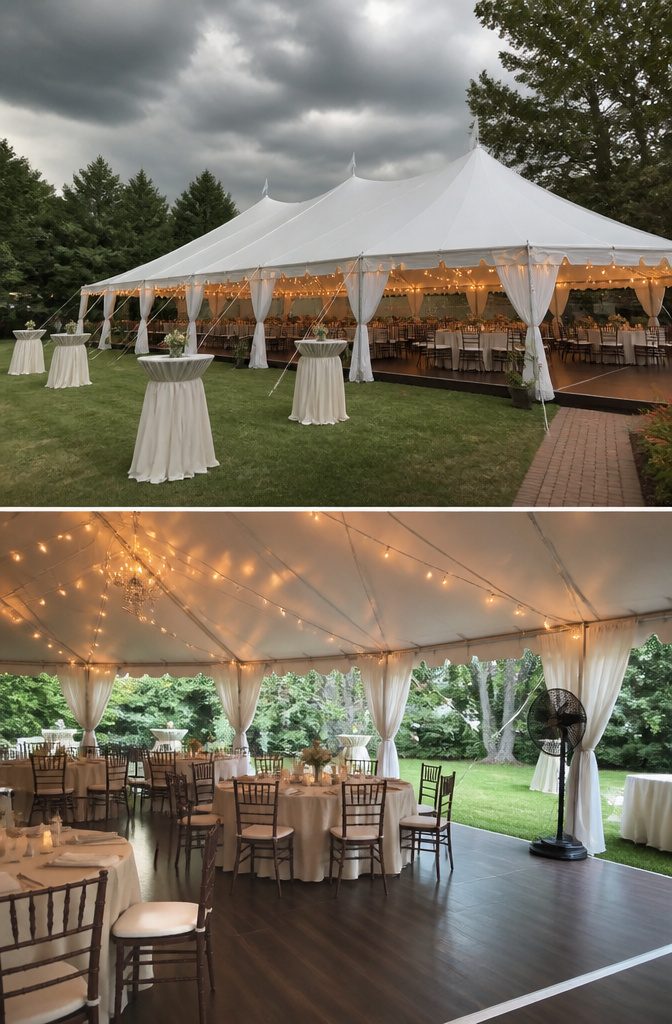
The tent line is the tightest bottleneck in a backyard wedding.
Rental companies run out of sides and flooring fast when storm warnings hit, and a Friday forecast shift leaves you with nothing by Saturday morning. Book the tent before you book the florist.
Three things to lock in early:
- A tent sized for your full guest count, not just the ceremony. If rain pushes everything under one roof, cocktail tables, dinner seating, and a dance floor all need cover. One toilet per 50 guests still applies, but wet weather means guests stay inside the tent longer, so circulation matters.
- Flooring. Grass turns to mud in an hour of steady rain. Most couples notice this only when heels start sinking during the processional.
- An indoor fallback the tent cannot cover. A garage, a basement with exterior access, or a finished barn on the property. The tent handles drizzle; a named storm or lightning needs real walls and a ceiling you did not rent.
Heat and fans count as weather backup too. A tent in August sun without sidewall vents or portable AC becomes a greenhouse by the salad course.
Budget for both scenarios when you sign the rental contract, because adding climate control two weeks out costs more than the original quote and sometimes cannot be sourced at all.

Two-Person Portable Restroom Cabin: Designed for outdoor and temporary use, this 2-stall portable toilet provides clean and private restroom access for sites, events, and...
Setup and Teardown Timeline
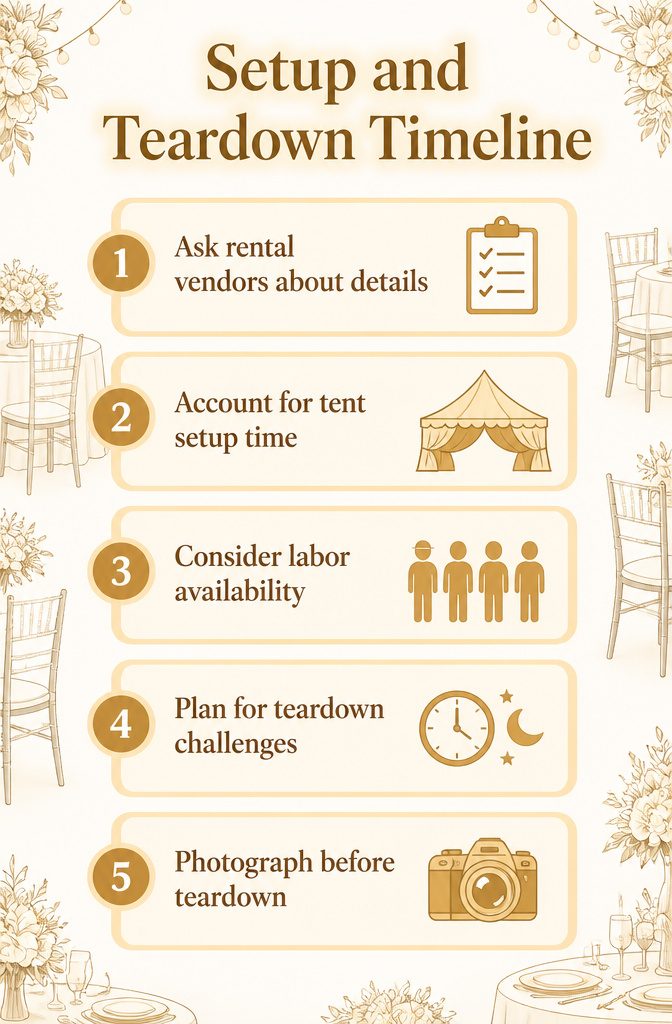
The rental truck pulls away at 2 PM on Friday and your wedding starts at 4 PM the next day.
Someone has to bridge that gap, and it is probably not the company that dropped the chairs in a stack on your driveway.
- Ask each rental vendor the same three questions: when delivery happens, when pickup happens, and whether their crew or yours handles placement. Tent companies sometimes include setup; chair and table companies almost never do.
- Count the hours, not just the calendar slots. A 20-by-40 foot tent takes a crew most of a day. Table and chair placement, if you are chasing level ground on uneven lawn, runs longer than you would guess. Build Friday setup and Sunday teardown into your timeline as their own events, not as margins around the wedding.
- That labor has to come from somewhere. Friends who offered to help are still guests who want to shower and change. Paid setup crews run $25–$40 per hour per person in most Midwest markets, and a backyard wedding with tent, tables, dance floor, and lighting can easily need four people for six hours.
- Teardown is harder to staff than setup. Guests leave, energy drops, and the same Sunday morning crew may not show. If your contract has a hard Monday pickup time, you are the one policing the lawn at midnight or paying overtime rates.
- Photograph everything before the crew leaves: the tent footprint, the electrical run, the table layout. Saturday morning corrections eat time you do not have, and post-wedding disputes over damage are decided by what you can prove was pre-existing.

DOUBLE THE OUTPUT: This generator parallel cables kit links two identical compatible inverter generator units so combined output can reach up to 40 amps for RV-ready power. It is built for steady connection when more wattage is needed at camp, at a trailer, or for equipment that demands more than one unit can supply alone.

Parallel Power Cord: Compatible with the use of parallel power cables two EU1000i, two EU2200i, two EU3000 generators together to get as much as double the output (Please note: you can only parallel two identical units together)

The cable is compatible with any mating 15/30/45A ADS connector.
Event Day Timeline
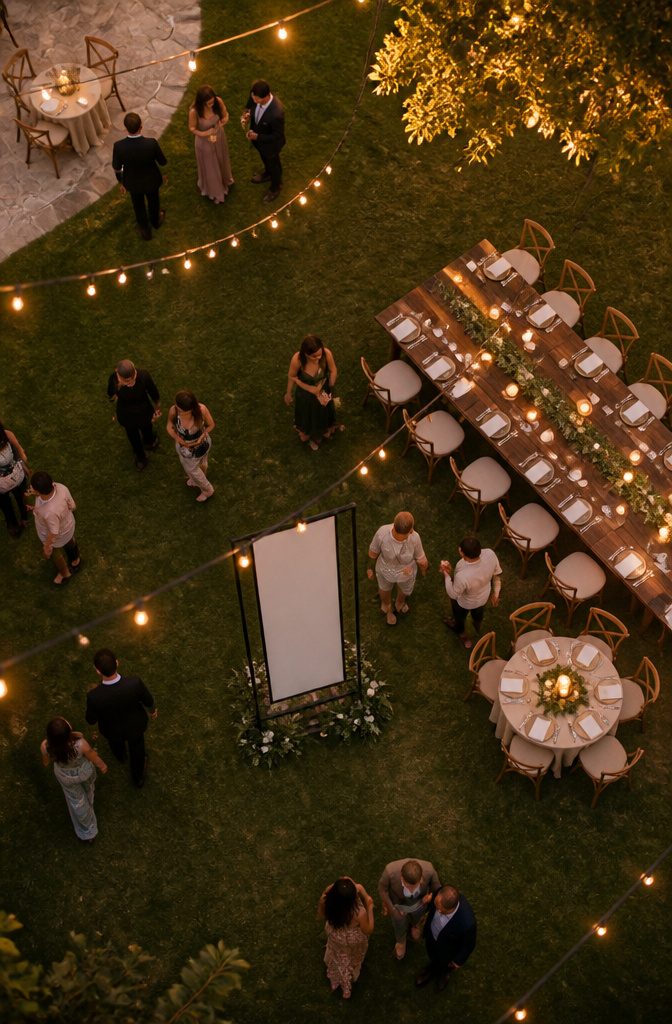
A backyard wedding timeline lives or dies by two hard stops: music cutoff and golden hour. Build everything backward from those.
- Check your local noise ordinances before you book the band or DJ. Most neighborhoods set a hard stop for amplified sound, often 10 p.m., and the fine for pushing past it falls on the host. Start the ceremony early enough that dancing doesn’t get squeezed.
- Golden hour shifts with the season, so look up sunset for your date and put couple portraits 60–90 minutes before it. That light is why you hired a photographer; missing it means flat flash photos against your garage door.
- Share the finished timeline with every vendor two weeks out. Caterers need to know when cocktail hour starts so they can fire the apps. The photographer needs to know when you’re walking down the aisle so they don’t miss the aisle itself. One shared document beats a chain of texts.
- Build in buffer for the things that run late. The backyard has no venue manager tapping a watch. Toasts stretch, kids wander, someone hunts a jacket. Fifteen minutes of slack between ceremony and dinner keeps the whole night from compounding.

2-in-1 Value Pack for Full Wedding Guidance – Get 7 double-sided signs in one set: 3 square "This Way" signs for directing guests to ceremony, cocktail hour, or photo zones, plus 4 arrow-shaped parking signs for parkinglots, valet areas, or shuttle stops—eliminating the need to buy separate sign kits.

10 Pack 2-in-1 Complete Wedding Guidance Set: get 10 directional signs in one convenient set, including 4 rectangular signs for guiding guests toward wedding areas and parking zones, plus 6 arrow-shaped signs for clearly marking the route and direction of travel; Use them to direct guests to ceremony entrances, reception areas, parking lots, photo areas, cocktail spaces and other key locations throughout your wedding venue, helping guests find their way with less confusion

COMPLETE WEDDING DIRECTION SIGN SET:This 9-piece wedding direction sign set is made for brides, wedding planners, event coordinators, and outdoor venue hosts. It helps guests know where to park and how to reach venue entrances, ceremony spaces, walkways, and reception areas with less confusion.
When to Start This Checklist
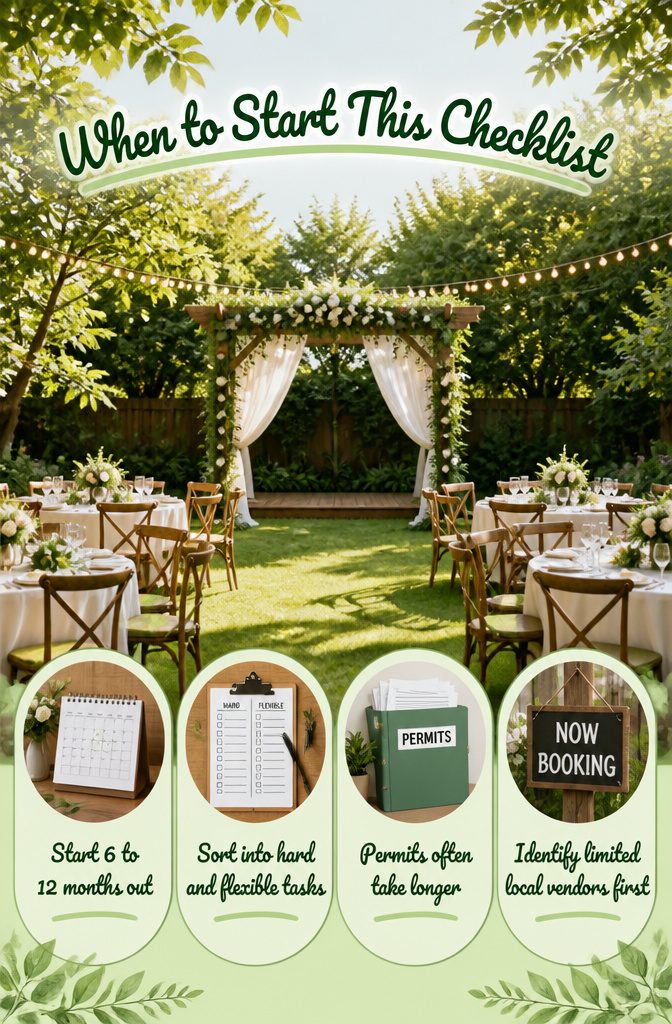
A backyard wedding checklist only works if you start it early enough for the items that do not bend.
I have watched couples lose their preferred rental company because they called at the three-month mark and the Memorial Day weekend fleet was already spoken for.
Six to twelve months is the window that actually protects you, and the bottom of that range is already tight for the vendors everyone in your city wants.
The first pass through your checklist should sort every item into two piles: hard deadline versus flexible fix.
Permits sit in the hard pile because city offices move at their own speed, and a restroom trailer or generator often triggers a review that takes weeks, not days.
Popular rental companies and caterers belong there too. Limited local availability means the good ones book out first, and a backyard wedding adds complexity that makes some vendors decline outright.
Start with those hard-deadline items before you let yourself fall into color palettes or table settings. The rest of the checklist can wait.
What Goes Wrong and How to Catch It
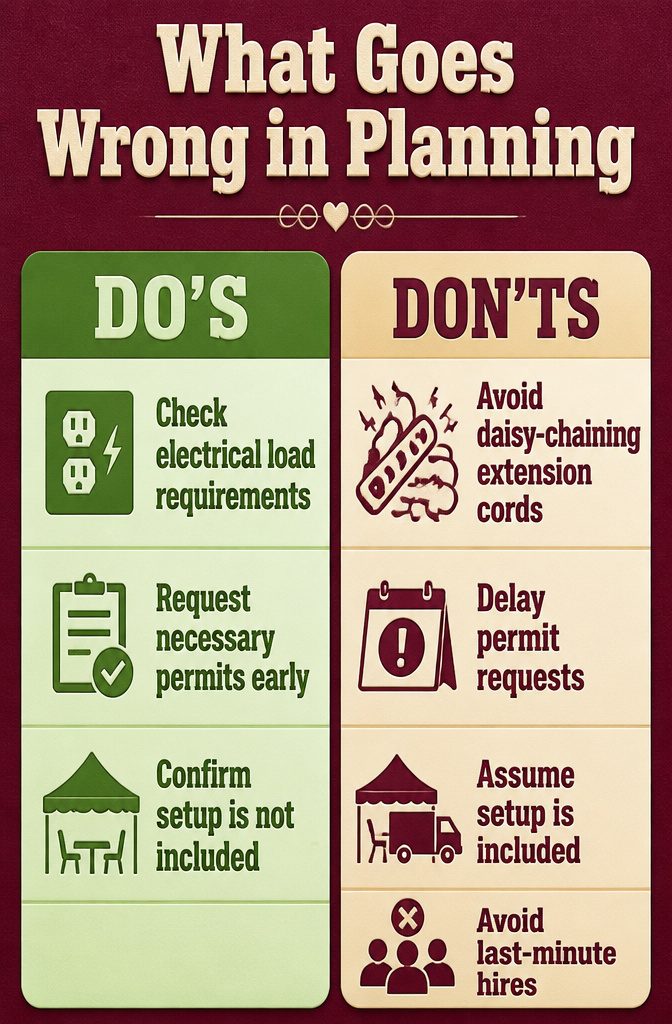
The backyard wedding checklist most couples build starts with the pretty items, flowers and string lights, and skips straight over the electrical load.
A standard household outlet will not power a caterer’s warming trays, a DJ’s subwoofer, and perimeter lighting at the same time.
I have seen a bride’s father daisy-chain three extension cords across a damp lawn because nobody ordered a generator until the rehearsal dinner, when the sound system kept tripping the breaker.
Permits sit in the same blind spot. The assumption is that your own property means your own rules, but some jurisdictions require permits for generators over a certain size or for any restroom trailer.
Rental companies will often pull the permits for an added fee, but only if you ask them to early enough in the process. Waiting until two weeks out turns a routine form into a crisis.
The third error couples make is assuming setup is included in the rental quote.
Most tent, table, and chair companies deliver to the curb. They do not wrestle a 40-by-80-foot tent across a root-heaved yard, and they do not stay to level tables on uneven ground.
Someone has to be assigned to that labor, and if it is not written into a vendor contract, it falls to your cousins in nice clothes or to a last-minute cash hire you did not budget for.
Frequently Asked Questions
What do I need for a backyard wedding?
A complete backyard wedding setup covers guest management, rentals, catering, restrooms, power, permits, parking, setup labor, weather backup, and a tight timeline.
Start with a tape-measured layout on graph paper so you know what actually fits before you call any vendors.
How do I manage my guest list for a backyard wedding?
Your yard’s square footage sets the hard limit, not your wishes.
Walk the space with a tape measure and lock the count before you fall for a layout that only works for 30 fewer people than you invited. Limited space means a limited guest list, and that trade-off arrives early.
Do I need a permit to have a wedding in my backyard?
Some towns require permits for home events, and the only reliable way to know is to ask city officials directly.
Check noise and parking ordinances first; restroom trailers and generators sometimes need their own permits too, which rental companies can usually obtain for an added fee if you ask early.
How do I plan for bad weather at my backyard wedding?
Book a tent sized for your full guest count before you book the florist, and add flooring so grass does not turn to mud.
Also lock in an indoor fallback like a garage or basement for named storms, plus heat or fans since a tent in August sun becomes a greenhouse without climate control.
How do I set up a timeline for my backyard wedding?
Build backward from two hard stops: your local noise ordinance cutoff and golden hour for photos.
Start the ceremony early enough that dancing finishes legally, and put couple portraits 60–90 minutes before sunset. Add 15 minutes of slack between ceremony and dinner so toasts and wandering kids do not compound into a delayed night.