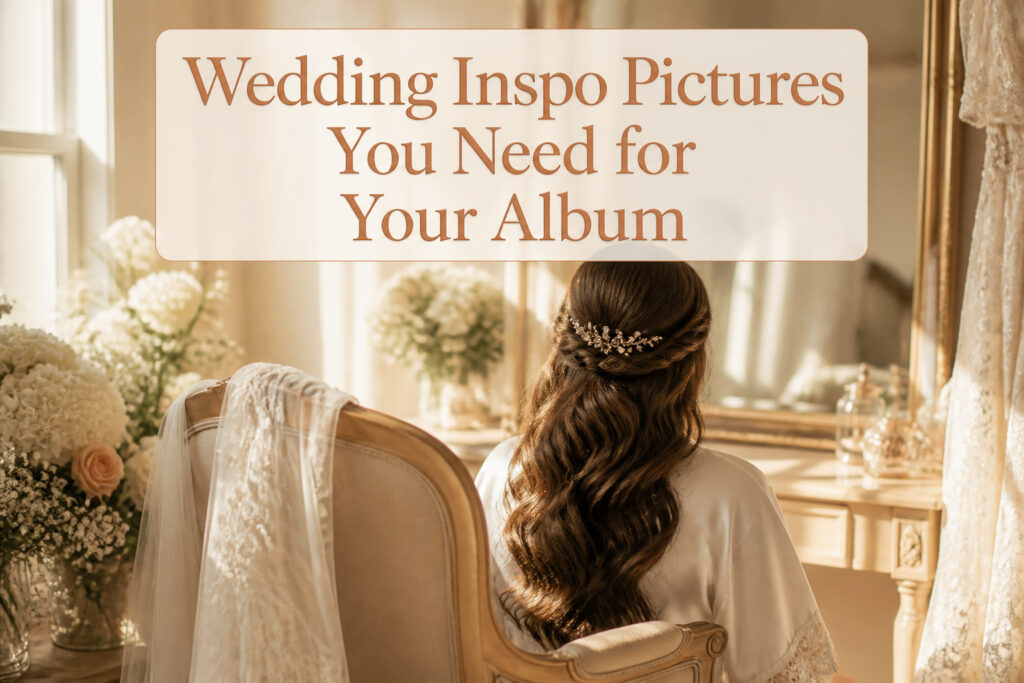
The wedding inspo pictures worth keeping change completely based on whether your photographer arrives while hair is still in progress or after the finished look is already done.
That decision, not the shot list itself, determines whether your album opens with anticipation or only results.
1. Getting Ready Photos
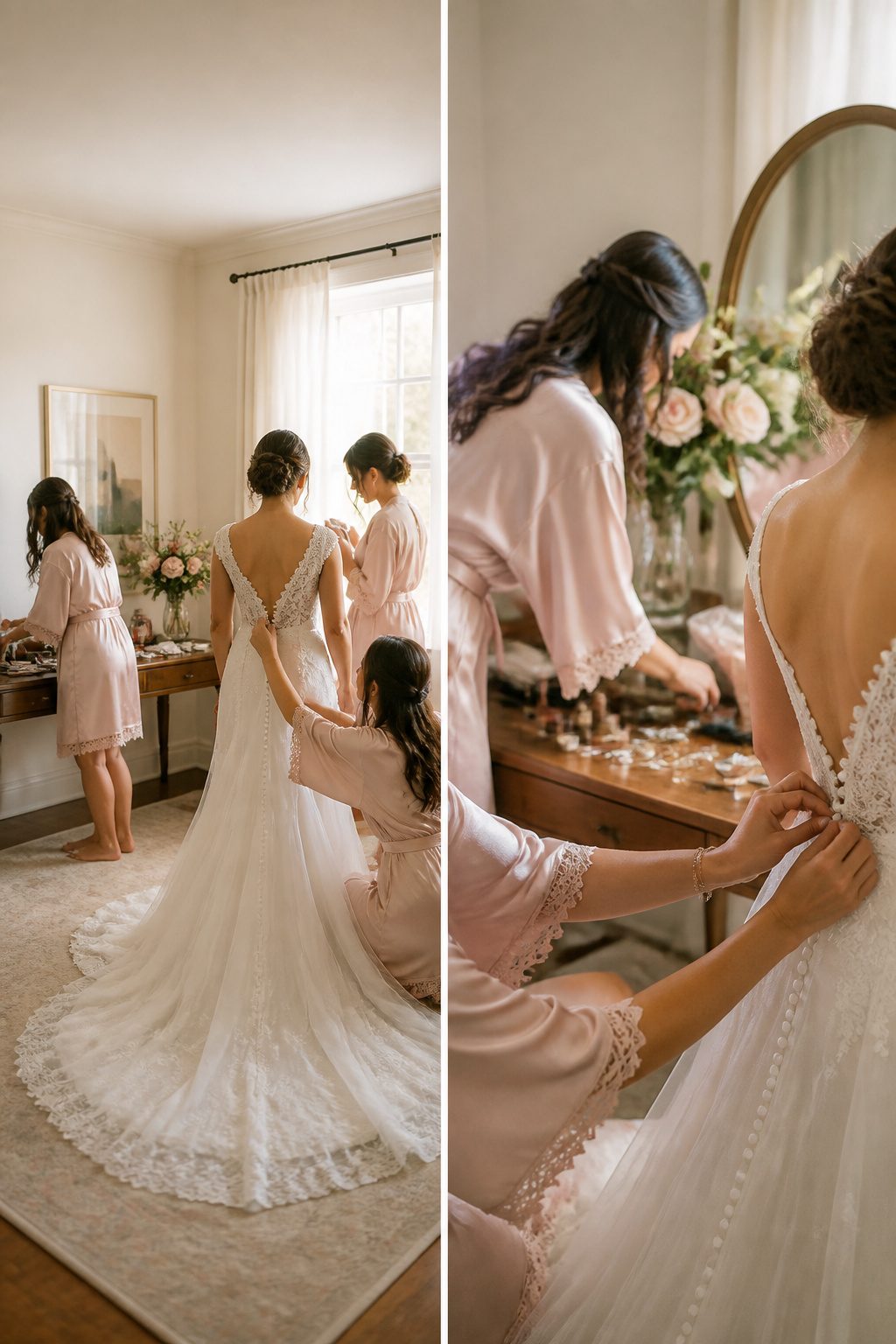
The morning of a wedding moves fast, and the getting-ready hours are where the day actually starts to feel real.
Light in the room matters more than most couples expect; a north-facing window or a space with sheer curtains will do more for your photos than any filter later.
I always tell people to scope the bridal suite with that in mind, because a photographer can’t manufacture soft light that isn’t there.
Bridesmaids in matching robes, the mother of the bride fastening buttons, someone hunting for the right earring back: these scenes show up on every must-have list for a reason.
The same sources that push for detail shots of rings and invitations consistently flag this block of time as non-negotiable.
Have your photographer arrive while hair is still in progress, not after, because the finished look is only half the story.
The groom’s side deserves the same attention; boutonnieres going on crooked, the best man pretending he knows how to tie a bow tie.
Those images thread through the album and tie everything that follows back to the anticipation that came first.

Light and sleek fabric to accentuate curves; Smooth to the touch and easy on the skin.

Soft, Comfy, Lightweigtht and Smooth Fabric.

Sexy Floral Lace Trim Robes: The sleeve and the bottom designed with lace trim, sexy V-neck kimono style, Inside ties and removable waist sash to keep closed and adjust to a great fitting. It's looks more elegant and beautiful
2. First Look Photos
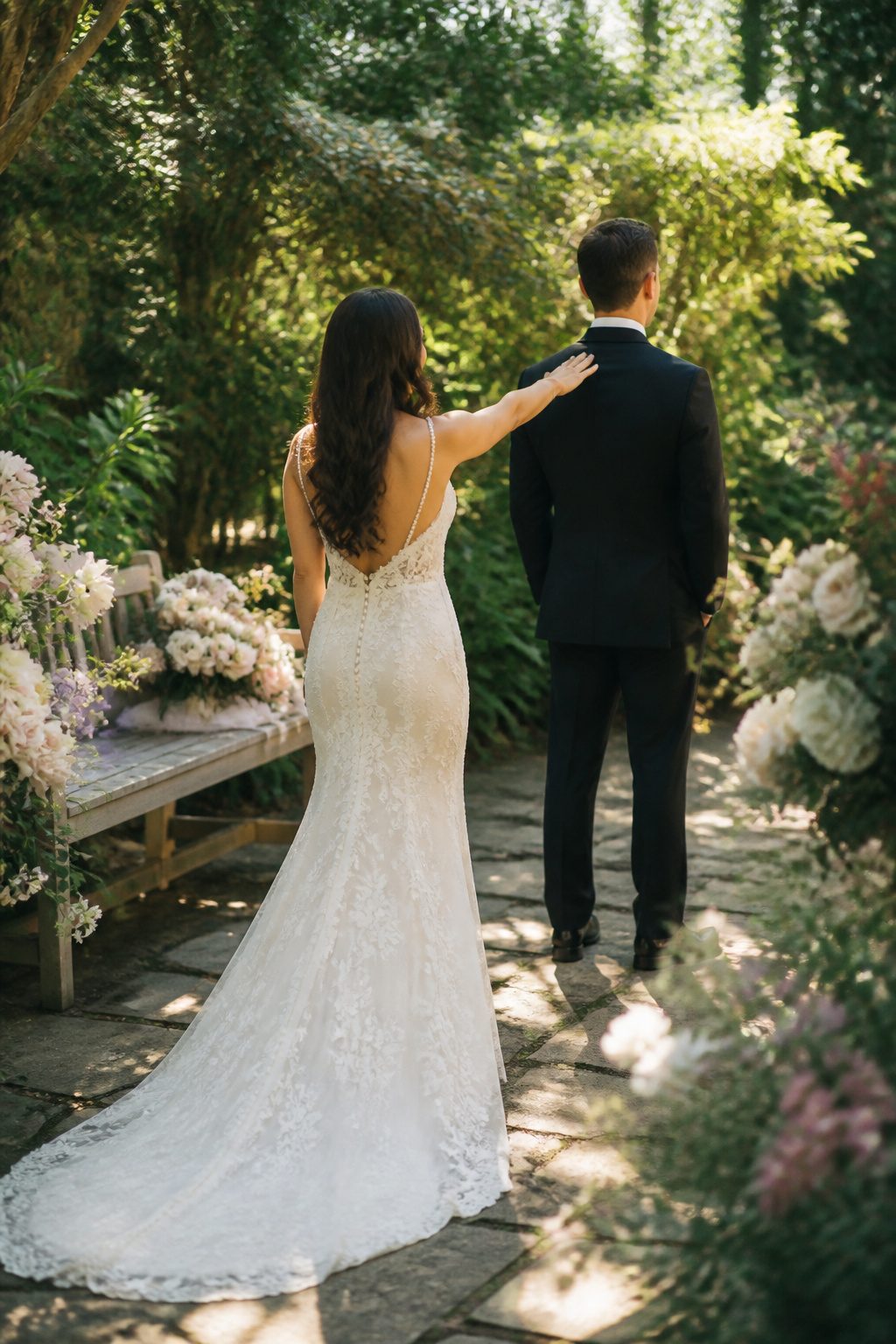
A first look before the ceremony buys you back the cocktail hour for actual cocktails. The couple sees each other privately while the photographer works, then the wedding party and family step in for portraits before guests arrive.
Done well, you are at the bar with everyone else instead of missing your own party for group shots.
The emotional range widens when you pull others in. A bridesmaid first look, a father turning around, future in-laws meeting the dress: each carries its own weight and gives the album more than two people reacting to each other.
These moments are harder to stage later because the timing is real. Once the procession starts, the chance is gone.
The trade-off is the loss of that aisle reveal. Some couples want it, and the schedule stays traditional.
Others find the private reaction is the honest one, and the aisle becomes theater for the guests instead of pressure for the couple. Either choice is defensible; only one lets you attend your cocktail hour.
3. Wedding Ceremony Photos
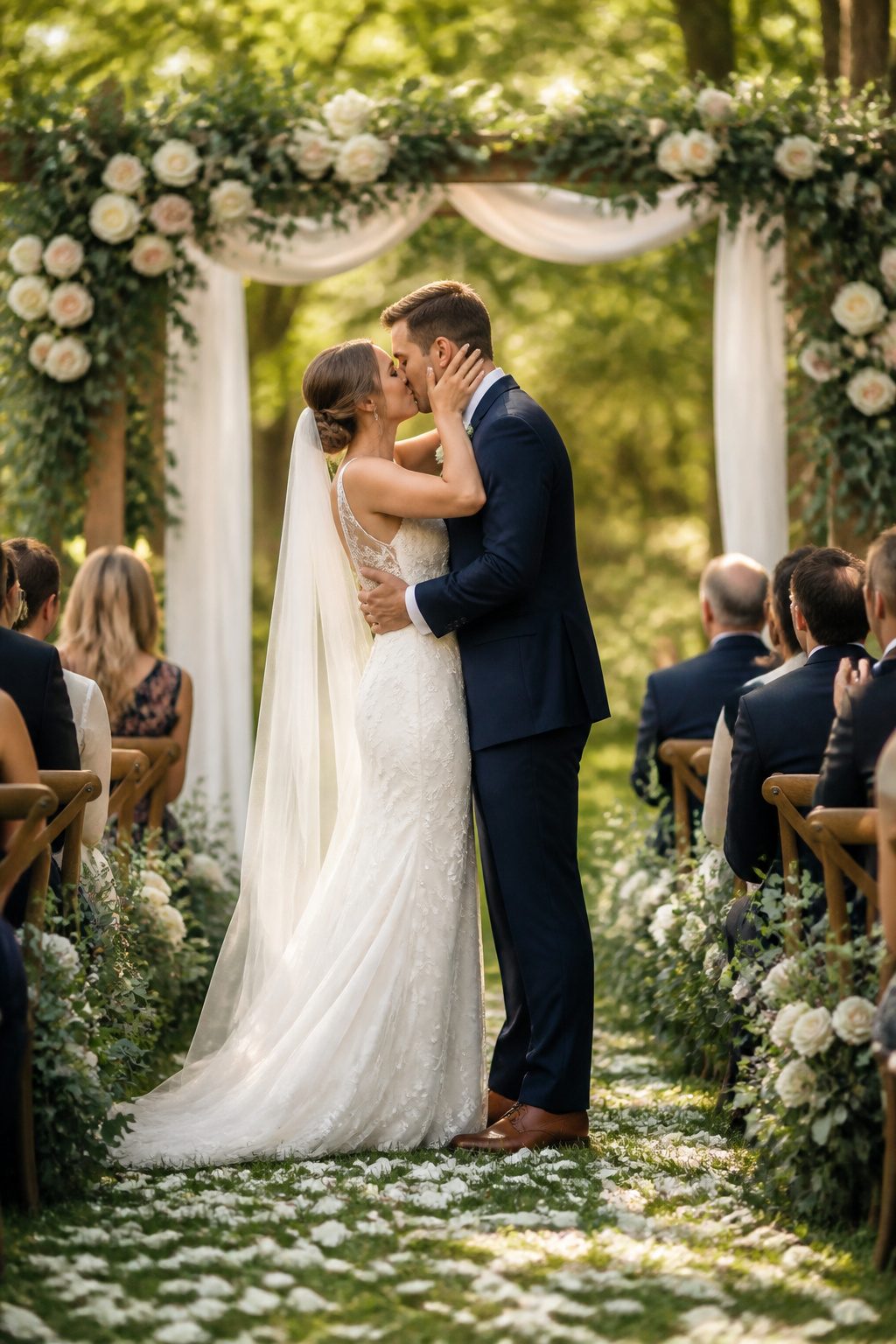
The first kiss is the shot almost every couple expects to find when they open their wedding album, and with good reason.
That moment carries the weight of the entire ceremony in a single frame: the pause, the lean in, the relief that follows. Experienced photographers know exactly when it is coming, but the best ones do more than anticipate the timing.
They coordinate with whoever is officiating to step aside at the right instant, keeping that figure from blocking the composition. An outdoor ceremony helps, with open sightlines and natural light working in your favor, though the principle holds anywhere.
Walking back down the aisle as newlyweds is just as easy to miss.
The moment feels obvious, even inevitable, yet photographers with less experience sometimes shift focus the instant the kiss ends and catch only the back of your head or the crowd instead.
Ask directly about this shot during your booking conversation, not as an afterthought. The couple who has been married for only a few seconds carries an expression that does not repeat itself.
4. Couple Portraits
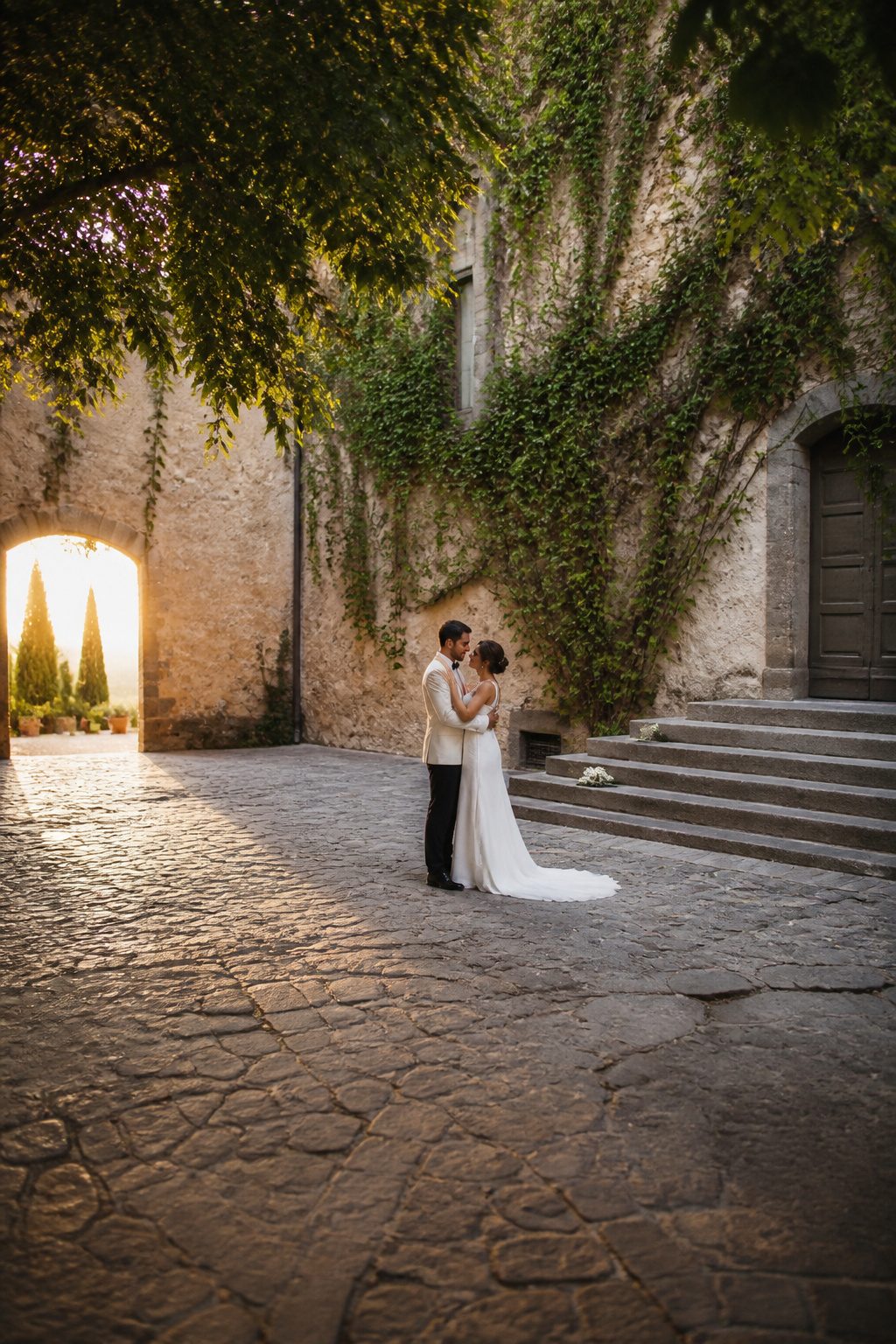
Couple portraits land in that narrow window after the ceremony, while guests are at cocktail hour and the light is still holding.
Most weddings run the formal portraits then, bridal party and family included, which answers the question I get most often about when the two of you actually get photographed together.
A "first look" changes the math: you see each other beforehand, knock out the portraits early, and free yourselves to join the cocktail hour you paid for instead of missing it.
The location should feel like something the two of you would choose for a Saturday, not a rental set.
I like bringing the atmosphere into the frame, the way the light falls in that particular spot, whether it is a courtyard in Italy or the alley behind your reception venue.
The editorial quality comes from the place being real, not from posing that fights it.
Formal portraits between ceremony and reception is the standard, but the first look is the move if you want those minutes back for yourselves.
5. Reception and Party Photos
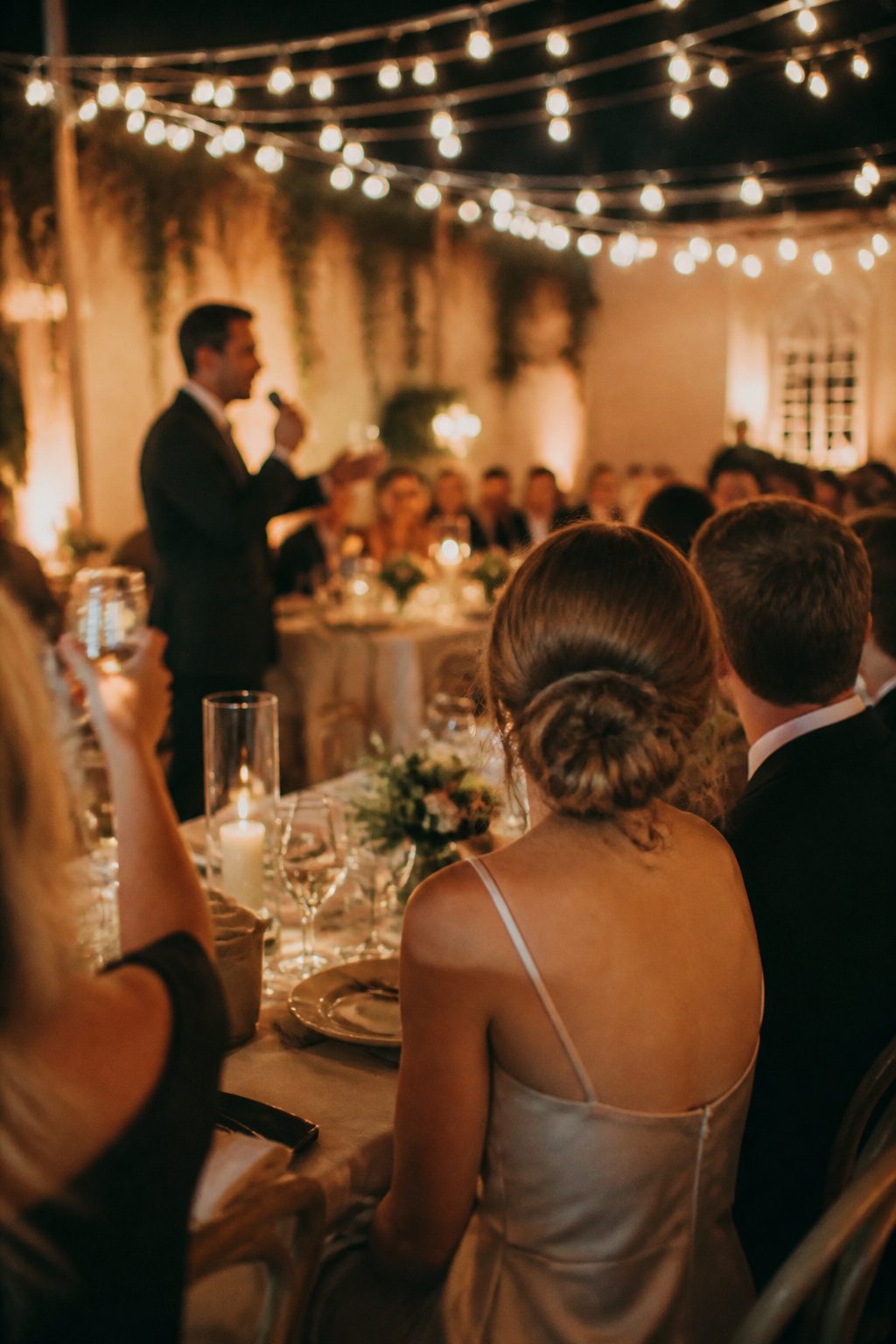
The reception is where the timeline loosens and the real celebration starts, which also makes it the easiest part to miss on camera.
I have learned to tell couples to ask their photographer to stay through the last dance, not just the first one, because the energy shifts completely after dinner.
The dance floor shots that actually work are the ones taken from inside the action, not from the perimeter with a flash popping every ten seconds.
A photographer who moves through the crowd catches the genuine laughter during speeches instead of the stiff posed reaction shots.
Speeches deserve their own attention too.
The best wedding inspo pictures from receptions pair the wide shot of the room with a tight frame on whoever is speaking, so the album later tells the story of who was there and what they meant to you.
If you are working with a tighter budget, this is where a single photographer really earns their keep; one person who reads the room beats two who split the night into zones.
The cake cutting and the formal dances are the scheduled moments, but the unplanned ones, a guest catching the bouquet or a grandparent sneaking a second piece of cake, are what you will want framed.
6. Detail Shots
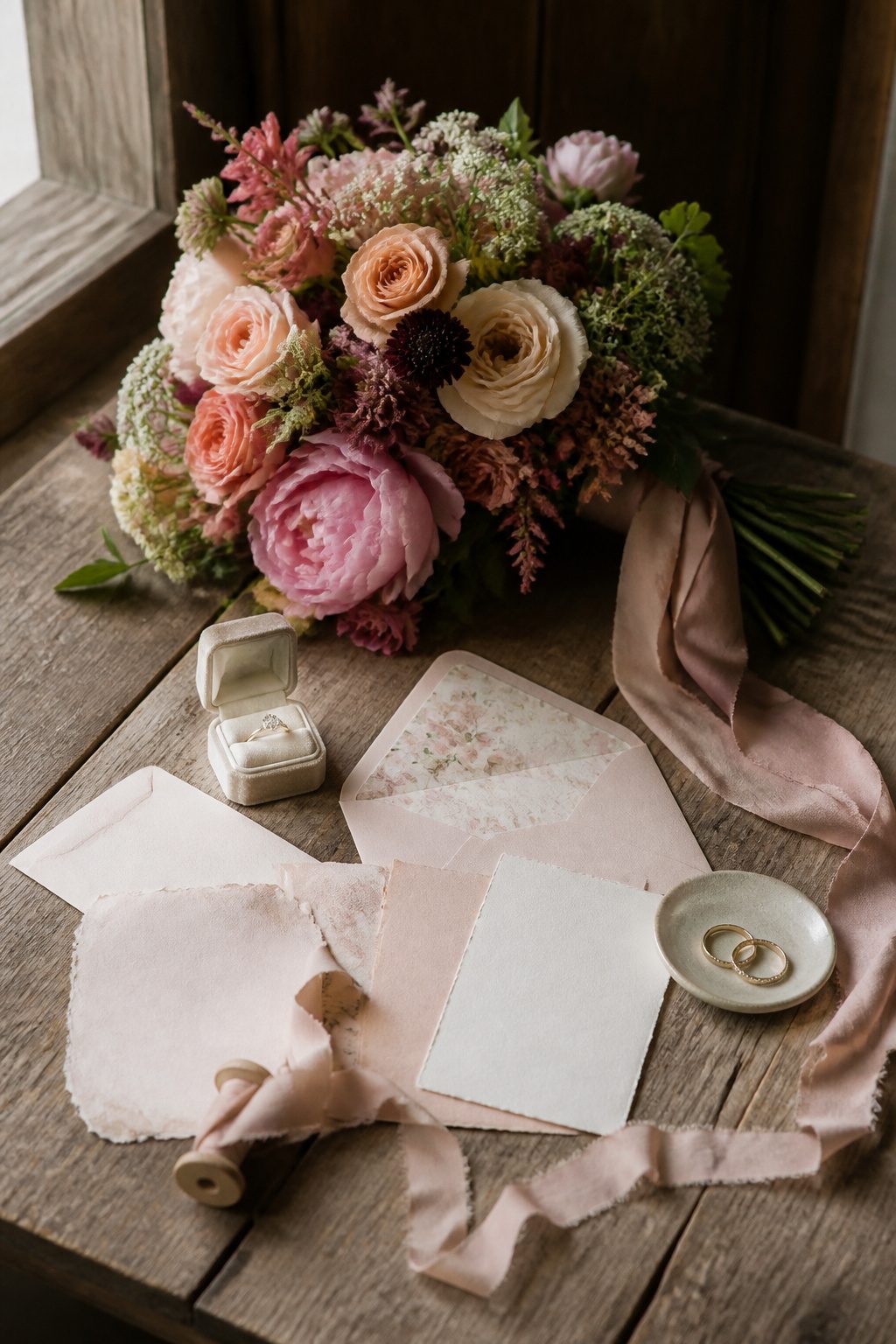
The bridal bouquet sits in more frames than almost any other object at the wedding, yet couples routinely forget to schedule time for it alone.
Set aside ten minutes before the first guest arrives for the photographer to isolate the flowers against a clean background, maybe with a hint of the venue’s architecture in the frame.
The same goes for the invitation suite, the rings, the shoes, the boutonnieres. These items absorb hours of selection and often hundreds of dollars; a shot list that skips them leaves that effort unrecorded.
Ceremony and reception décor need the same treatment.
Room shots establish the full space, but close-ups of table settings, escort cards, signage, and favors are what you’ll actually study later. The photographers who submit successfully to wedding publications emphasize this category as non-negotiable for completeness.
One approach I favor after reviewing dozens of these submissions: capture the details in place, in context, rather than hauling everything to a single styled corner.
The bouquet on the getting-ready table, the rings on the actual ceremony program, the place card where the guest will find it. The result feels like your wedding, not a catalog.

Luxurious silky feel and look. Light and sleek fabric to accentuate curves; Lightweight and comfortable, Shinny and smooth to the touch.

Silky robes have seeped into daywear trends in recent seasons.Designed for comfort, versatility and timeless style.
7. Exit Photos
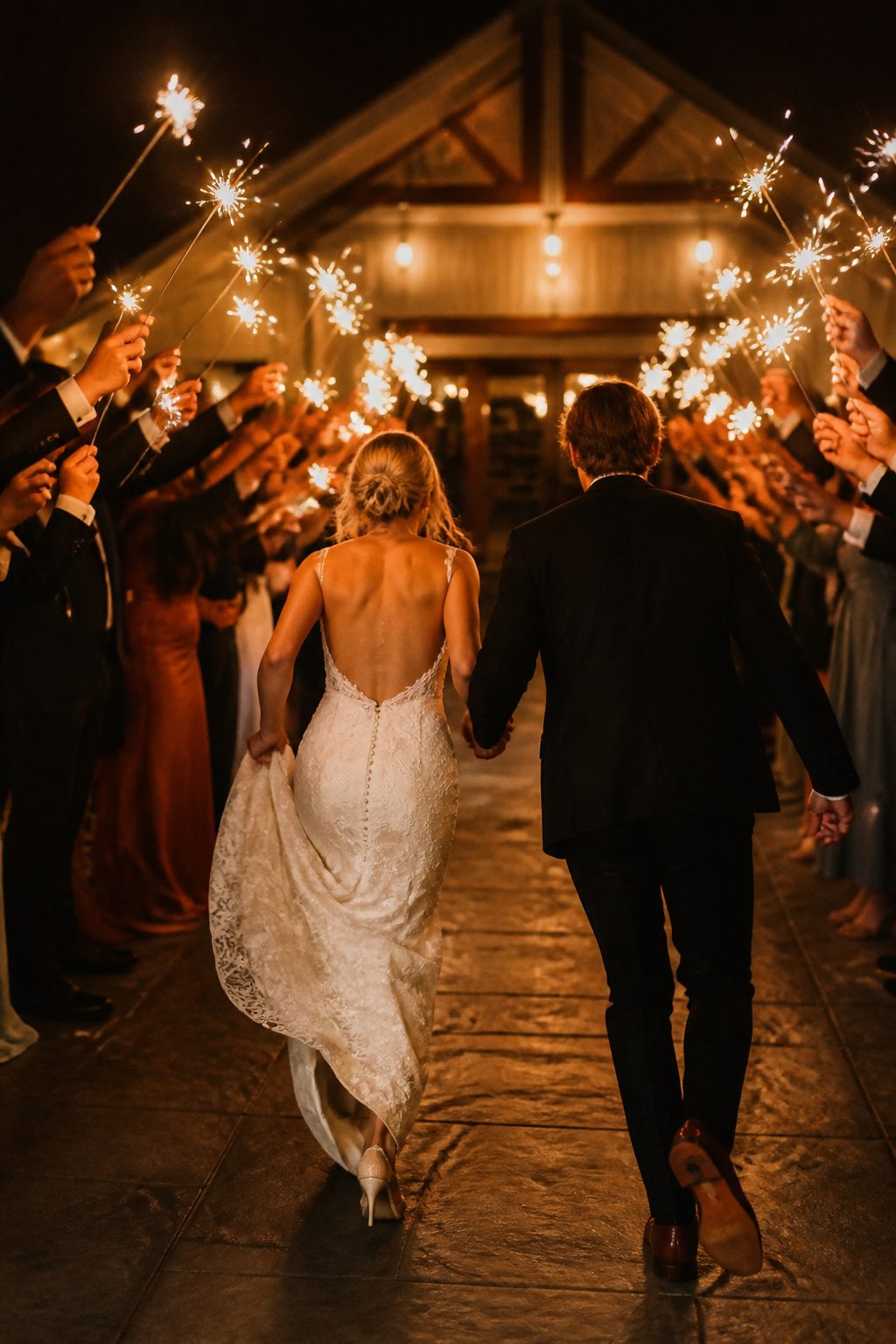
Sparkler exits and confetti tosses give the night a final punctuation mark, something guests remember longer than the cake cutting. The trick is timing.
Summer weddings run into a real problem: sparkler photos need darkness, and in June that might not happen until 9:30 p.m., when half your crowd has already said goodnight or had enough champagne that corralling them feels like herding cats.
Plan the exit earlier than feels natural, maybe right after the last dance while energy is still high, or accept that you’ll stage it with a smaller group.
Confetti skips the darkness issue entirely, though you’ll want to check whether your venue allows it; some outdoor spaces fine you for leftover paper or biodegradable petals that still read as litter.
Either way, loop your photographer and planner in before the day itself. The best exit shots come from guests who know where to stand and a couple who knows exactly when to run.
Candid Moments
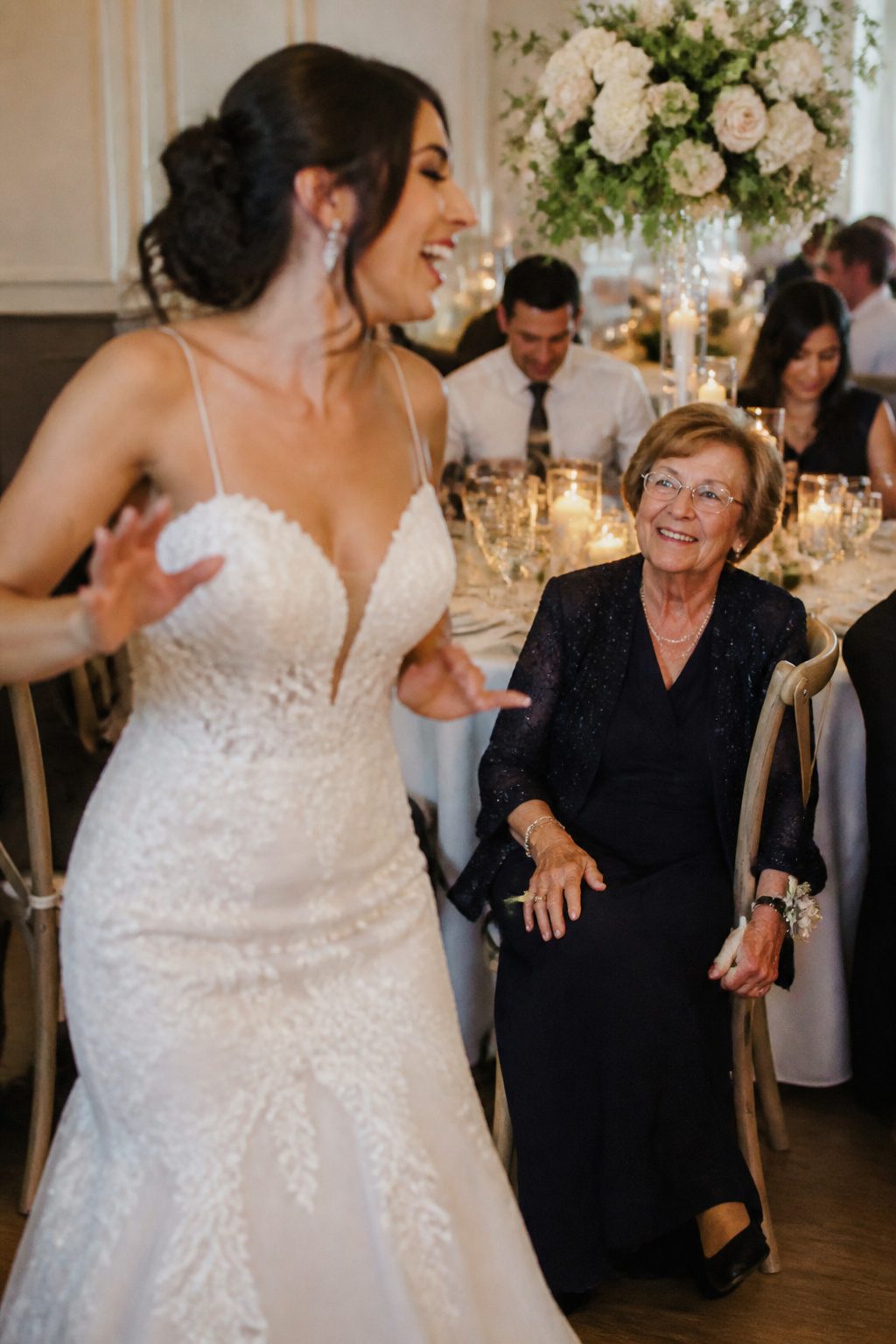
A wedding album built only on posed shots tells the story the couple rehearsed, not the one that actually happened.
The real memory, the one that still makes you laugh at year five, is usually the unplanned moment: your grandmother’s face when she spots you in the dress, the best man mid-snort during a toast, the two of you forgetting the crowd and dancing like it’s the kitchen on a Tuesday.
Candid moments are the ones you did not know needed saving until you see them later.
Most couples I meet admit they feel stiff when a camera points at them. That awkwardness is exactly why I tell people to flag this priority with their photographer upfront.
If you want more of these natural shots in your final gallery, say so explicitly, and say what kind matters to you: the quiet ones, the loud ones, the laughter especially.
Joy and laughter are huge ingredients at a wedding, but a photographer running on a tight timeline will default to the safe posed frame unless they know you’re willing to trade a few of those for the shot they can’t guarantee but might catch.
The trade-off is real, and in my view it tilts toward candids every time.
Drone Photography
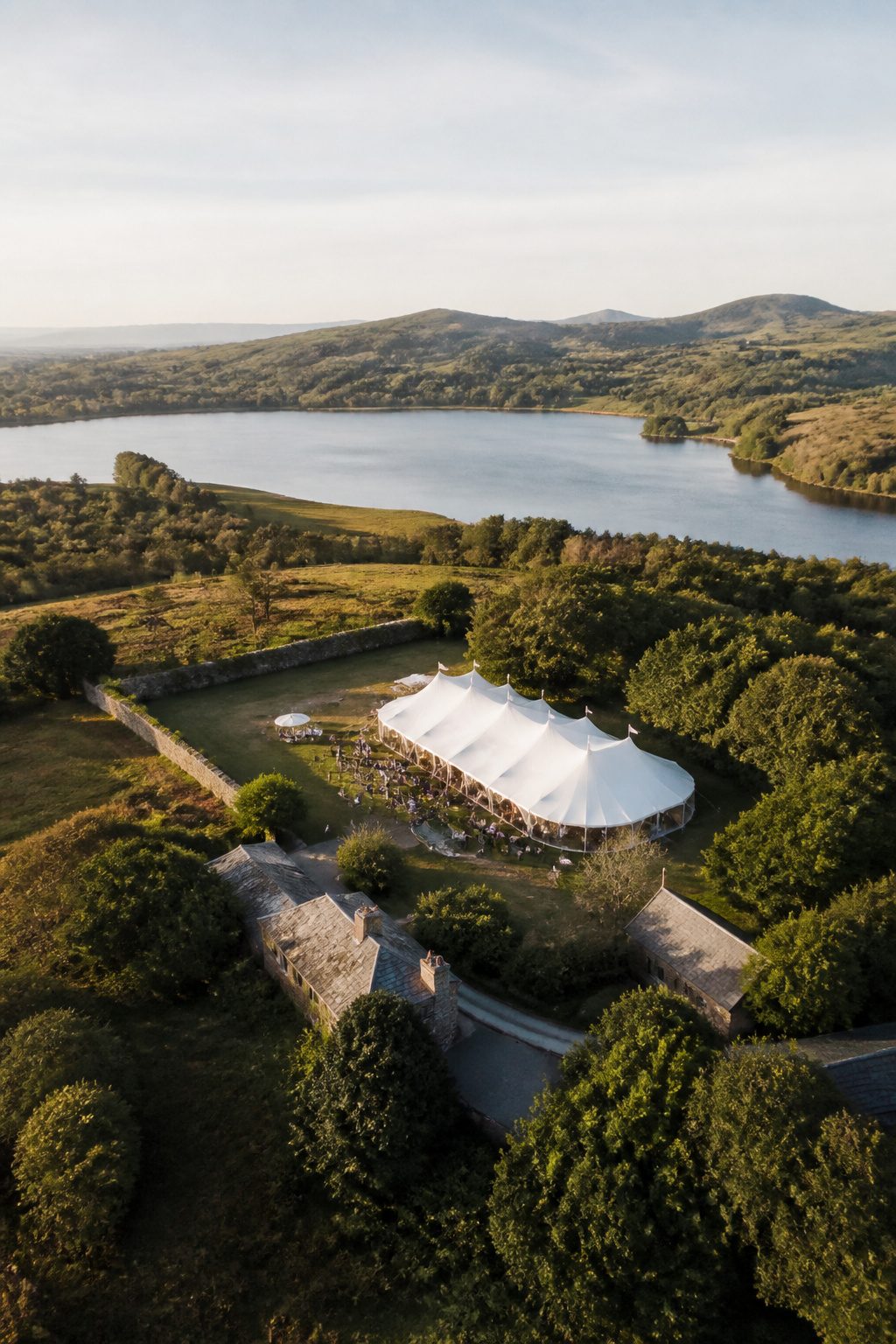
Drone photography sits outside standard wedding coverage, and that is exactly why it belongs on your inspo board.
A licensed pilot can lift a camera above the tree line or the roofline and return a single frame that shows your venue the way a guest never sees it: the full geometry of a garden ceremony, the way a lake wraps around the property, the scale of a tent against the lawn.
The shot works best when the setting itself is worth reading as a map, not just a backdrop.
Rain, wind, or proximity to an airport can ground the drone entirely, so this is a backup plan or a bonus, not a pillar of your album.
Budget it as a splurge, ask your photographer whether they keep a Part 107 license or bring in a specialist, and if the day clears and the airspace cooperates, you get the one image that explains to someone who was not there why you chose that spot.
Finding Your Photographer
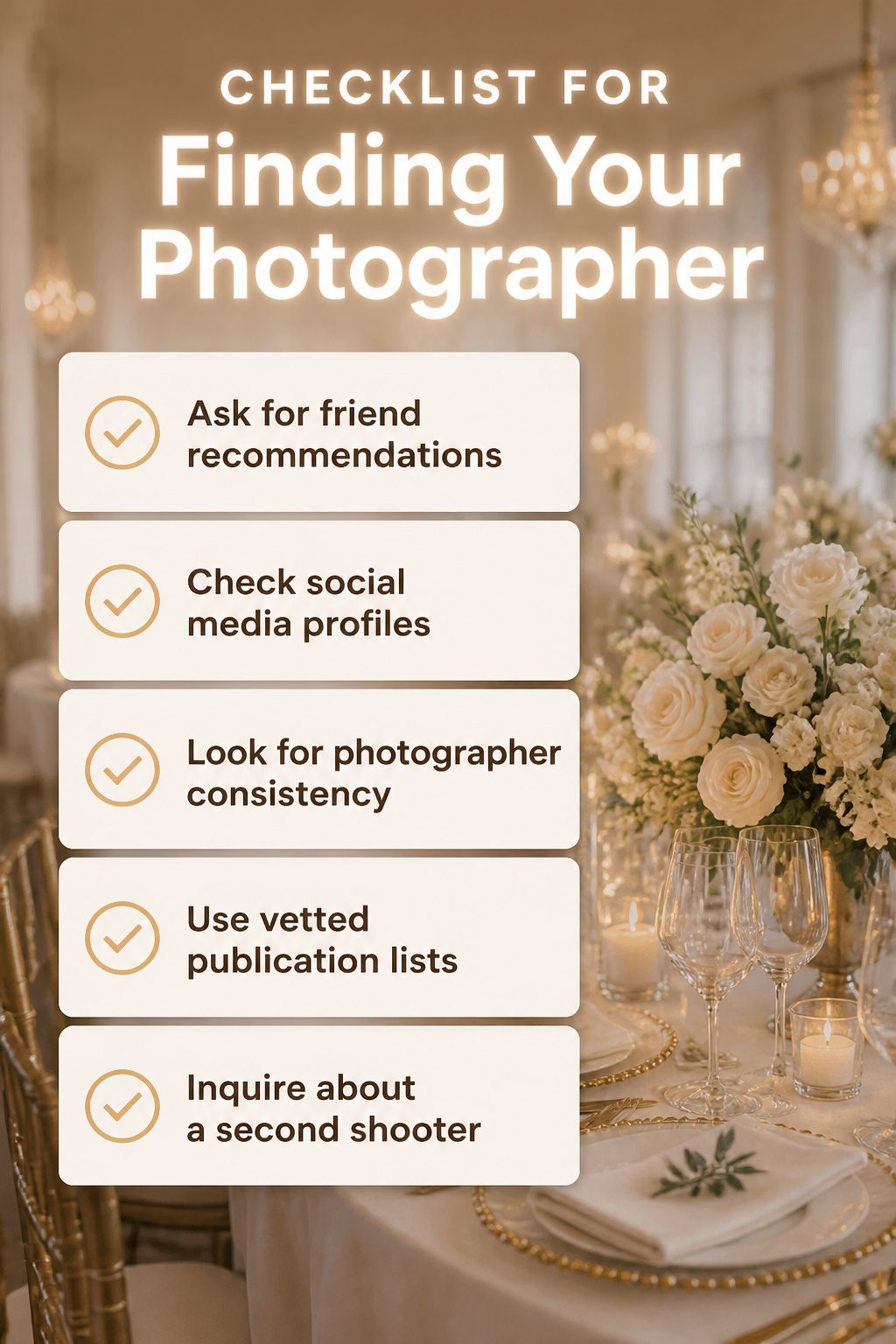
The hunt for someone who can actually deliver the wedding inspo pictures you’ve been saving starts with people you already trust.
A friend whose album made you pause mid-scroll is worth more than any portfolio; ask them who shot it and how the day felt from their side of the camera.
Social media fills the gaps when your circle comes up short. Instagram and Pinterest let you see a photographer’s full range across seasons and venues, not just the six images they chose for their website.
Look for consistency: one stunning sunset shot is luck, twenty well-lit receptions in a row is craft.
If you’re still staring at too many tabs, vetted lists from publications you trust cut the noise without the gamble of a blind hire.
Members of the Inside Weddings Editors Circle, for instance, have already passed a bar your own eyes might miss. Ask whoever you contact whether they bring a second shooter.
That second set of hands catches the moments you’d never stage: your mother’s face during vows, the ring bearer’s mid-ceremony yawn, both of you laughing at a toast that went wrong.

Used Book in Good Condition
Timing Your Shots
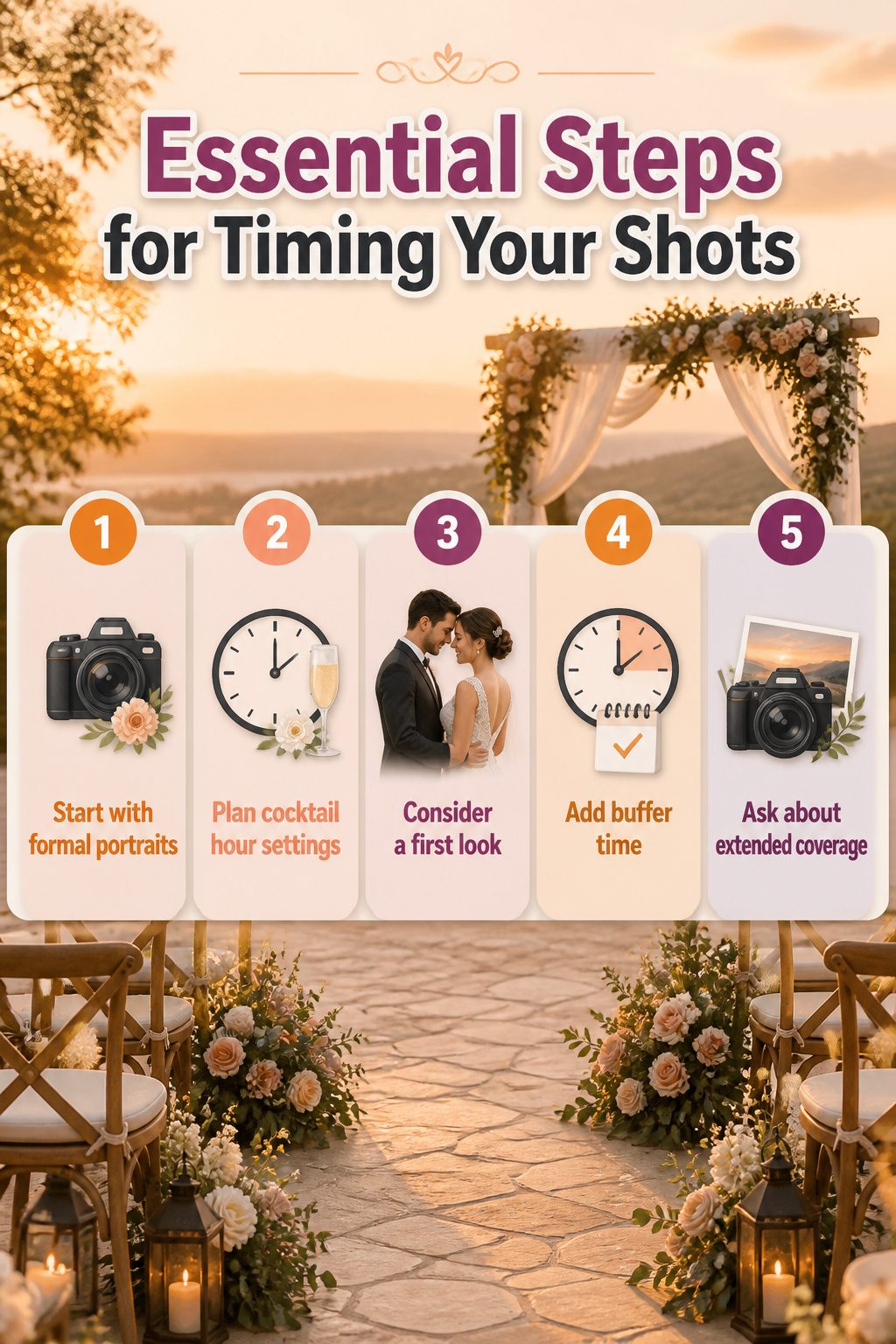
Formal portraits usually land in that stretch between ceremony and reception, while guests are still holding their first drink and the room hasn’t fully shifted into party mode.
Cocktail hour gives you roughly sixty minutes to work with, which sounds generous until you account for wrangling family, swapping boutonnieres that got crushed in hugs, and the photographer repositioning for light that just moved behind a cloud.
A first look changes the math entirely. Seeing each other before the ceremony means portraits, wedding party shots, and even family formals can finish before guests arrive.
The tradeoff is giving up that aisle moment, but the payoff is walking into cocktail hour as a married couple instead of disappearing into a side garden while everyone else drinks.
Most timelines I have looked at leave too little buffer. Fifteen minutes of padding between ceremony end and the first group photo call time disappears fast when the officiant runs long or the ring bearer needs a bathroom break.
Build in that slack, or the photos compress and someone in every frame looks rushed.
If you want coverage that stretches past the main day, ask your photographer about the welcome party, rehearsal dinner, or morning-after brunch.
Those hours add to the package, but they also catch the moments that never make it into the standard album.
The Must-Have List
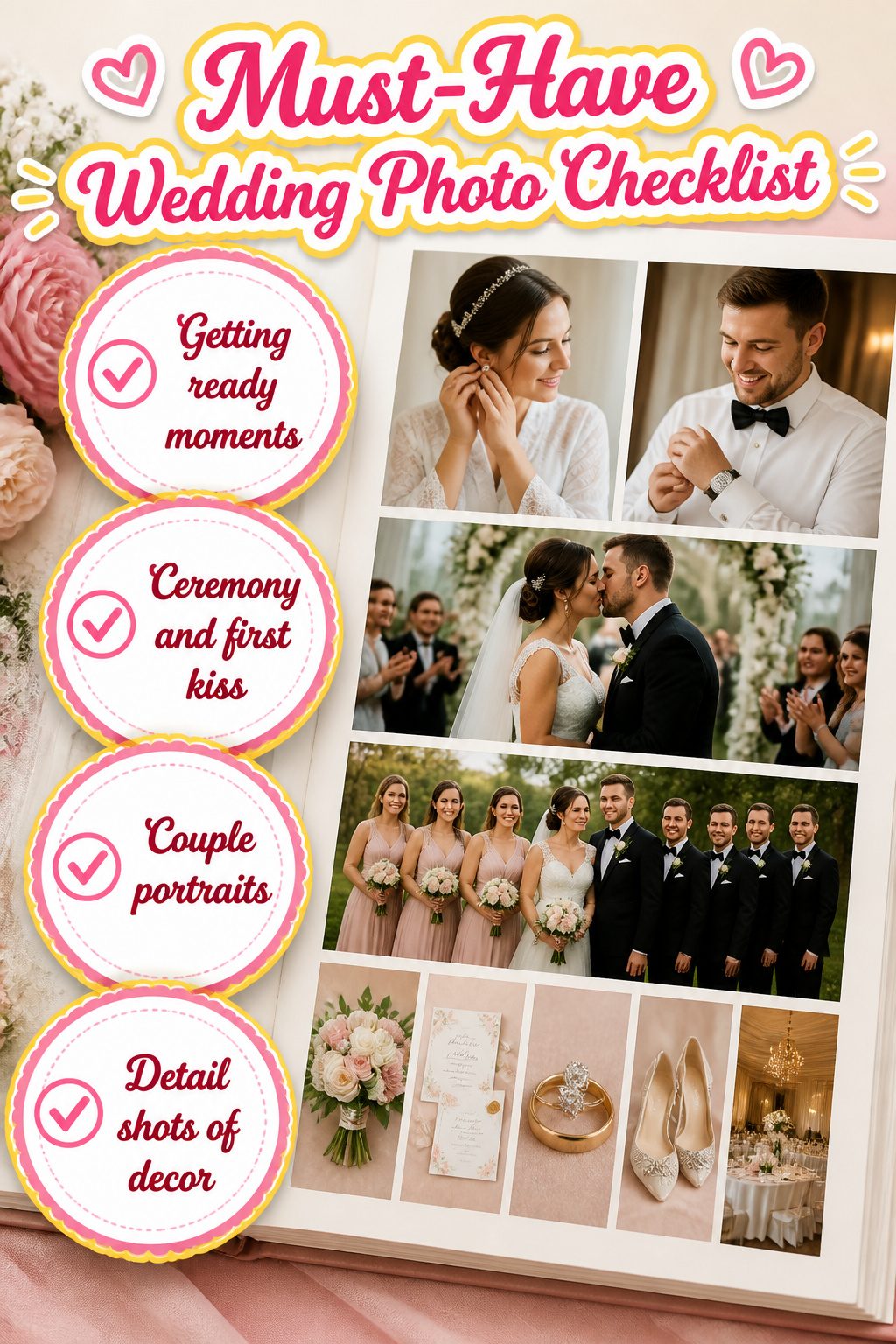
A tight shot list keeps the budget conversation honest. Most couples I work with in St. Louis start with a Pinterest board running to hundreds of pins, then freeze when they see the hourly rate.
The photos that actually make it into the album are the ones you planned for, not the ones you hoped to catch between events.
These are the four categories worth fighting for:
- Getting ready. Both sides of the wedding party, not just the bride. The morning builds the story your album will tell, and skipping the groom’s side leaves half the narrative blank.
- The ceremony and first kiss. The first kiss is the single most requested image for a reason; it’s the moment everyone in the room shares, and it only happens once.
- Couple portraits and wedding party formals. The standard window is cocktail hour, between ceremony and reception. A first look buys that time back for you, if you’re willing to trade the aisle reveal.
- Detail shots. Bouquets, boutonnieres, invitation suite, rings, shoes, reception décor, room shots, signage. These are what magazines and blogs require for submission, but more importantly, they’re what you forget you spent money on. The flowers wilt, the cake gets eaten; the photo is what remains.
What I Have Learned from Budget Weddings
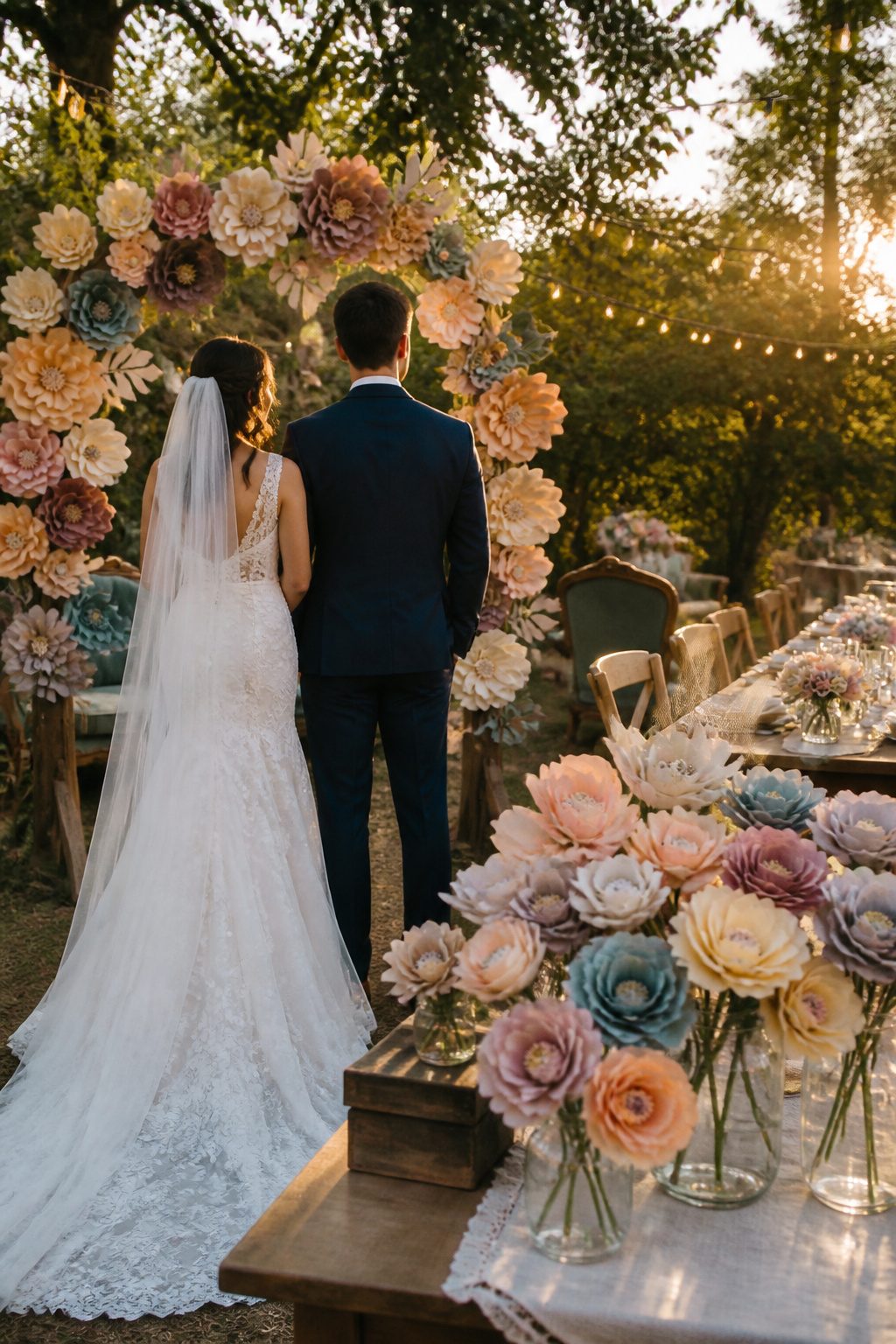
The budget line changes what couples ask me to catch on camera, and the shift is sharper than most photographers admit.
At a modest wedding, the couple who spent three Saturdays making paper flowers wants those centerpieces shot from every angle because the labor matters as much as the look.
The $40K wedding with flown-in florals? Those details get a faster pass; the couple already knows a magazine will photograph them better next season.
Photo priorities invert under pressure. A $6K wedding often skips the second shooter, so I build the shot list around what cannot be staged later: the ceremony, the toasts, the ten minutes of golden-hour portraits.
The big-budget couple books coverage through the after-party and trusts candids will surface naturally.
Tight budgets force explicit choices. I have watched a bride choose between an extra hour of my time and a cake upgrade; she chose the cake, and we raced through family formals in twelve minutes.
The album still worked because we planned exactly which twelve groupings mattered.
Deadline pressure does similar damage. The DIY couple booking me six weeks out has usually already committed to the venue, the dress, the playlist.
They are not shopping for vision boards; they are confirming that their compromises will photograph like intentional style. My job becomes finding the angle where string lights in a backyard read as romance, not as making do.
Frequently Asked Questions
What are the must-have wedding photos?
The four categories worth prioritizing are getting ready shots on both sides, the ceremony and first kiss, couple portraits with the wedding party, and detail shots of flowers, rings, invitations, and décor.
These are the images that actually make it into the album, not the hundreds of pins on a Pinterest board. A tight shot list keeps the budget conversation honest and ensures the moments that cannot be staged later get captured.
When should wedding pictures be taken?
Formal portraits usually happen during the sixty-minute cocktail hour between ceremony and reception, though a first look lets you knock them out earlier and actually attend your own party.
Build in fifteen minutes of padding; that buffer disappears fast when the officiant runs long or someone needs a bathroom break. For extended coverage, ask your photographer about the welcome party, rehearsal dinner, or morning-after brunch.
How do you find wedding photographers?
Start with friends whose albums made you pause mid-scroll, then use Instagram and Pinterest to see a photographer’s full range across seasons and venues.
Look for consistency; one stunning sunset shot is luck, twenty well-lit receptions in a row is craft.
Vetted lists from publications you trust cut the noise, and you should always ask whether they bring a second shooter to catch the moments you’d never stage.