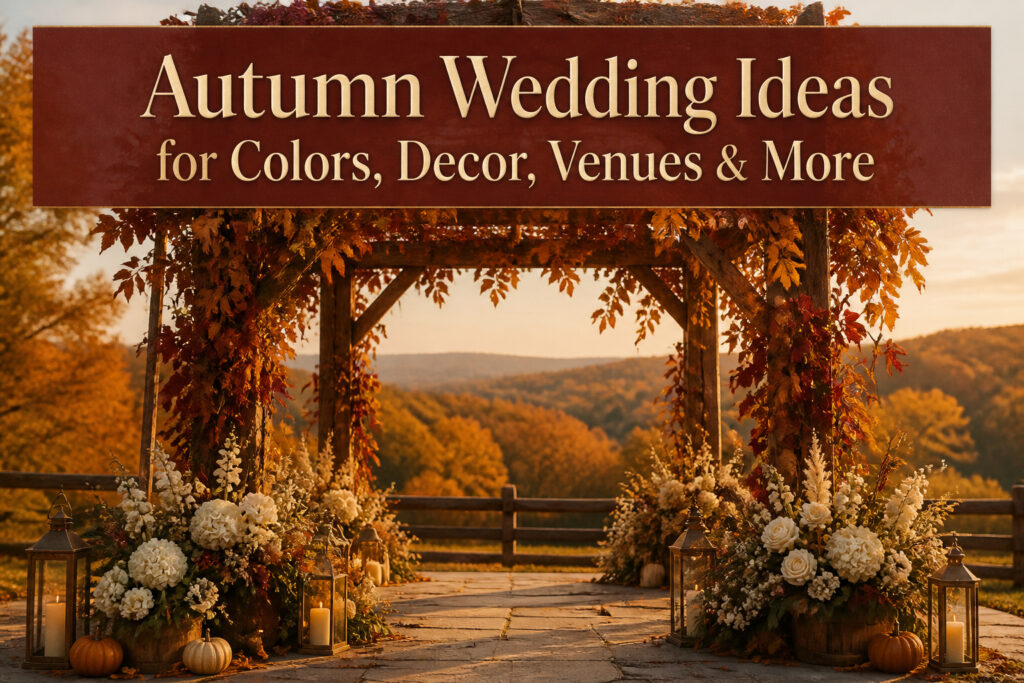
An autumn wedding can run from a casual barn with sunflowers to a hotel ballroom in burgundy velvet, and the deciding factor is usually how much temperature control your venue actually has. The light fades fast once daylight saving ends; a 4:30 ceremony that felt generous in August can leave you squinting through vows, and that "mild" afternoon can turn sharply cold by 6 p.m.
1. Fall Wedding Colors

Rich orange hues, deep reds, and earthy neutrals do the heavy lifting in an autumn wedding palette, and the reason they work is that they already exist together outside the window. The orange carries the warmth, the red adds weight, and the neutral keeps the whole thing from looking like a harvest festival poster. The neutral is what lets the other two colors breathe.
Dahlias, chrysanthemums, and sunflowers are the flowers that actually show up in season this time of year, which matters more than most couples realize until they get a quote for out-of-season peonies. Dahlias bridge the gap between that bright orange and a muted rust; chrysanthemums give you the deep red without forcing you toward roses that have been shipped halfway around the world. Sunflowers are the wildcard. They read cheerful rather than formal, so the judgment call is whether your whole day leans casual enough to carry them. If the venue is a dressed-up barn or an outdoor tent, they fit. If it is a hotel ballroom with crystal chandeliers, they fight the room.
The season’s flower selection runs narrower than spring or summer, which is not necessarily a loss. Fewer options can force a cleaner decision. Dried flowers or artificial florals are the fallback if none of the three feel right, though in my experience couples who go that route usually knew they wanted dried stems from the start and are better off committing early rather than treating it as a consolation prize.
2. Seasonal Decor

Pumpkins and gourds work harder than most wedding props because they already look intentional. Hollowed into vases, they hold autumnal flowers for tabletop centerpieces without the rental markup. Painted in shimmering neutrals, they line aisles or cluster on cake tables with the uneven texture that makes a setup feel gathered rather than bought.
Fallen leaves and bare branches do the same work for less. A centerpiece built from thrifted branches, acorns, and scattered foliage costs little and reads as personal because no florist assembled it. The trick is restraint: one or two natural elements per table, not every item the season offers.
Candlelight is what separates autumn decor from summer’s brightness. Ceremony spaces lit by flickering flames or softened with lanterns drop the wattage and raise the intimacy. Fire pits outside, warm lighting fixtures inside, and the glow reflecting off wooden surfaces create the cozy setting that makes guests settle in rather than pose through the evening.
For favors that extend the mood, mason jars layered with hot cocoa or cookie mix feel handmade without requiring actual craft skill. A mulled wine spice kit in a small jar costs less than most store-bought options and gives guests something to brew at home when the wedding is over.
3. Wedding Venues

A historic barn in late October practically decorates itself. The weathered wood and lofted beams give you the structure; the surrounding trees hand you color that shifts by the week. I have seen couples lose hours of their timeline because they assumed the barn’s interior would be enough and skipped scouting the property for where the light actually falls at 4 p.m. The money you save on florals in that setting can go toward a tent or canopy you will almost certainly need, because autumn temperatures swing hard and rain arrives without much warning.
Vineyards follow the same logic. Rows of vines turn gold and rust in a way that photographs cleanly even in overcast light, and the tasting-room infrastructure often means built-in bars and guest flow that outdoor-only farms lack. The catch is the same: that romantic sunset cocktail hour only stays romantic if you have space heaters ready when the temperature drops. Venues with both indoor and outdoor spaces let you move guests inside without killing the evening’s momentum, which is worth prioritizing over a slightly prettier view with no backup room.
Gardens can work, but they demand more intention. A garden without strong fall foliage reads as tired greenery, not seasonal atmosphere, so the specific plantings matter more than the garden’s reputation. Ask for photos from the exact weekend you are considering, not generic summer shots.
4. Fall Wedding Attire

Long-sleeved dresses and warm fabrics like velvet solve the temperature problem without making anyone look like they’re dressed for a different season entirely. The bridesmaids stay comfortable through outdoor photos, and the groomsmen in tweed or velvet read as elegant rather than bundled up. A fabric with actual weight to it keeps body heat in during the ceremony while still looking intentional under reception lighting.
Color works harder in autumn too. Burgundy, deep green, and burnt orange signal the season without needing a maple-leaf pin to explain the theme. These shades photograph well against late-afternoon backdrops and don’t wash out once the sun drops.
The real mistake is forgetting how much the temperature falls between afternoon portraits and the last dance. A dress that works at 4 PM can leave someone shivering by 8 PM. Layers the bridal party can add or lose, or a wrap in the same palette, handle the swing without breaking the look. Floor-length cuts help here; they block more wind than cocktail length and still read formal.
For guests, the invitation sets the expectation. If the ceremony is outdoors in October, saying so lets them choose closed-toe shoes and a jacket that actually closes. Nobody wants to choose between watching vows and keeping circulation in their fingers.
5. Seasonal Menu
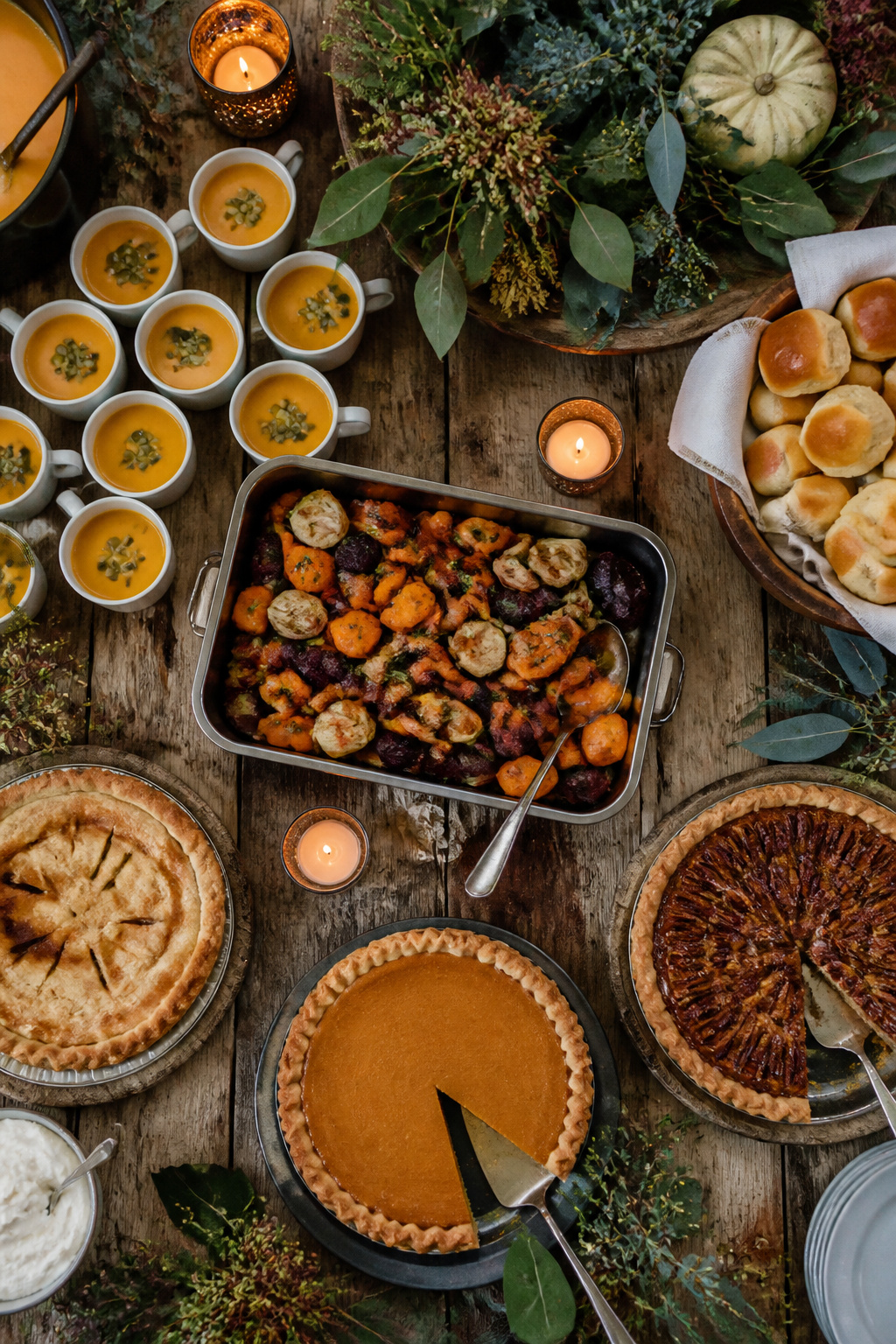
A creamy pumpkin soup served in small cups during cocktail hour warms guests without filling them before the main course. Roasted root vegetables, carrots, beets, and sweet potatoes, bring color to the plate and sweetness that pairs with heavier meats. Pumpkin cheesecake bites and chai spice cupcakes turn the dessert table into something guests actually talk about afterward.
Apple cider works served cold for the ceremony or warm once the sun drops. A pie bar with apple, pumpkin, and pecan options lets guests choose their own ending rather than waiting for a plated slice. The caramel apple station sounds like a children’s party move, but guests in their late twenties line up for it once they see the toppings laid out: chopped nuts, sprinkles, the warm caramel itself.
Maple-bacon wrapped scallops or mini grilled cheese with tomato soup cups bridge the gap between passed apps and seated dinner. The flavors are familiar enough that no one hesitates, seasonal enough that the menu feels intentional rather than safe.
6. Autumn Photo Opportunities

The light in autumn changes faster than most couples expect, and that is where the real planning starts. Schedule your portrait session during golden hour, the stretch just after sunrise or before sunset, when the sun sits low enough to throw soft, warm light across the trees instead of the hard overhead glare of midday. In fall that window shrinks, so your photographer needs the time built into the timeline, not squeezed between the ceremony and dinner.
Fall foliage does the heavy lifting for backdrop. The reds, yellows, and oranges that peak through October in most of the country give you depth without renting a single drape. I have shot against rows of sugar maples that needed no filter, and against barn walls where the leaves visible through open doors framed the couple better than any arch we could have built. Indoor spaces matter too; barns and historic lodges carry their own character when the light fades early. The mistake is treating the scenery as decoration and skipping the early portrait block entirely. By the time the sun drops, the color in the trees goes flat and the temperature drops with it.
7. Guest Favors
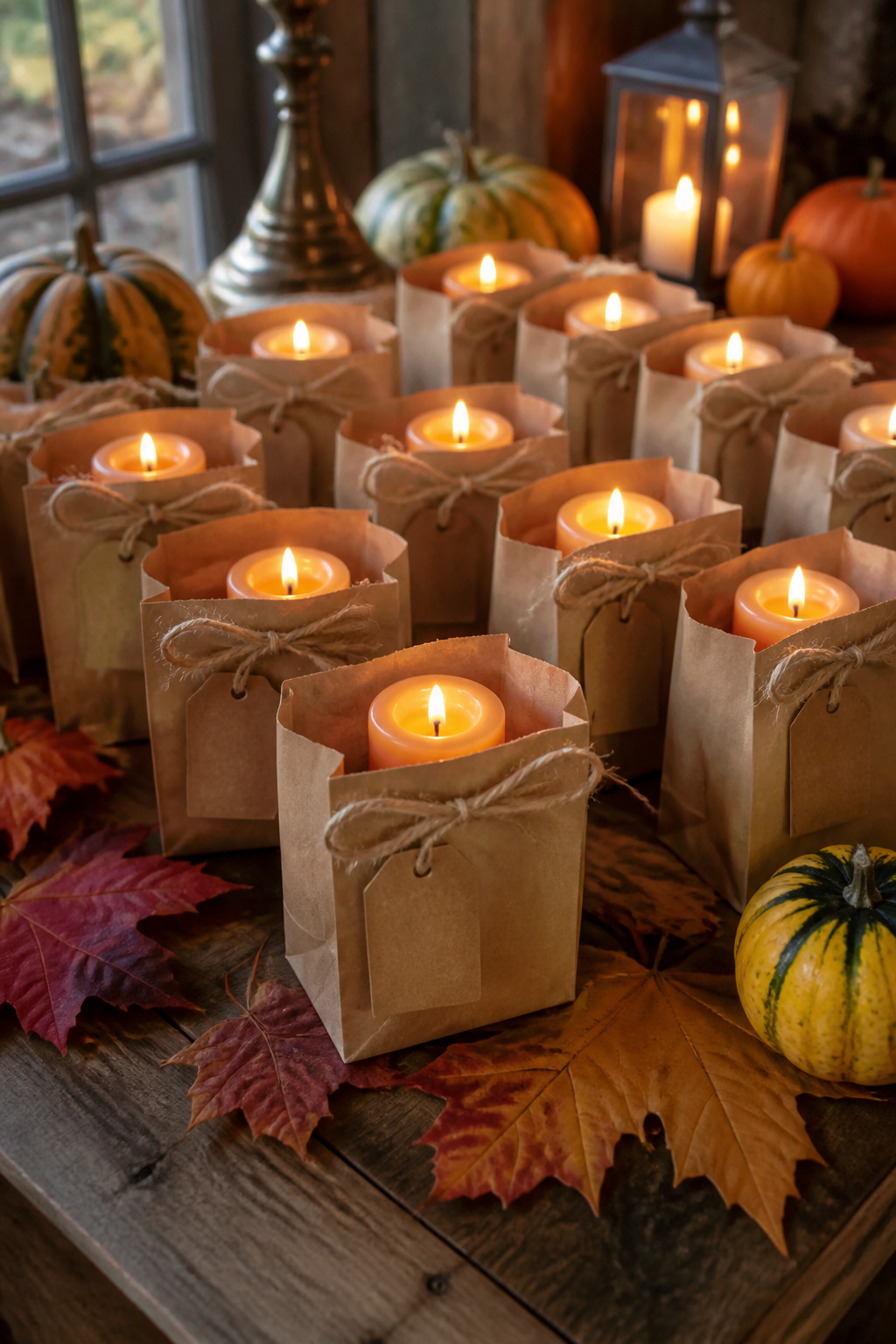
Mini pumpkin spice candles fit neatly into a paper bag with a handwritten tag, and guests actually light them instead of leaving them in the hotel room. Personalized jars of honey do the same work with a little more permanence: your names and the wedding date on the label turn a pantry item into a keepsake someone opens months later and remembers the evening.
The cost difference between the two is real. Candles run cheaper per unit, especially if you pour them yourself in a borrowed kitchen the week before. Honey costs more, but the personalization is usually done by the supplier, which saves you an assembly line at midnight. Either way, the scent or the sweetness carries the season better than a generic trinket ever could.
What I would skip: the DIY mulled wine mix or the mason jar cookie kit. They look charming in photos, but most guests never bake them. The couple ends up hauling home the leftovers.
Weather Backup Plans

The temperature drop during an autumn wedding ceremony is not gradual. It happens while someone is speaking, while the ring is being moved from one hand to another, while guests who were comfortable at 4:30 are shivering by 5:15. A basket of blankets or shawls near the seating costs little and signals that you thought about the people sitting there.
Rain is the other half of the problem, and the solution splits two ways. A tent or canopy set beside your ceremony and reception sites keeps the event outside while keeping guests dry, which matters if you chose the venue partly for the trees or the lake behind it. An indoor backup at the same venue is the other path, and venues that offer both from the start save you from negotiating a last-minute move.
Space heaters or tower heaters stretch an outdoor cocktail hour past sunset, though they work only where power is available and the budget allows the rental. The practical limit is this: heaters warm a defined space, not a wandering crowd. If guests will move between the ceremony, the bar, and the photo area, blankets travel with them and heaters do not.
Golden Hour Timing

Golden hour in autumn lands closer to 5:00 p.m. than the 7:30 or 8:00 p.m. stretch most summer brides expect. That shift matters because your cocktail hour becomes your best window for sunset portraits without slipping away from guests mid-toast. In October, usable light usually fades within forty-five minutes of the sun touching the horizon, and the angle stays lower all afternoon, so faces pick up more warmth but shadows fall harder.
A timeline built for July will leave you rushed or, worse, shooting formals in dull twilight. I move autumn ceremony start times up by about ninety minutes from what I’d book in June, then lock the portrait block into the hour before sunset rather than treating it as flexible padding. If the ceremony runs long, you lose the light; there is no catching up. Barns and lodges can extend the session afterward, but the amber, leaf-lit glow that makes autumn photography distinctive does not wait.
Cozy Details That Matter

The difference between a fall wedding that looks cozy and one that actually feels cozy usually comes down to light sources you can stand next to. String lights overhead are pretty in photos, but guests remember the heat from a fire pit or the glow of a lantern they carried from cocktail hour to their seat. At one October wedding I photographed, the couple set out small wooden benches instead of rented chairs for the outdoor ceremony. Guests still mention those benches three years later, not because they were stylish, but because sitting on actual wood in cool air felt like the season in a way plastic never would.
Schedule your ceremony earlier than you think you need to. Daylight shrinks fast in autumn, and your photographer will need that buffer. Candlelit tablescapes work beautifully for dinner, but they are not a replacement for golden-hour portraits. If your venue has a fireplace, treat it as seating, not just backdrop. People gravitate toward it between courses, and the photos that happen there are relaxed because the guests are genuinely warm. Hot cider stations help too, though I have seen them placed where the line blocks the bar. Set them apart so the two flows do not compete.
What to Skip

Bright coral and hot pink read cheerful on a mood board in July; against October maples they look like a costume change that forgot the season. I learned that the hard way at a wedding where the bridesmaids’ fuchsia chiffon seemed to actively argue with the rust-colored hillside behind the altar.
Timing matters more in fall than you expect. The sun drops fast once daylight saving ends, and a 4:30 ceremony that felt generous in August can leave you squinting through vows. Temperature swings are real too: that "mild" autumn afternoon can turn sharply cold by 6 p.m., and guests in sleeveless dresses will remember shivering through dinner more than they remember your centerpieces.
Decor that ignores the setting always looks forced. Trucking in hay bales and plastic pumpkins to a modern loft doesn’t read festive; it reads like the venue lost a bet. The same goes for scheduling over Halloween or Thanksgiving weekend. School-year commitments and family travel plans will thin your guest list in ways a June Saturday never would.
Frequently Asked Questions
What colors are popular for fall weddings?
Rich orange hues, deep reds, and earthy neutrals form the backbone of an autumn wedding palette. The orange brings warmth, the red adds visual weight, and the neutral prevents the whole scheme from looking like a harvest poster. Burgundy, deep green, and burnt orange also signal the season without needing literal leaf motifs.
How can I incorporate seasonal decor into my wedding?
Pumpkins and gourds work as vases, aisle markers, or table clusters, especially when painted in shimmering neutrals. Fallen leaves and bare branches build inexpensive centerpieces with thrifted materials. Candlelight and lanterns shift the mood from summer brightness to autumn intimacy, while fire pits outside extend the evening as temperatures drop.
What should I serve at a fall wedding?
Creamy pumpkin soup in small cups during cocktail hour warms guests without spoiling appetites. Roasted root vegetables, apple cider served hot or cold, and a pie bar with apple, pumpkin, and pecan options keep the menu seasonal. Maple-bacon wrapped scallops and mini grilled cheese with tomato soup cups bridge passed appetizers and the seated dinner.
What are the best venues for an autumn wedding?
Historic barns in late October need minimal added decor because weathered wood and surrounding foliage do the work. Vineyards offer rows of vines that turn gold and rust, plus built-in infrastructure like tasting rooms. Gardens can succeed but only if they have strong fall plantings; ask for photos from your exact weekend, not generic summer shots.
How can I make my wedding cozy and romantic?
Candlelight and lanterns lower the wattage and raise intimacy in ceremony spaces. A basket of blankets or shawls near outdoor seating costs little and signals you planned for guests’ comfort. Fire pits, wooden benches instead of rented chairs, and hot cider stations give people warmth they can actually stand next to rather than just photograph.