The gowns below range from whispered metallic thread to full sequined bodice, with the deciding factor being whether you want the gold to frame your face or carry your train.
Zero of them are costume pieces; all of them rely on placement, not volume, to keep the effect bridal.
The white satin gown with scattered floral embroidery is the one you could wear again; the champagne number with heavy gold glitter leaf embroidery on long sleeves is the one you’ll need to plan your photographer’s shot list around.
1. White Tulle Ball Gown
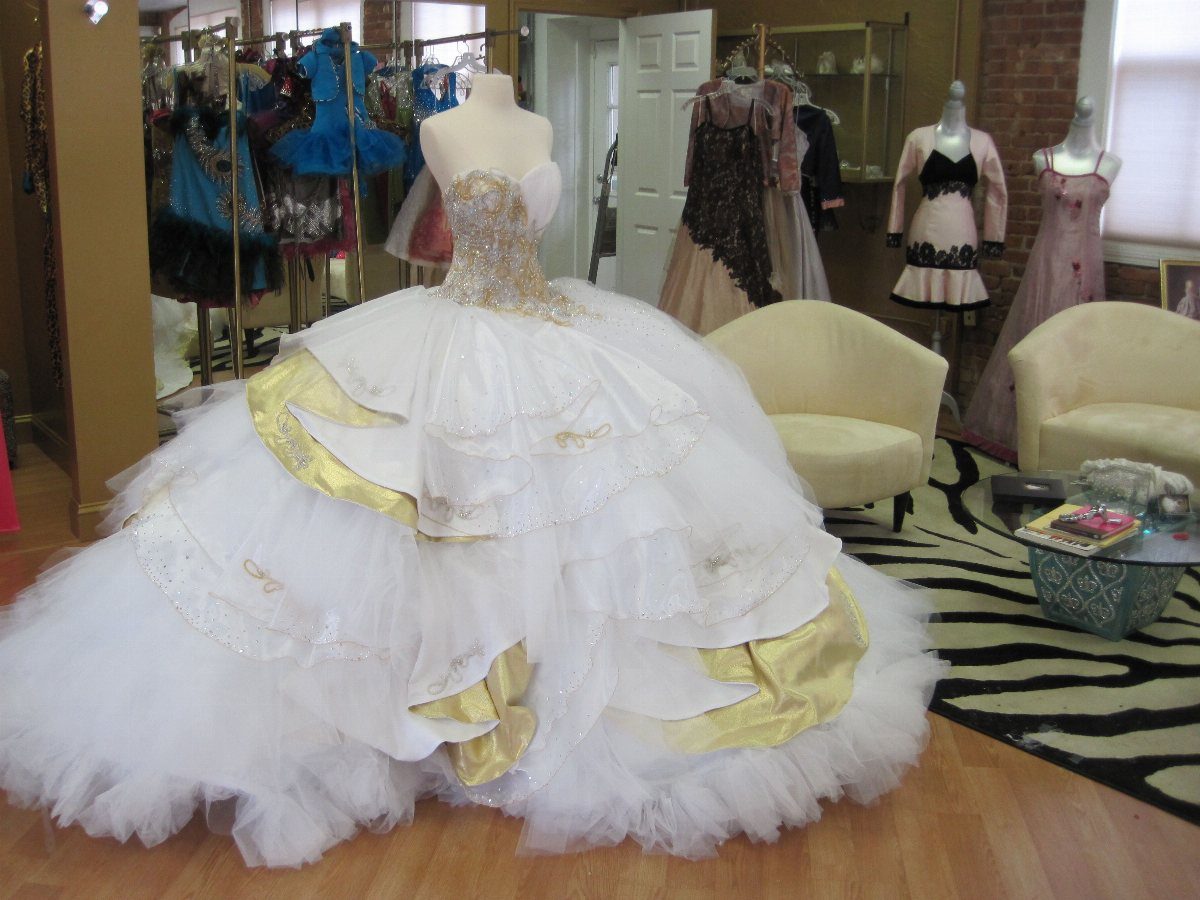
A strapless ball gown keeps the drama in the skirt, and gold floral lace embroidery at the bodice, waistband, and hemline ties the whole thing together without drifting into costume territory.
The ruffled tulle layers do the heavy lifting for volume; the metallic thread does the rest.
This one suits anyone who wants a traditional silhouette first and the gold accent second. The embroidery placement draws the eye up and down rather than scattering it, which photographs cleanly from any distance.
If you try this shape, check that the bodice boning is substantial enough to hold the skirt’s weight through a long reception. A gown this full can sag at the waistband by hour four.

【Great Value】This single gold 3D lace flower applique measures 20 × 8 inches, supplying a full oversized gold lace embellishment to elevate wedding gowns, evening dresses and high-end fabric craft works.

Elegant Design: The embroidery sequin lace applique is designed with delicate floral patterns and shiny sequins, showing a graceful and attractive style that enhances your crafts and clothing. You can easily add a fancy and romantic touch to your daily outfits and handmade projects with these beautiful gold lace applique
2. Champagne Tulle Ball Gown
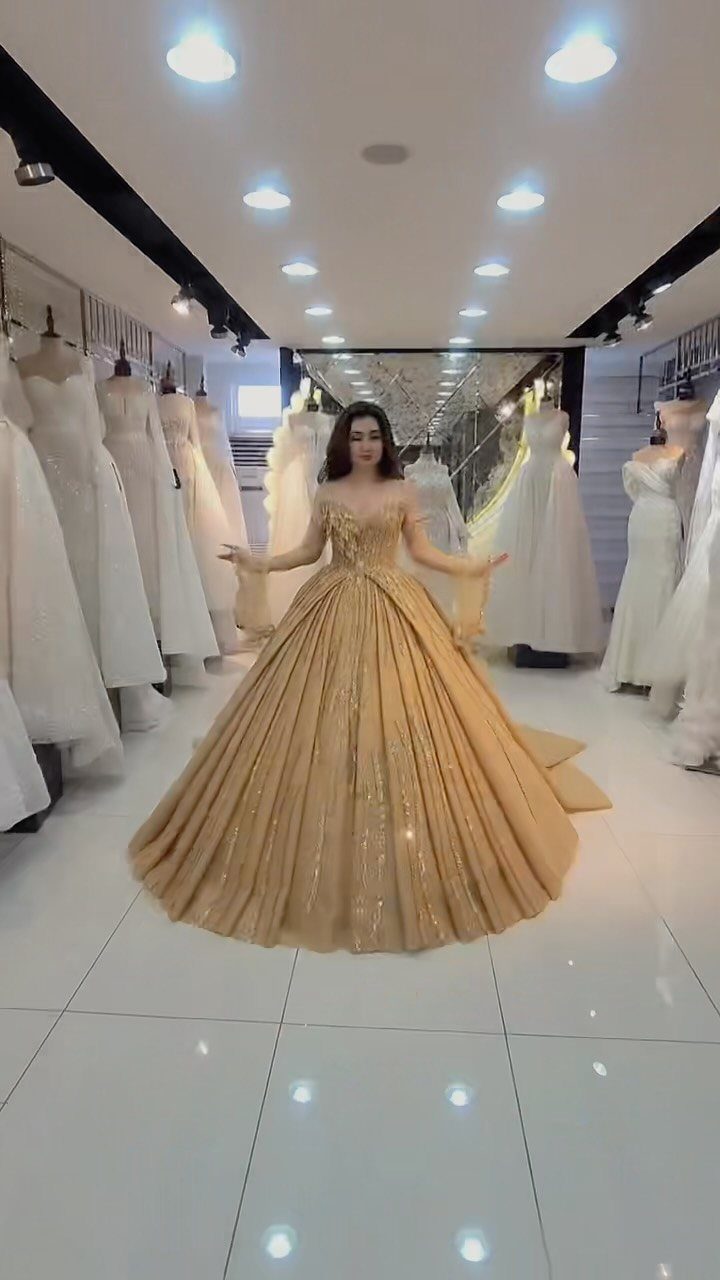
Champagne reads warmer than white, and against skin tones that wash out in stark white, it is often the kinder choice. The off-the-shoulder neckline here exposes just enough collarbone to feel formal without the structural demands of a strapless bodice.
Gold floral lace embroidery on champagne tulle needs less contrast to register than it would on white; the effect is glow rather than punctuation. The champagne tulle keeps the color story going from neckline to hem without a single interruption.
Budget for alterations at the shoulders. Off-the-shoulder sleeves bear the gown’s entire weight through a narrow band of fabric, and the fit there determines whether you spend your evening hiking or dancing.

Features:Off the shoulder prom dress for girls; glitter tulle prom dresses 2026; sparkly off shoulder formal dresses for women; corset long ball gown; a line formal evening gowns; lace up back; ruched; sweetheart quinceanera dresses; built in bra

Romantic Off-Shoulder Design: A sweetheart neckline and sheer long puff sleeves frame the shoulders, bringing a romantic princess-inspired look to this tulle prom dress. Gathered detailing across the bodice adds texture to the design.

Romantic 3D Floral Applique This gown is adorned with delicate 3D floral appliqués that cascade down the bodice and skirt. The soft pink floral details add a romantic, garden-inspired touch, creating a whimsical, fairy-tale silhouette against the sheer tulle fabric.
3. Sleeveless V-neck A-line Gown
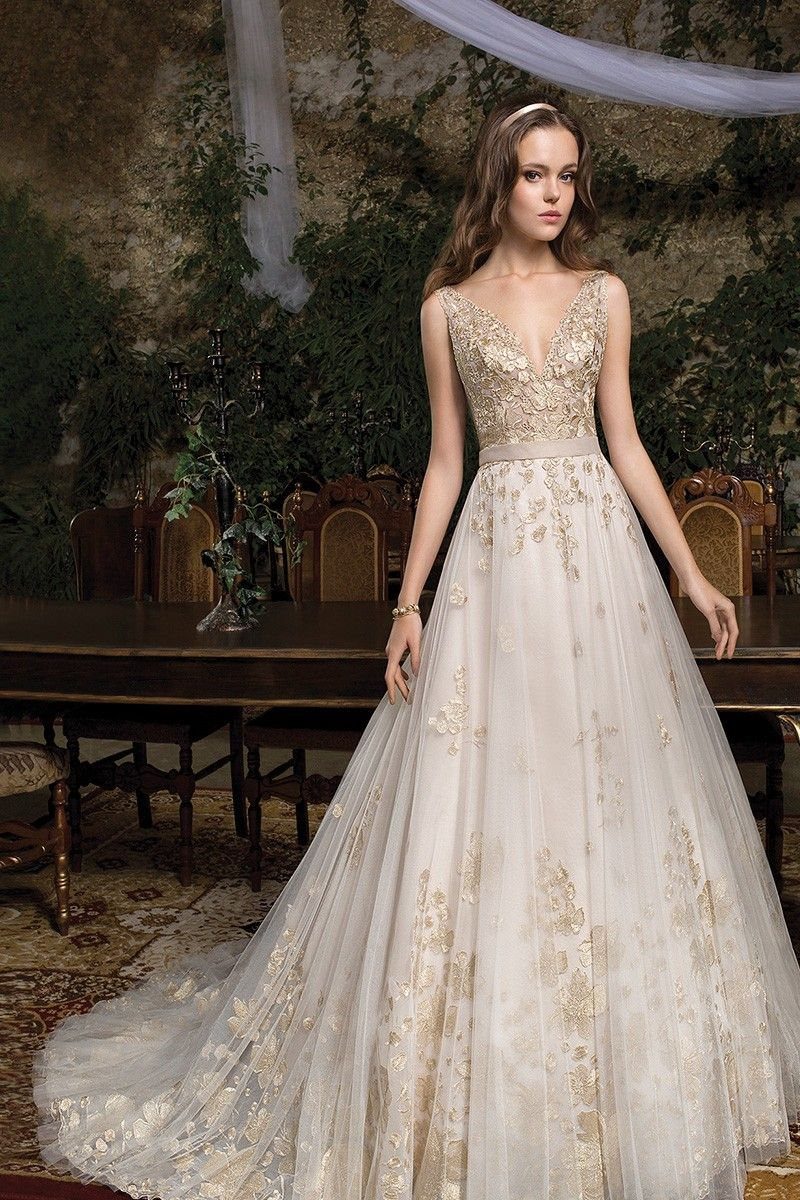
An A-line in ivory tulle with gold metallic floral lace appliqués trades the ball gown’s volume for movement. The V-neck elongates the torso; the appliqués give the eye somewhere specific to land.
This cut walks better than it stands still, which matters if your venue involves grass, gravel, or any distance between ceremony and reception. The sleeveless cut keeps the line clean, and the V-neck adds enough formality without adding weight.
For a simpler version, skip the veil and let the neckline do the work. For more, ask your seamstress about scattering additional appliqués down the skirt rather than concentrating them at the bodice.

PREMIUM MATERIAL: The mens satin dress shirt is made of shiny satin material with super soft, lightweight and breathable. Silk like fabric for men provides maximum comfort and great against skin feelings.

💎NOTE: This versatile V-neck satin negligee lingerie is designed with sexy style and it may run a little small, Please Check the size chart in product description/picture before ordering. The nightgown is made of 95% polyester and 5% spandex. The fabric has little elasticity, so the wearing effect varies from person to person.

4. Champagne Gown with Gold Embroidery
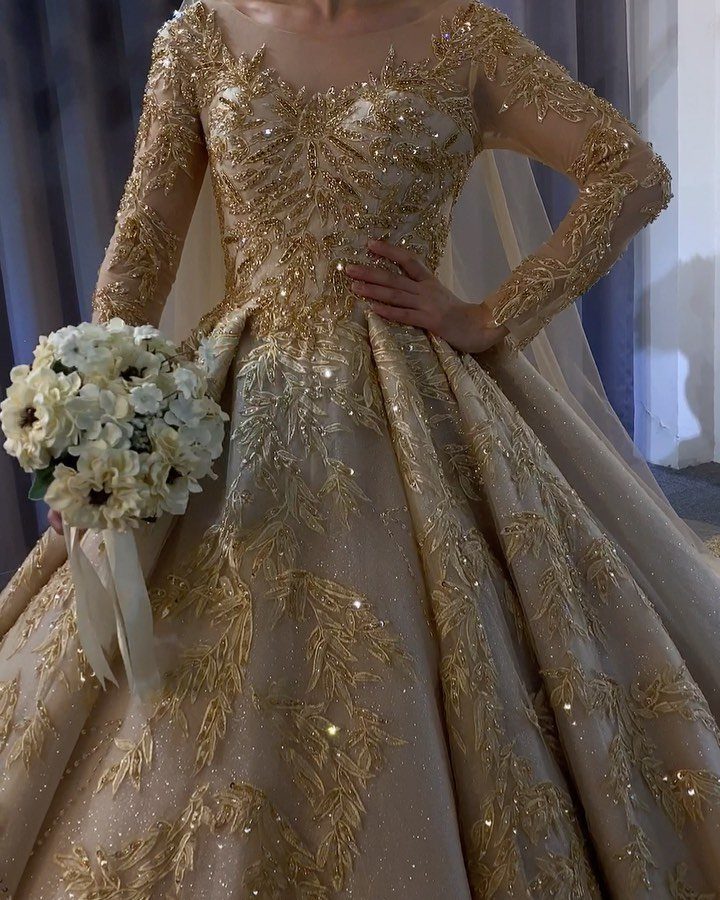
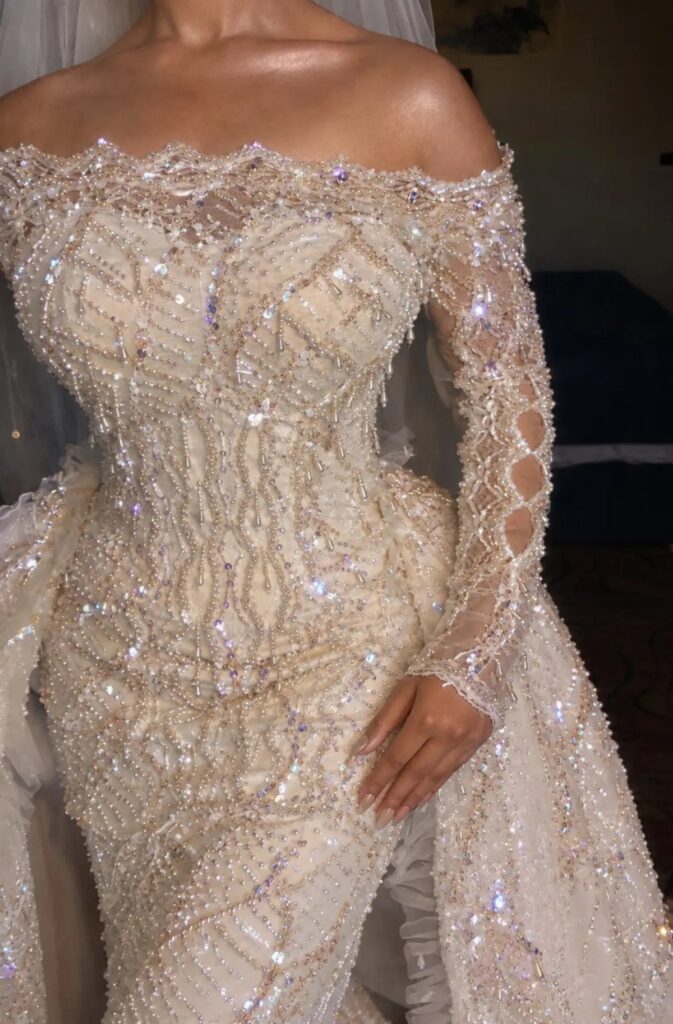
Long sleeves in champagne, heavy with gold glitter embroidery and sequins, commit fully to the metallic theme. This is not a gown that whispers; the leaf patterns and sheer fabric create a specific effect of wearing light rather than fabric.
The embroidery density means this gown photographs differently depending on flash: matte in natural light, suddenly alive in reception lighting. Plan your photographer’s shot list with that in mind.
Heat is the tradeoff.
Sheer, heavily embellished long sleeves in June or in a packed ballroom will not care what month your invitation said. Consider this for fall ceremonies, winter receptions, or venues with aggressive air conditioning.

Exquisite 3D Texture & Shimmer: This luxury gold lace trim features high-density sequins and intricate beadwork woven into a delicate tulle mesh. The metallic gold thread catches the light beautifully, providing a rich, multidimensional look that elevates any handmade garment or craft project.

Features: Handmade tulle prom dress with lace appliques, A-line floor-length dress, spaghetti straps, V neck, lace-up closure, corset design, built-in bra, with split, flowing fairy dress.

Exquisite Antique Gold Elegance – Premium embroidered metallic lace trim with a classic Baroque aesthetic that instantly elevates dresses, veils, crowns, and decorative pieces with a luxury vintage appeal.
5. Heavily Embellished Gold Bodice
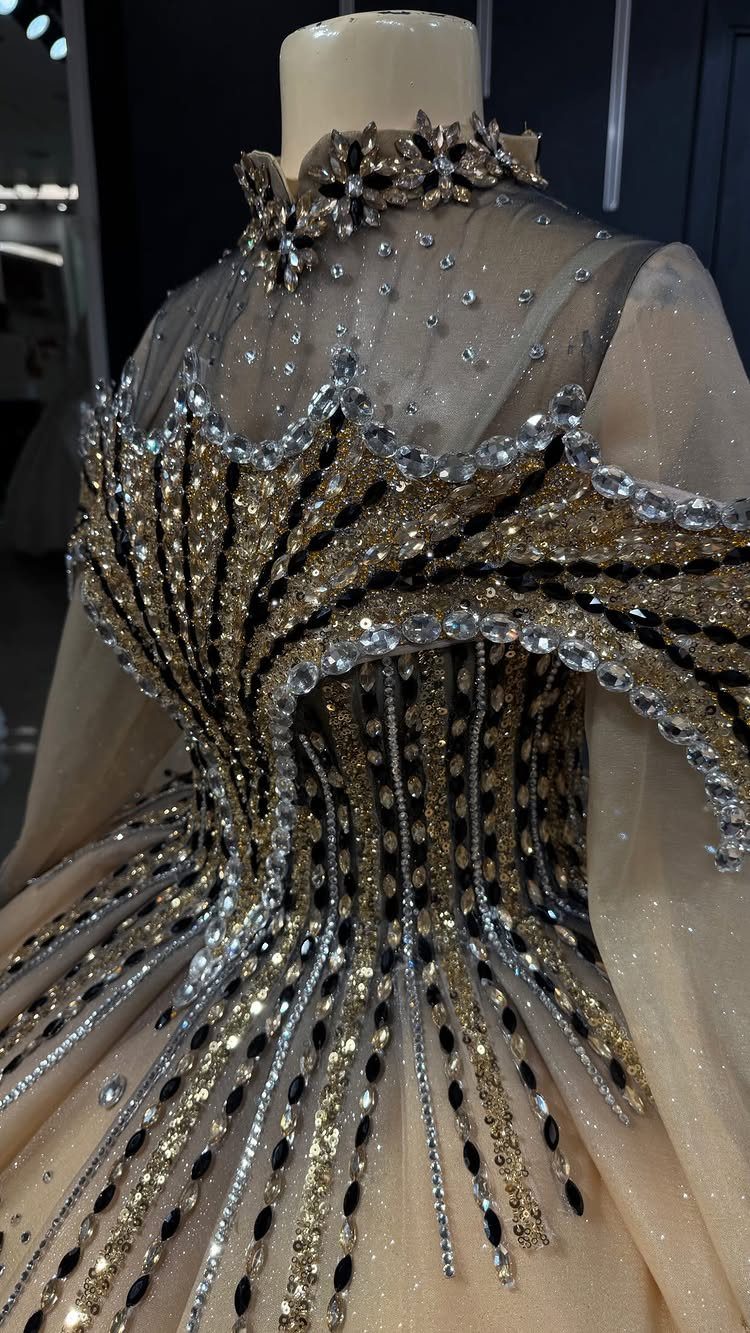
Radiating gold and silver sequins, crystals, and metallic beads from a high-neck collar across the bodice and waistline turns the torso into a focal point. The beige base recedes; the embellishment does not.
A high neck with this much surface detail needs minimal jewelry.
Small studs, maybe a bracelet if the sleeve allows. Anything at the throat competes and usually loses.
The construction here is dense enough that alterations become complicated. If you are between sizes or planning body changes between purchase and wedding, the beaded areas limit how much a seamstress can let out or take in.
Buy closer to the date, or buy with the budget to rebuild the bodice if needed.

ELEGANT DESIGN: Stunning A-line wedding dress featuring a sweetheart neckline and beautifully detailed bodice with intricate embellishments

Features:Gothic black lace wedding dresses for bride; a-line appliques bridal gown; vintage strapless wedding gown; victorian dresses with ruffles; women's black wedding ball gown

ELEGANT SILHOUETTE: Features a classic A-line ball gown silhouette with a voluminous tulle skirt that flows gracefully to the floor.
6. Sparkling Silver and Gold Gown
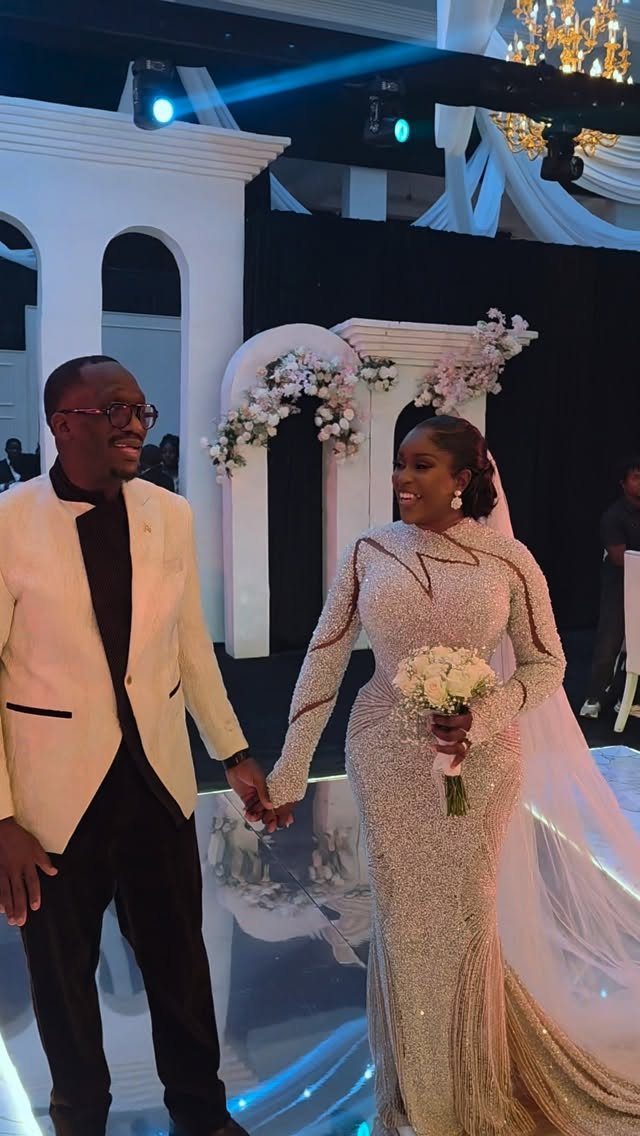
Silver and gold sequins together solve a specific problem: gold alone can read brassy under cool venue lighting, silver alone can read cold against warm skin. Mixed, they catch different wavelengths and average out.
The long-sleeved, fitted silhouette here is less forgiving than an A-line.
Sequins do not compress or drape; they sit where they sit. Fittings matter more, and spanx or similar becomes less optional the more fitted the gown.
For a version less committed to full coverage, ask about removing the sleeves or swapping for sheer tulle with scattered sequins at the shoulder. The mixed-metal effect still works with less real estate.

Sleeveless high crew neck smooth satin bodice decorated with hand-sewn gold floral lace appliques on one shoulder and waist, neat tailored torso lines for formal events.

Material and Dimensions: Made from polyester filament, measuring 40cm x 22cm (15.7 inches x 8.6 inches) with no glue on the back, can be sewn with a needle or attached using a glue gun

Material:Mesh embroidery,size:25cmx35.5cm/10"14"
7. Gold Embroidered Sheer Coat Dress
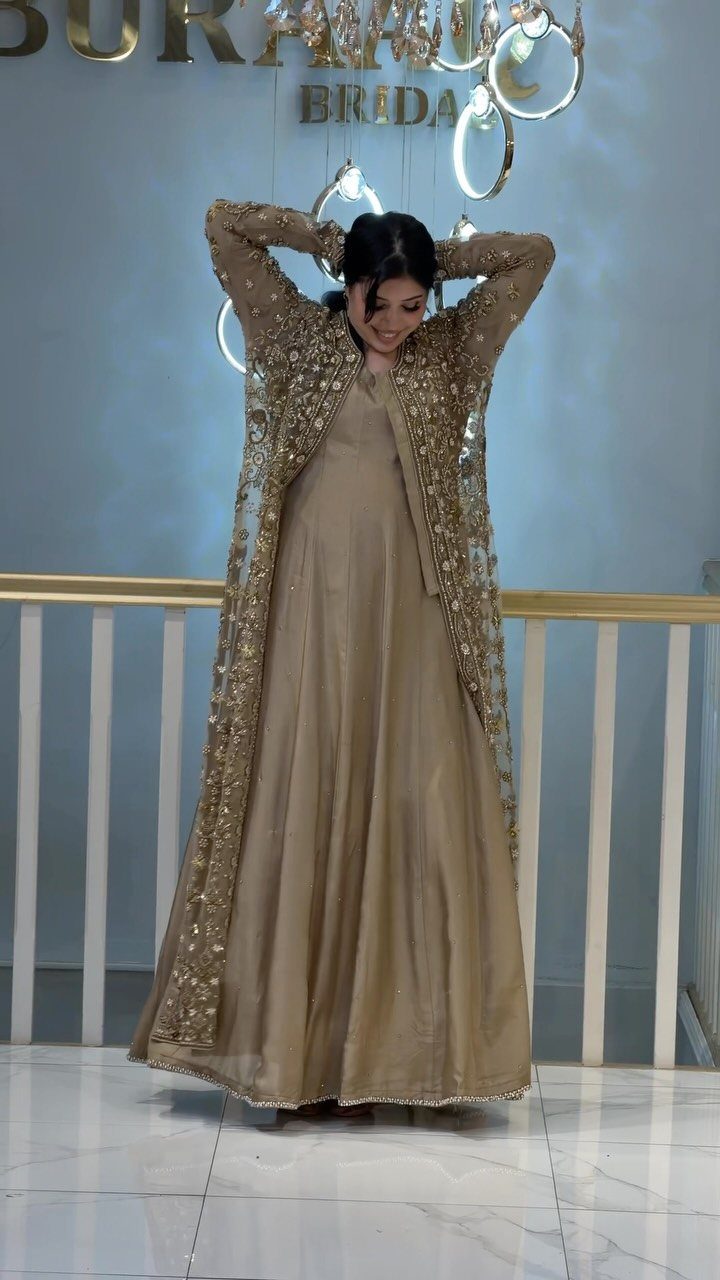
A sheer floor-length coat in gold embroidery turns a simple champagne gown into something closer to armor. The jacket does all the statement work; the dress underneath stays quiet and wearable.
This suits anyone who wants the option to remove the gold halfway through the night. The coat comes off for dinner, goes back on for entrance and exit, and suddenly one outfit serves two moods.
The embroidery placement matters more than the dress underneath.
Ask to see the coat on a body, not a hanger, because the weight of the thread pulls the sheer fabric differently across shoulders and back. If the coat drifts backward, the whole effect collapses.

Size Tip (If unsure, we recommend SIZE UP): For accurate sizing, we recommend consulting the measurements provided in the 'Size Chart' (click for details); Sizes 140-170 may run slightly small; we recommend comparing our size chart measurements to an existing garment (not body/age) and considering a size up if unsure for the proper fit; Sparkle dresses for girls, girls bridesmaid dress, wedding pageant dress, rustic flower girl dress, flower girl dresses for wedding, birthday dress for girls

Size:US standard size 2-26,but if you want to customize,please contact me after ordering,your detailed measurements are needed Bust,Waist,Hips,Arm Length,Hollow to floor,Height,shoes heel height

Vintage off the shoulder v neck lace appliques ball gown long court train corset back with black tulle overlay
8. White Dress with Dramatic Gold Train
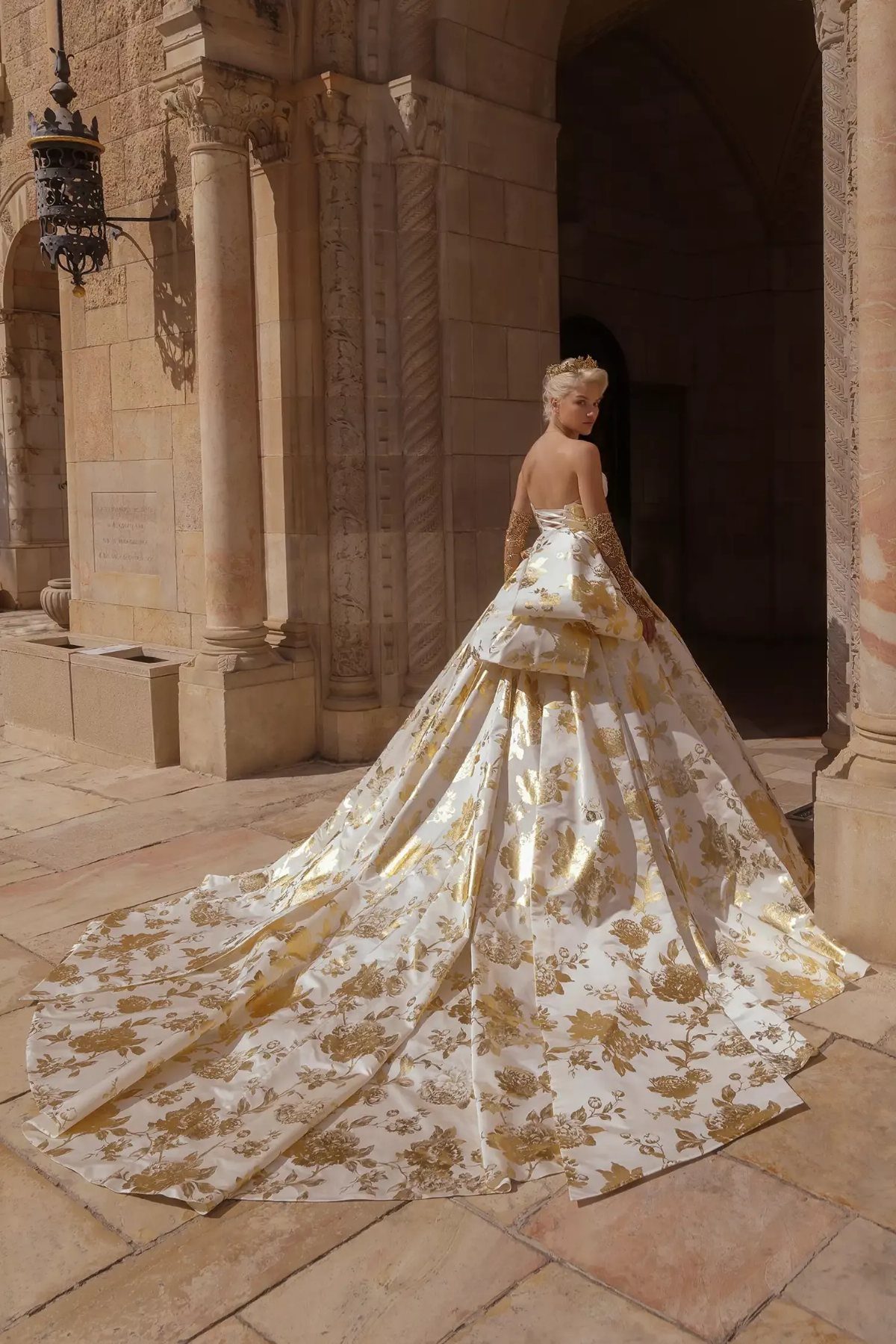
Gold brocade trailing behind white volume reads formal in a way that flat embroidery does not. The train here is the accent, not the bodice, which keeps the face and shoulders clean for photography.
A train this long needs a bustle or a change of skirt, period.
Budget both the alteration and the time it takes to pin. Without it, you drag brocade through grass, gravel, and every spilled drink between ceremony and last dance.
The pattern scale also matters: large florals read romantic, small ones read busy.
Check the repeat size against your height. A petite frame disappears inside too large a motif.

For the optimal fit, compare our garment dimensions (Click 'Size Chart' for details) to an existing dress of similar style, not your child's body measurements. Note that the size chart provides age ranges as a reference only; select the size based on actual measurements, not age. We recommend kids under 10Y choose SIZE DOWN; kids older than 10Y, refer to the detailed size chart. Girls party dress, first communion dress for girls, junior lace bridesmaid dresses, father daughter dance dresses

✨ Exquisite Design & Elegant Details: This stunning sleeveless formal gown features a delicate round neck and an intricately embroidered bodice adorned with beautiful 3D floral appliqués on the front. A large, elegant satin bow on the back and a hidden zipper ensure effortless dressing and a perfect, charming fit for your little princess.

Design:Vintage Gold lace appliques wedding dresses for bride with Double split; gothic tulle bridal gowns;pleated medieval wedding dress with tassels;victorian weeding gown;Flare Sleeves ball gown
9. White Satin Gown with Gold Patterns
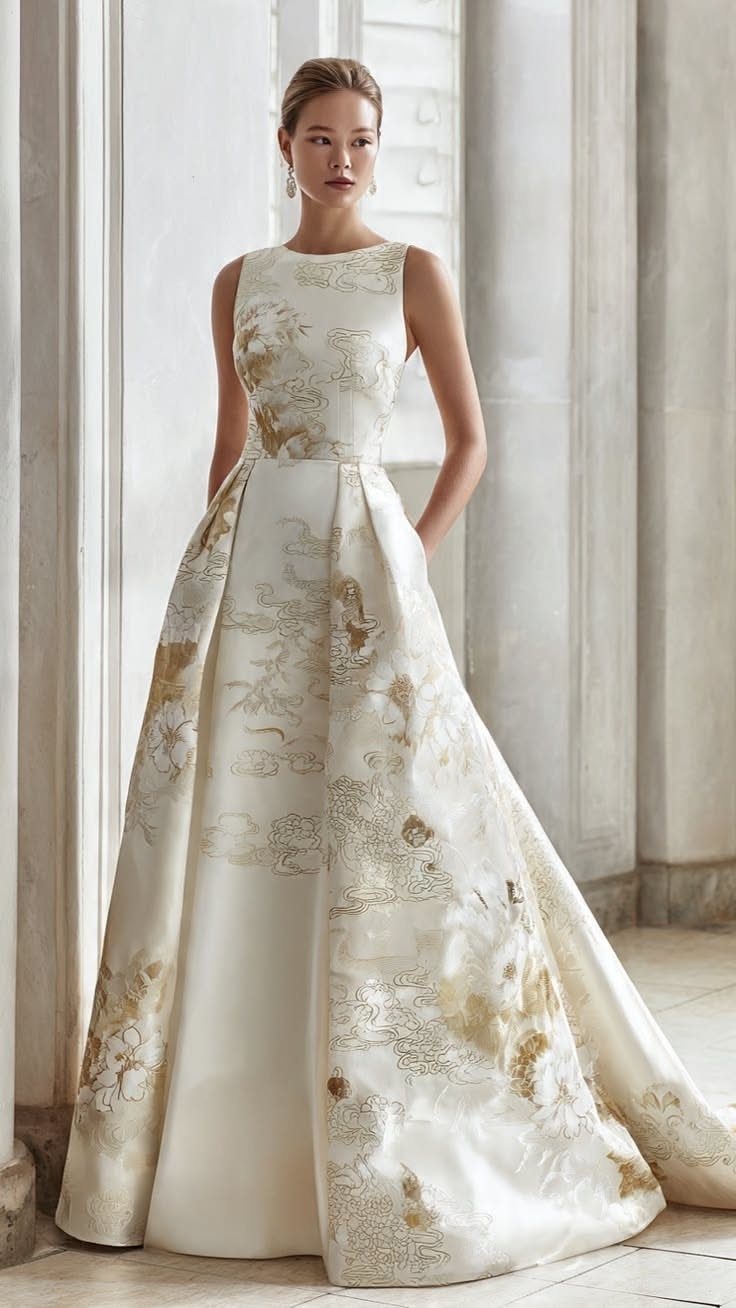
Sleeveless white satin with scattered gold floral embroidery keeps the shape simple and the surface interesting. The satin reflects light; the gold catches it, so the whole thing moves between ivory and glow depending on where you stand.
This is the most re-wearable shape on the list. A-line, sleeveless, no train, no veil dependency: it photographs at a courthouse or a cathedral with only shoe and jewelry changes.
Satin shows every wrinkle and water spot.
Pack a hand steamer, not an iron, and assign someone to spot-check between photos. The gold thread complicates dry cleaning later, so ask about preservation before you buy, not after the wedding.

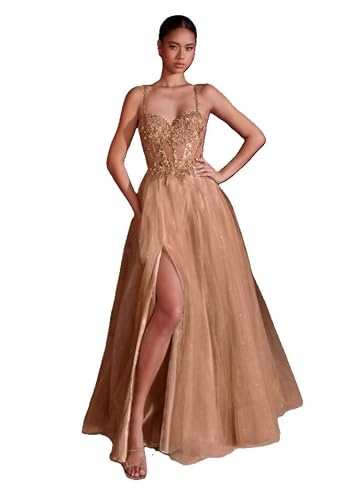
LACE & TULLE A-LINE DRESS - Mocha Gold

champagne gold Material:gold line + Transparent tulle Embroidered width:11cm(4.3inch) Total width: 21cm(8.3inch)
Styles of Wedding Dresses
Ball gowns and A-lines are not the only shapes that carry gold well, though they are the ones the list favors.
A mermaid silhouette, fitted through the hips and flaring at the knee, offers a different canvas: less skirt to scatter appliqués across, more drama in where the eye lands. The gold becomes punctuation rather than pattern.
What changes with shape is where the weight sits. A ball gown’s volume lives at the waist; a mermaid’s structure relies on the hip and thigh.
Gold embroidery placed low on a fitted skirt can distort the line, so designers tend to concentrate it higher or confine it to a train.
If you are drawn to both the mermaid and the metallic detail, look for versions where the gold starts at mid-thigh and travels downward, following the flare rather than fighting it.
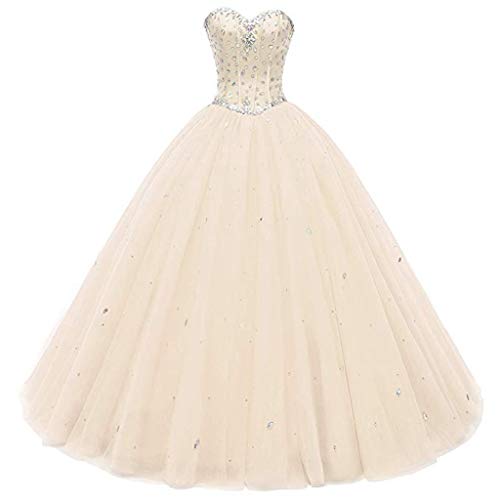
1.Made in Tulle and Satin,Ball Gown Style,Sewn with Sequin and Beaded
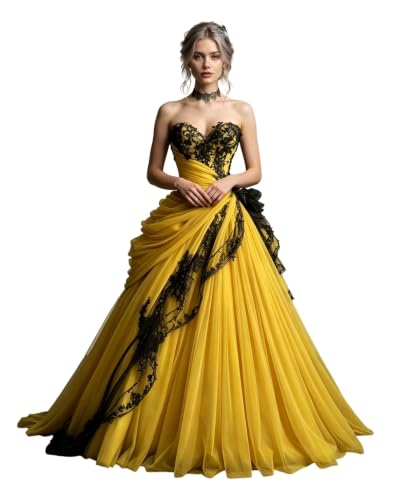
Stunning Gothic & Elegant Design: Features a striking contrast of premium grey/silver tulle and dramatic black lace appliqués cascading diagonally across the bodice and skirt. The sweetheart strapless neckline combined with a corseted back creates a romantic, gothic-inspired silhouette that commands attention at any high-end formal event.

❀1.This exquisite gown features a structured strapless bodice, meticulously adorned with elaborate, shimmering beadwork that forms luxurious patterns. The intricate detailing serves as a dazzling focal point, showcasing superior craftsmanship.
Gold Embroidery Details
2 placements are worth comparing: concentration and tapering.
A bodice that gathers all its gold at the shoulder and waist, then thins to nothing, reads as a deliberate frame. The eye travels the path the embroidery sets.
Edge work matters too. A veil with gold lace at its border extends the gown’s language rather than repeating it.
A cream satin gown with a matching sheer tulle veil carries the same motif scaled smaller at the edging, so the set reads as designed rather than assembled.
Gold embroidery details on wedding dresses can range from subtle threadwork to dense metallic patterns, and while that full spectrum exists in catalogs, these examples trend toward restrained placement—and there is a reason.
Concentrated embroidery photographs cleanly; scattered metallic thread competes with itself and with jewelry.
If you are considering a gown with gold distributed evenly across the whole surface, ask to see it in the lighting your venue uses, not just the boutique’s.
Metallic thread under warm bulbs becomes a different garment than the same thread under daylight.
Color Combinations with Gold
White, ivory, and champagne each change what gold does.
On white, gold reads as contrast; on ivory, as warmth; on champagne, as continuation. The same embroidery technique produces 3 different effects depending on what it sits against.
An off-the-shoulder black satin with gold floral embroidery, paired with a gold-flecked veil, works on a different logic than the white or champagne versions.
The gold does not decorate; it rescues the black from flatness. Without it, the gown risks reading as evening wear rather than bridal.
With it, the black becomes deliberate, the gold becomes necessary, and the whole thing needs the specific accessories the notes name: the gold-flecked veil, the white calla lily bouquet. Change one and the balance shifts.
Accessories for Gold-accented Dresses
The veil is the accessory most often matched to these gowns, and 2 approaches show up again and again. One extends the gold into the veil itself: gold lace edging, gold flecks in the tulle.
The other keeps the veil plain and lets the gown do the work. The first risks too much of a good thing; the second risks a visual drop where the dress ends and the veil begins.
A seamstress can add a thin gold ribbon at the veil’s edge as a bridge, or you can choose a veil length that ends before the gown’s detail begins, typically at fingertip or elbow.
A gown with scattered gold embroidery at the neckline invites a pendant; a high-neck sequined bodice does not.
Belts work when the waist is plain and fail when the waist is already the busiest part of the dress. The list’s ball gowns with waistband embroidery, for example, would fight a separate belt rather than benefit from it.
Frequently Asked Questions
What does it mean to wear a gold dress to a wedding?
Gold in a wedding dress reads as luxury without drifting into costume territory when it is placed deliberately rather than scattered.
A bodice embroidered in gold thread, or a skirt with concentrated metallic appliqué, draws the eye to specific points and photographs cleanly.
A gold dress turns theatrical when the metal sits too scattered; concentrate it at a neckline or waist and it reads as intentional design instead of costume.
What are the hottest wedding dresses right now?
Ball gowns and A-lines with gold accents are prominent in current collections, particularly with embroidery concentrated at the bodice, waistband, or hemline.
Champagne tulle with gold lace has gained ground against stark white for how it photographs against varied skin tones.
Off-the-shoulder necklines and removable sheer coat layers also show up repeatedly, both solving the problem of how to carry a statement detail through a long reception without it becoming a burden.
What colors complement gold well for a wedding?
White, ivory, and champagne each change what gold does. White makes gold pop, ivory softens it, and champagne lets it sink into the fabric so the shine reads as texture rather than decoration.
Black satin with gold embroidery works on a different logic, where the gold rescues the black from flatness and evening-wear associations.
Sequins that mix both metals handle whatever lighting the venue throws at them: gold alone flattens to yellow under fluorescent tubes, silver turns ashy near candles, but the two together find a middle ground.