Dark wedding venues use architecture itself to create mood: heavy barn beams that swallow light, industrial brick and steel left deliberately unfinished, stone castle walls thick enough to hold back afternoon sun.
Your photographer has to work with what’s there instead of blasting the space flat with light.
At Front & Palmer in Philadelphia, a converted barrel factory, soaring cedar ceilings and controlled gallery lighting create the deep shadows and hard highlights that make editorial photography possible.
Rustic Barn Venues
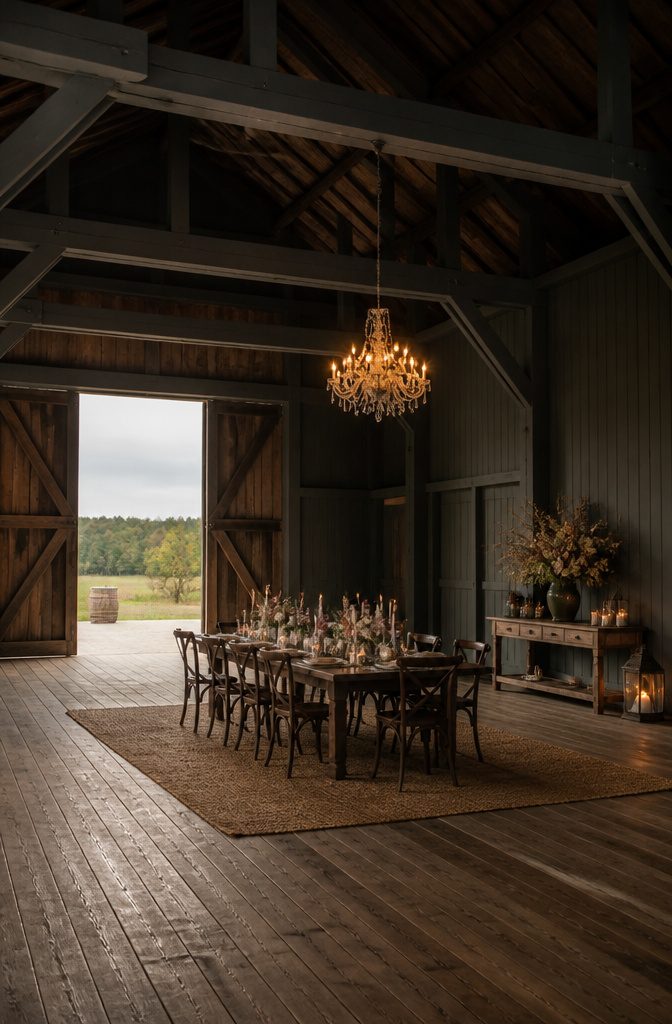
Natural wood textures and dim lighting do most of the work in a barn, turning what could feel like a plain storage building into something moody and enclosed.
The darkness comes from the architecture itself: heavy beams overhead, walls that swallow light rather than bounce it back, and small windows that keep the space feeling tucked away from the afternoon.
Paint those beams a matte charcoal or deep forest green and the gothic quality sharpens without looking like costume.
Hazelnut Farms works this formula on the upscale end. The structure reads as estate-style rather than working farm, with countryside views through doors you can open or close depending on the season.
Indoor and outdoor ceremony options mean the enclosed darkness is a choice, not a trap. That matters for couples who want the atmosphere for the vows but need guests to actually see the first dance.
The rustic part and the dark part can fight each other if you aren’t careful. Too many mason jars and fairy lights, and the mood collapses into something sentimental.
The barn venues that hold their atmosphere keep the lighting low and warm, use the wood as-is rather than staining it lighter, and let the existing shadows do the decorative work.
The best ones feel like nighttime even at four in the afternoon.

【Bright & Wide Illumination for Artworks】 With 350 lumens output and a 16-inch light bar, our picture light delivers bright, even coverage for paintings up to 40 inches wide. The high CRI 95+ ensures colors pop exactly as the artist intended—making it ideal for galleries, living rooms, and photography studios.

Long-lasting 12000mAh Rechargeable Picture Light: PopoIron wireless LED wall lights for pictures, features a long-lasting, massive 12,000mAh built-in. Fully recharges in just 7-8 hours, enjoy up to 12 hours (highest brightness) or up to 75 hours (lowest brightness) per charge.

Full Coverage & High CRI: The 16-inch size design enables the picture light to provide full-frame illumination for the pictures, compatible with frames of various widths. Furthermore, the light for pictures has a high CRI (>90), which enables it to accurately display authentic colors and makes your artworks vivid and natural.
Industrial Venues
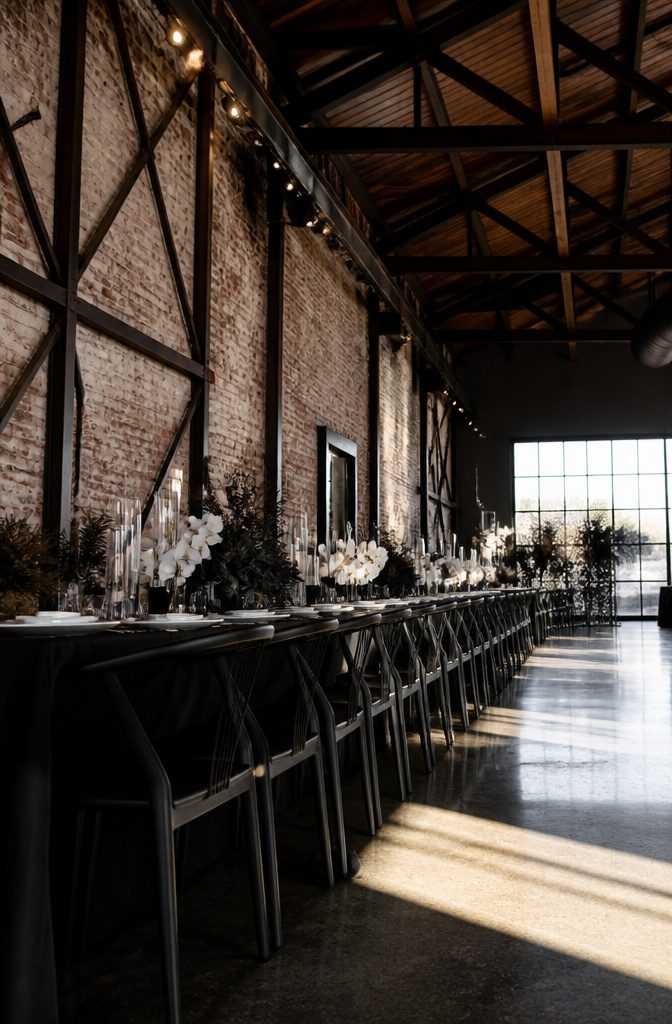
Converted factories and warehouses build the dark wedding aesthetic from what they already are: exposed brick, steel beams, and surfaces left deliberately unfinished. The raw material does the mood work so you do not have to.
Front & Palmer in Philadelphia, a converted barrel factory, earns its place at the top of this category.
Soaring cedar ceilings and dark metal accents pair with controlled gallery lighting to create the deep shadows and bright highlights that high-contrast photography needs. The venue’s architecture supplies the drama; your photographer only has to catch it.
Globe Dye Works runs it close. Massive windows, especially the north-facing ones found in that industrial corridor, throw directional natural light across dark, non-reflective interior surfaces and let photographers work with consistent light-to-shadow ratios rather than fighting them.
A warning buried in the trend data: 64% of couples booking industrial spaces in that market now request moody or high-contrast editing styles specifically.
The look is becoming expected, not exceptional. If you want your gallery to stand apart from the next couple’s, you will need to push beyond the default aesthetic the venue hands you.
Scout the space at the same hour you plan to marry, note where the light falls and where it dies, and brief your photographer on exactly which walls and windows you chose the room for.
The venue gives you the tools. The result still depends on what you build with them.

Light Specifications: With 100 LED lights, each Christmas string lights is 35.5 ft long in total, wire with LED bulbs is 33 ft, lead wire without lights is 2.5 ft, spacing between each LED bulb is 4 inch. Waterproof design allows it to be used indoors and outdoors.

UL Certified Christmas Lights: Strictly tested and meets the US requirements of string lights UL safety standards to ensure & maximize the safety. UL Approved for indoor and outdoor use.Perfect for Christmas tree, St. Patrick's Day,Thanks Giving Day,Halloween, birthday parties,great for indoor and outdoor lighting decoration.

Waterproof Design: The string light is waterproof, making it suitable for outdoor use.
Castle Venues
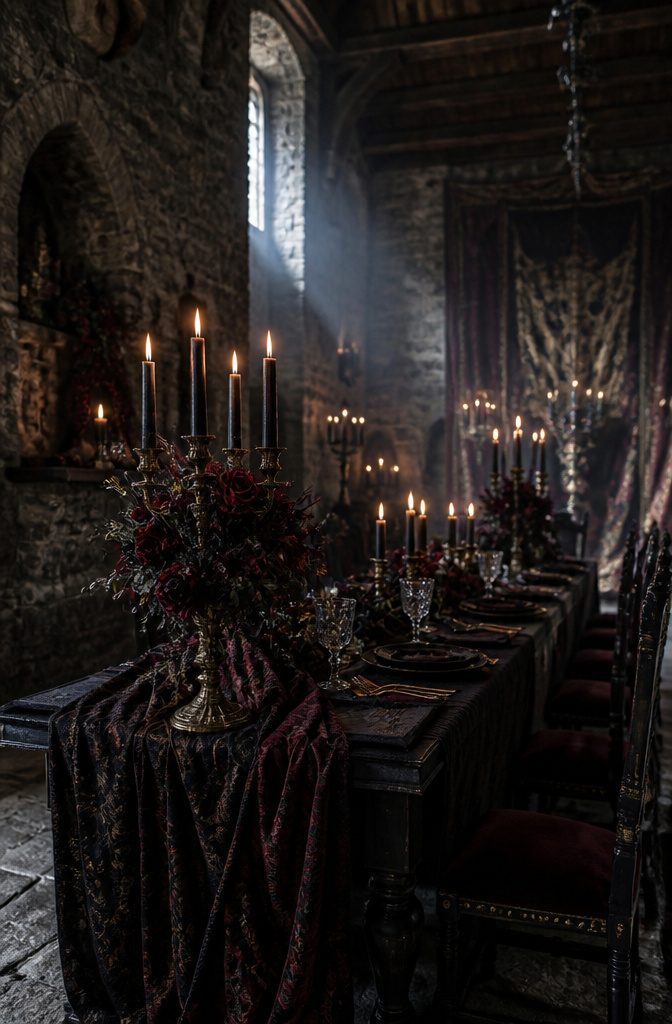
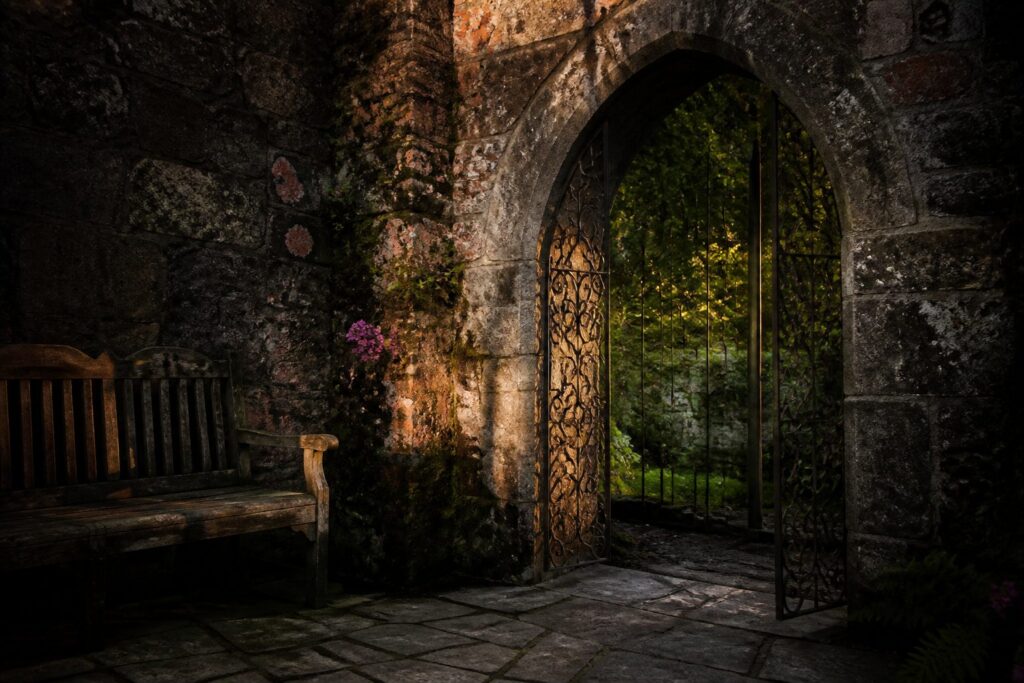
Stone halls and vaulted ceilings carry their own darkness without anyone adding a curtain.
A castle venue builds its mood straight into the masonry. The walls are thick, the windows are narrow slits set deep into the stone, and daylight arrives in thin, angled beams that barely reach the floor.
That constraint is the feature. You are not fighting the architecture to get a gloomy look; you are working with physics that has been holding back the sun for centuries.
Grand halls with timbered or coffered ceilings swallow sound and scatter flash in complicated ways.
I have seen photographers lose whole corners of a frame to black void where the stone drank their light entirely. Bring someone who has shot in literal castles before, not just country houses with turrets glued on.
The real ones have uneven floors, surprise columns, and tapestried alcoves that read beautifully in person but can turn into muddy shadow in a backlit candid.
Chicago sets the floor for this tier at $38 per hour for average castle venue rental, though most couples book four-hour minimums and the usable window is shorter than that.
Travel outside the metro drops the rate but costs you coordination; most castle-adjacent properties are under single owners with idiosyncratic rules about caterers, flame, and how late the bar can run inside a structure with no modern sprinkler system.
Historic weight sounds romantic until you read the riders. Candle approval, floor protection, vendor insurance minimums, and weekday-only availability are common.
The atmosphere is handed to you. The logistics, you earn.


Rechargeable Battery Powered: Made of full metal construction, powered by 3.7V 5000mAh lithium battery, 2-3.5 hours full charge supports lighting up to 10 hours at max brightness and 50 hours at min brightness, USB cable included

【350LM Brightness & Adjustable Color Temperature】The picture light is equipped with 36 high-quality light beads, with a maximum brightness of 350LM; Paired with 3000k warm yellow, 5000k natural white, and 6500k cool white 3 color temperature adjustment, to meets your lighting needs with different color temperatures and brightness levels;
Mansion Venues
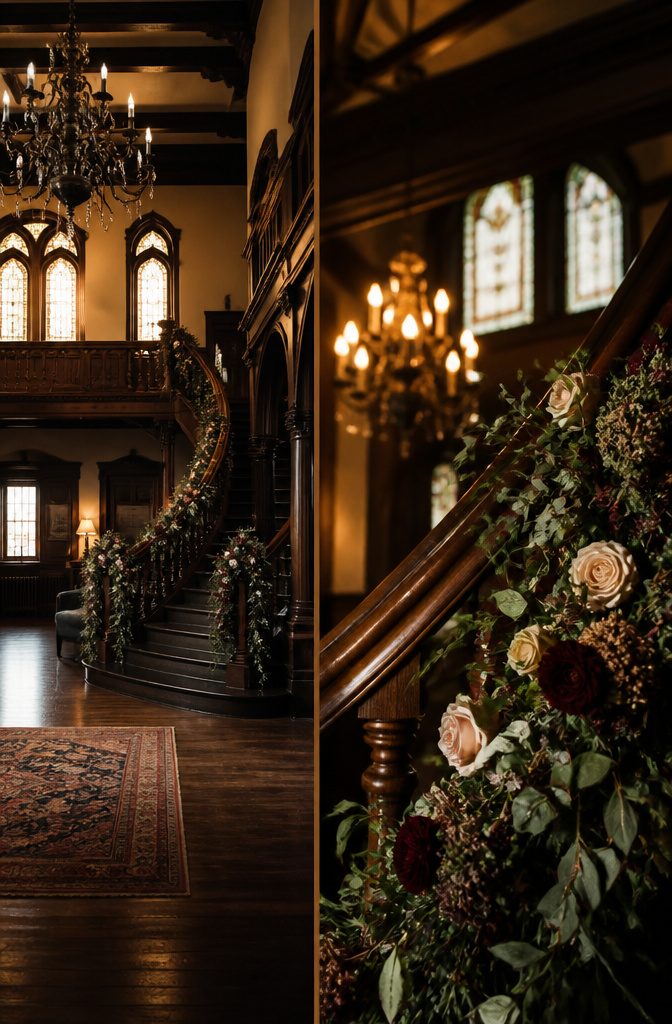
Historic mansions carry a darkness that new construction cannot replicate.
The weight of it sits in original woodwork burnished by a century of hands, in drapery heavy enough to deaden sound, in the particular amber of light filtered through leaded glass or refracted off crystal fixtures wired before modern wattage standards.
These rooms were not designed for photography; they were designed for oil lamps and candlelight, and that subdued illumination still performs the same work.
The balance these venues strike is between grandeur and intimacy, which sounds contradictory until you walk a space like Rhodes Hall.
Romanesque Revival stone, stained glass, sweeping staircases: the architecture announces itself immediately, yet the scale of individual rooms keeps guests close rather than scattering them across a cavernous floor plan.
The same walls that photograph with editorial gravity also hold conversation without amplification.
What saves the budget here is what already exists. Aged interiors filter daylight through small-paned windows, through dust and patina, into something naturally moody.
You are not renting uplighting or draping fabric to create atmosphere; the atmosphere is structural, cumulative, the result of 1904 construction standards and decades of maintenance choices left intact.
Swan House photographs like another era because it is another era, boxwood garden and cascading fountains included in the venue fee rather than added as décor line items.
The judgment call is whether your party fits the rooms as they are.
These spaces dictate flow more aggressively than blank-slate venues. You adapt to the mansion; it does not adapt to you.

Charming Xmas Lights: Christmas 300 LED string lights, use UL-certified 29V low-voltage plugs to ensure the safe use of the product. The outdoor Christmas lights has 16.5 FT leading wire, and the light string is 98.5 FT, total length is 115 FT, the bulb spacing is 3.9 inch. The string light using green wire, which looks more natural and suitable for winter using.

66ft Christmas string lights with 200 purple individual LED bulbs. Each Christmas lights has end-to-end connection, you can connect up to 4 sets together to illuminate a wider range.
Up to 22 Sets Connectable: These mini led green christmas lights are safely end-to-end connectable up to 22 sets for total 726ft decor length on one plug
Unique Outdoor Venues
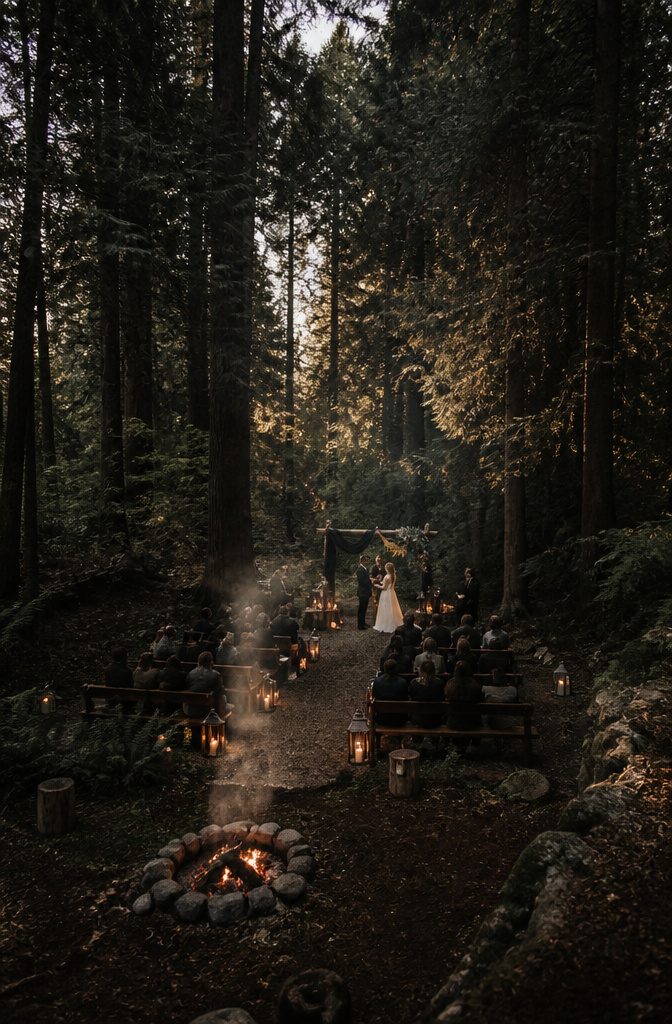
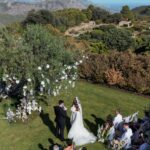
Dense forest settings carry a dark wedding aesthetic without relying on artificial walls. The canopy itself blocks most daylight even at noon, and the trunks reduce visibility to a few meters in any direction.
What reads as gloom in ordinary photography becomes atmosphere here, though you need a photographer who can meter for this.
Twilight weddings in these spaces work best when the ceremony itself runs from last light into full dark, because the transition gives guests’ eyes time to adjust and the images gain depth from the gradient rather than flat blackout.
Overcast skies solve a problem sunny outdoor venues create: harsh shadows that fight a moody palette. Gray cloud cover softens everything and turns lake surfaces into mirrors of the same tone.
Timing is where you lose flexibility. A June evening stays light past 9 PM, which pushes any candlelit or firelit portion of the evening late enough that older guests may flag.
Fall and winter ceremonies get darkness by 5 or 6 PM, so an afternoon schedule still yields torchlit portraits and a reception that feels like it belongs to the aesthetic rather than borrowing an hour at the end.

[Powerful Rechargeable Battery] This 15.75 inch wireless LED picture light has a built-in 5000mAh rechargeable battery and comes with a USB-C charging cable. In just 4 hours, battery operated picture lights fully charges to provide lasts 7 hours ( highest brightness ) - 30 hours ( lowest brightness ). It's perfect for painting, gallery, home, or wherever you want to brighten up your artwork

𝗗𝗜𝗠𝗘𝗡𝗦𝗜𝗢𝗡𝗦: Features a 8.6 inch (22 cm) wide scalloped shade, 7inch (18cm) adjustable Black arm, and 4.7inch (12cm) circular wall mount for optimal positioning

𝗗𝗜𝗠𝗘𝗡𝗦𝗜𝗢𝗡𝗦: Features a 8.6 inch (22 cm) wide scalloped shade, 7inch (18cm) adjustable copper arm, and 4.7inch (12cm) circular wall mount for optimal positioning
What Dark Venues Do to Your Photos
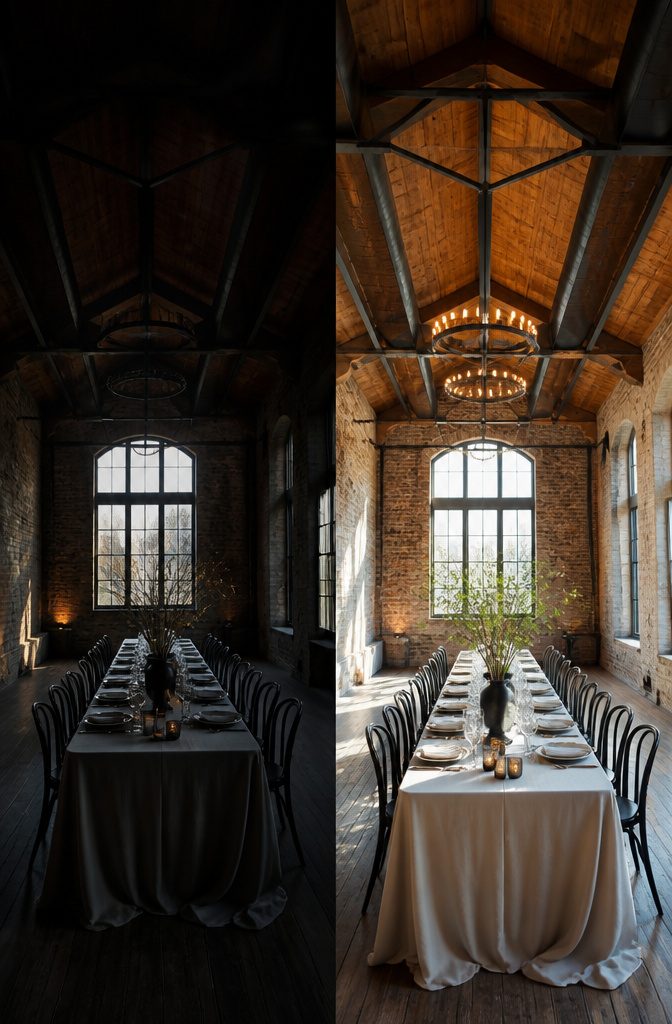
Darker spaces force a photographer to work with what is there rather than flood everything with flat, even light. The result is deep shadows against hard highlights, the kind of high-contrast imagery that editorial portfolios lean on.
Front & Palmer in Philadelphia is built for this: soaring cedar ceilings, dark metal, and gallery lighting that does not apologize for leaving pockets of black in the frame.
Brick, steel, and weathered wood absorb light instead of bouncing it around, so the texture stays dimensional rather than washed out.
What looks bright enough to your eye and what a camera actually records are two different things.
Your eye adapts; a sensor does not. A room that feels romantic at noon can turn into a fight against noise by evening.
Ask the venue when you will lose the last useful window light, and whether the overhead fixtures are warm-toned or the cold kind that turns skin gray. Surfaces matter too.
Painted plaster throws light back; raw timber and velvet swallow it. If your ceremony space is heavy on the latter, your photographer needs to know before the day, not during.

HOLIDAY GREEN LED LIGHTS: Add a touch of classic Christmas charm with our 500 LED green Christmas lights. Stretching 173ft (including a 10ft lead length), these lights are perfect for decorating a 7.5ft Christmas tree or adding a vibrant green hue to any space. Their natural green glow beautifully complements your holiday decor, creating a festive and inviting atmosphere
66ft Christmas string lights with 200 blue individual LED bulbs. Each Christmas lights has end-to-end connection, you can connect up to 4 sets together to illuminate a wider range.
8 Lighting Modes for Lively St. Patrick's Day Vibe: These green-themed string lights feature 8 eye-catching modes—combination, in waves, sequential, slogs, chasing/flash, slow fade, twinkle/flash, and steady on. With vibrant green LEDs (the iconic color of St. Patrick's Day), they cast a cheerful, festive glow that elevates your decor, whether you want soft warmth for decorative trees or dynamic flashes for St. Patrick's Day parties or Irish-themed gatherings.
Reading a Venue’s Real Capacity
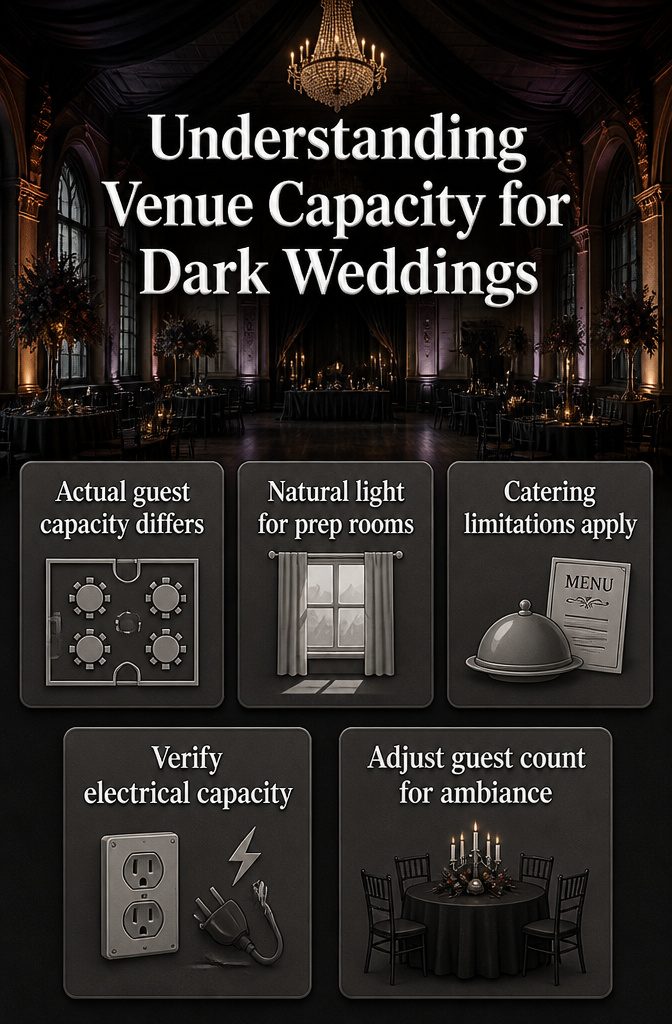
The capacity listed on a historic venue’s brochure rarely matches what a dark wedding setup actually needs. That 150-guest room was measured for airy ballroom spacing; fill it with uplighting rigs and capture stations and the floor plate shrinks fast.
Getting-ready space catches couples off guard. Many historic buildings offer zero on-site prep rooms with usable natural light, which means hair and makeup run on generator-buzzed lamps or crack-of-dawn scheduling.
At Greysolon, both event rooms include getting-ready space because the staff watched too many bridal parties scramble.
Ask specifically whether your getting-ready room has windows facing useful light, or whether you’re blocking the schedule around a single north-facing window at 6 a.m.
In-house catering in historic spaces runs tight. Greysolon notes that couples want "yes" to on-site prep, but the same building’s kitchen may be 1920s dimensions, meaning plated dinners only or strict preferred-list catering.
A BYO venue like Savannah’s Blacksmith Shop opens budget flexibility; an in-house package like the Hyatt historic district builds in coordination but limits menu maneuvering.
Electrical capacity is the question almost nobody asks until the lighting designer walks the space and finds two 20-amp circuits for the entire hall.
Ask for amperage per room, not just "we have outlets." Your uplighting, fog, and photographer’s strobes don’t run on charm.
Guest count and mood work against each other in dark venues. An intimate atmosphere needs bodies to absorb light; drop from 120 to 40 planned guests and your carefully dimmed barn reads cavernous, not cozy.
The room swallows the vibe. Scale the lighting budget up with the vacancy, or book the smaller wing.
【300lm & Versatile Lighting】Illuminate your art gallery or painting with ease using our 300 lumens brightness. Choose from three color temperatures (3000k, 4500k, 6000k)...
Specific Venues Worth the Trip
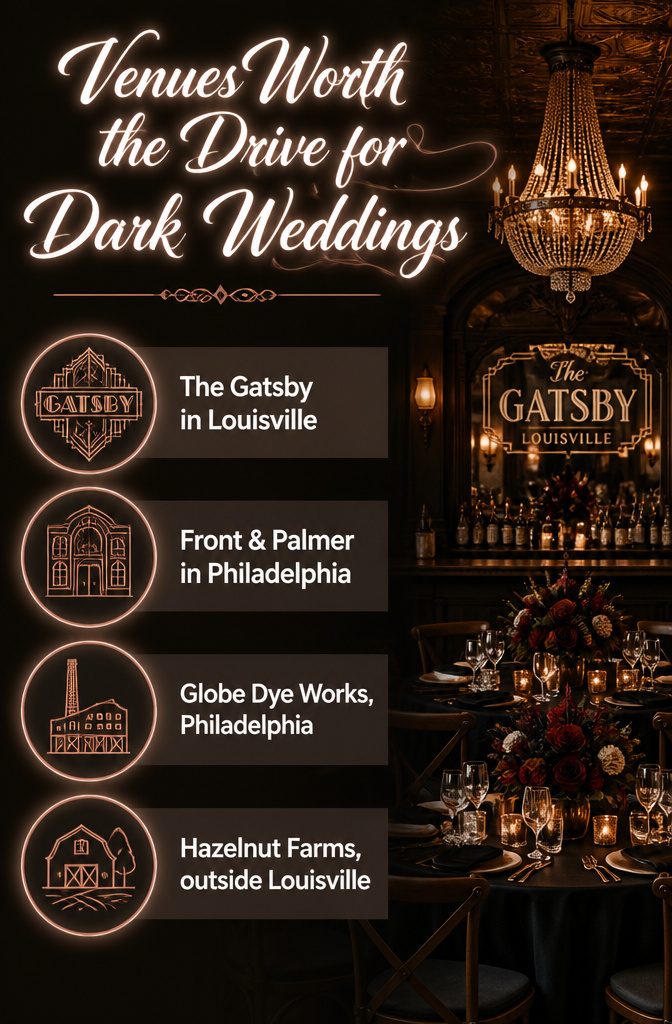
Some venues earn the drive because the architecture does work your local options cannot. These four are worth the miles:
- The Gatsby in Louisville leans on vintage décor and moody interiors that read speakeasy rather than country. The lighting is already low and warm, which flatters skin tones without extra rigging. A couple wanting dramatic, memorable reception shots without building atmosphere from scratch gets it built in.
- Front & Palmer in Philadelphia pairs soaring cedar ceilings with dark metal accents and controlled gallery lighting. The space is built for high-contrast, editorial photography: deep shadow, hard highlight, and the texture of raw material in between. North-facing windows keep the ratio consistent through an afternoon.
- Globe Dye Works, also in Philadelphia, runs a close second for the same industrial corridor aesthetic. Brick, steel, and weathered wood are the point here, not backdrop. The demand for these authentic textures has grown as couples move off traditional ballrooms.
- Hazelnut Farms outside Louisville offers a different path: estate-style barn with countryside views and modern amenities inside. The refined rustic look works for indoor or outdoor ceremony plans, and the timeless quality means the photos do not date themselves to a trend year.

Bright LED Lights, 9.8 feet long fairy lights ultra thin silver wire with 30 bright LED Lights with green light battery operated string lights, 4 inches distance between LED...
Frequently Asked Questions
What are some unique dark wedding venues?
Rustic barns, industrial warehouses, historic castles, aging mansions, and dense forest settings all deliver a dark wedding aesthetic without relying on added décor.
Each type uses its own architecture to absorb or block light: barns through heavy beams and small windows, industrial spaces through exposed brick and dark metal, castles through thick stone walls, mansions through burnished woodwork and leaded glass, and forests through canopy cover.
The best venues let existing shadows do the decorative work rather than forcing mood through uplighting or fabric.
How do I choose the right wedding venue?
Match the venue’s existing atmosphere to your aesthetic rather than fighting the architecture to become something else. Check real capacity against your guest list, since historic rooms shrink fast once rigs and stations move in.
Verify getting-ready space has usable natural light or windows facing useful directions, confirm electrical amperage per room for your lighting and photographer’s gear, and scout at the exact hour you plan to marry so you see where light falls and where it dies.
What is the average cost of renting a wedding venue?
Castle venue rental in the Chicago metro starts at $38 per hour, though most couples book four-hour minimums and the usable window runs shorter than that.
Travel outside major metros drops the rate but adds coordination costs, since castle-adjacent properties often operate under single owners with strict rules about caterers, open flame, and bar hours inside structures without modern sprinkler systems.
Budget for riders covering candle approval, floor protection, vendor insurance minimums, and weekday-only availability.
What is the 50/20/30 rule for weddings?
The piece focuses on venue selection, photography considerations, and specific dark wedding locations rather than general budgeting frameworks.
What are some spooky wedding venues in the USA?
Castle venues with stone halls, vaulted ceilings, and narrow slit windows built into thick masonry carry an inherent darkness that reads as dramatic rather than explicitly spooky.
Real castles have uneven floors, surprise columns, and tapestried alcoves that photograph with complicated shadow.
Historic mansions like Rhodes Hall in Atlanta or Swan House offer Romanesque Revival stone, stained glass, and sweeping staircases with the weight of original woodwork burnished by a century of hands.
What is the rarest month to get married?
It does note that fall and winter ceremonies earn darkness by 5 or 6 PM, allowing afternoon schedules to still yield torchlit portraits and candlelit receptions, while June evenings stay light past 9 PM and push any firelit portion late enough that older guests may tire.
Is $5,000 a reasonable budget for a wedding?
It does note that a BYO venue like Savannah’s Blacksmith Shop opens budget flexibility, while in-house packages like the Hyatt historic district build in coordination but limit menu maneuvering.
Historic mansion venues can save on atmosphere costs because aged interiors filter daylight into natural mood without renting uplighting or draping fabric.